Skip to contentGlobal buyers entering 2026 need more than impressive recycling machinery. They need plastic recycling solutions that perform reliably beside real-world supply chains. A PET bottle line may promise high output, yet wet flakes, labels, and food residue can quickly reduce product quality. Small details matter.
Ellen MacArthur, a leading circular-economy expert, has stated, “A circular economy is based on the principles of designing out waste and pollution, keeping products and materials in use, and regenerating natural systems.” Her principle offers a useful standard for evaluating equipment, suppliers, and long-term results. Buyers should examine sorting accuracy, washing performance, energy consumption, water treatment, spare-part access, and operator training. A supplier’s laboratory report is helpful. It is not enough.
Conditions vary widely. A recycling plant near a port may receive cleaner bales than one serving rural collection networks. Electricity prices, workforce skills, climate, and local end markets also change the investment calculation. The best plastic recycling solutions therefore balance technical performance with practical resilience. Buyers should request verified test data, factory references, maintenance records, and sample output before signing contracts. They should also ask difficult questions about rejected material and downtime.
No system is perfect. That matters.
Some forecasts may appear too optimistic. Equipment can underperform when feedstock changes, even after careful planning. A responsible purchasing decision leaves room for uncertainty, measurement, and improvement. This guide explores the strongest options for global buyers in 2026, while recognizing that dependable recycling progress requires evidence, accountability, and honest reflection.
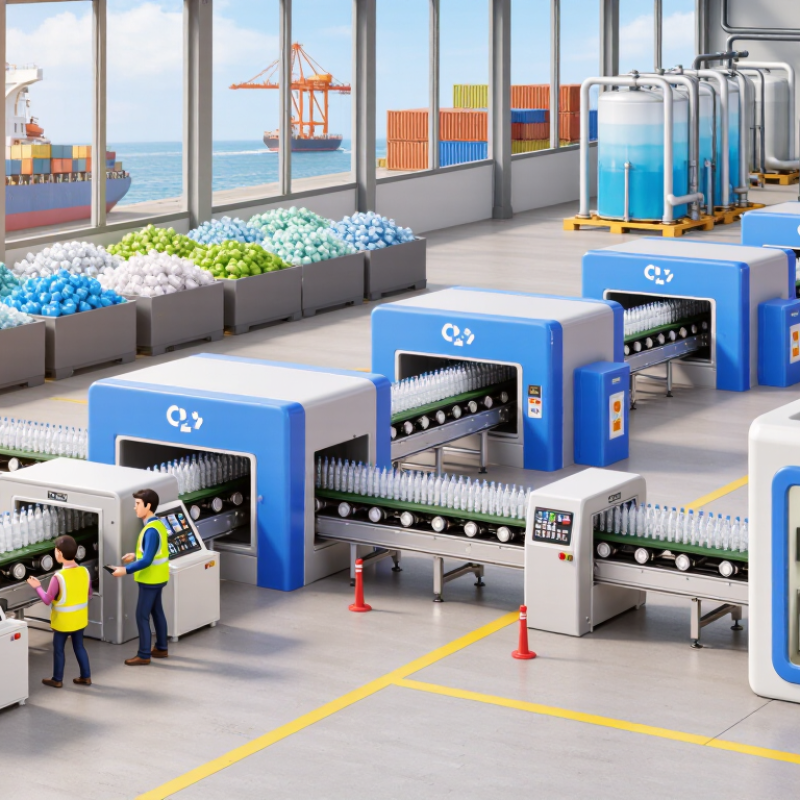
Plastic recycling solutions are systems that collect, sort, clean, process, and reuse discarded plastic. They may include optical sorting, washing lines, shredders, melt filtration, pelletizing, and digital quality tracking. Each stage affects the final material. A dirty input stream can quickly damage equipment and reduce pellet value.
The OECD’s Global Plastics Outlook reported 353 million tonnes of plastic waste in 2019. Only about 9% was recycled. Without stronger intervention, global plastic waste could nearly triple by 2060. These figures explain why global buyers need reliable recycling solutions, not simply recycled materials. Buyers must check feedstock consistency, contamination rates, energy use, output testing, and maintenance support. A shipment of pellets may look uniform, yet hidden moisture can create bubbles during injection molding. Small details matter.
The figures are sobering. UNEP’s 2023 assessment found that plastic pollution could fall by 80% by 2040 through reuse, better recycling, and reduced plastic consumption. However, recycling alone cannot solve the problem. It depends on local collection systems, trained operators, stable electricity, and clear product specifications. In practical purchasing work, buyers should request test results, production records, and sample batches before signing large contracts. No system is flawless. A low-cost machine may later require expensive cleaning, spare parts, or process adjustments. Careful evaluation remains necessary when selecting a solution for different waste streams, climates, and manufacturing conditions.
Choosing a recycling technology starts with the waste, not the machine catalogue. The OECD Global Plastics Outlook (2022) reported that only 9% of global plastic waste was recycled in 2019. That gap makes disciplined feedstock testing essential. Clean PET bottles and HDPE containers usually suit mechanical recycling through sorting, washing, shredding, extrusion, and pelletizing. In a trial setting, I would measure moisture, polymer purity, color, labels, and odor before approving capacity. Small contamination can reduce product value.
Flexible films need different handling. Multi-layer packaging, greasy films, and mixed polyolefins often lose quality during standard reprocessing. Density separation, hot washing, and advanced filtration can help, but economics remain sensitive to water, energy, and rejects. Solvent-based recycling may separate selected polymers from additives or layers. It suits controlled, high-value streams better than dirty municipal waste. The technology sounds impressive. The input still decides.
Pyrolysis can process some difficult plastic residues, especially selected polyolefin-rich waste that mechanical systems cannot use efficiently. It requires strict sorting and careful emissions control. It is not a universal answer. UNEP’s Turning off the Tap report (2023) warned that plastic pollution could nearly triple by 2040 without major intervention. Buyers should request independent yield tests, mass-balance data, energy consumption, and output specifications. I would also demand a failed-batch record. That uncomfortable detail is often missing. A cheaper line may underperform when feedstock changes seasonally.
2026 Best Plastic Recycling Solutions for Global Buyers
How Can Buyers Evaluate Recycled Plastic Quality and Performance?
A reliable evaluation starts with traceability. Ask for the polymer type, source category, processing date, and batch identification. A clear material history reduces surprises during production. Vague descriptions are warning signs.
Inspect the pellets for dust, dark specks, moisture, and inconsistent color. Then review melt flow rate, density, ash content, tensile strength, and impact performance. These figures should match a documented test method and a recent batch. Request a sample before placing a large order. Run it through the intended machine, not only a laboratory test. Watch feeding, pressure changes, surface finish, and odor. Small differences can affect cycle time. Moisture is especially easy to underestimate.
Performance also depends on the final application. Packaging, automotive parts, household products, and construction components need different balances of stiffness, toughness, heat resistance, and appearance. Ask whether additives or mixed polymers are present. They may improve one property while weakening another. Independent laboratory verification adds confidence, but it cannot replace a production trial. Results may shift between batches. That is the uncomfortable part. Buyers should set acceptance ranges, retain reference samples, and repeat testing when color or flow changes. A lower price is not a quality strategy. Neither is a perfect data sheet. Reliable purchasing combines records, physical inspection, controlled trials, and honest discussion about material limits.
| Recycled Polymer | Typical Recycled Feedstock | Recommended Recycling Solution | Key Quality Indicators | Typical Performance Range* | Common Applications | Buyer Verification Points |
|---|---|---|---|---|---|---|
| rPET | Post-consumer bottles, PET containers, and industrial PET flakes | Mechanical recycling with NIR sorting, hot washing, flake purification, melt filtration, and solid-state or equivalent decontamination when required | Intrinsic viscosity, color, moisture, acetaldehyde, black specks, PVC contamination, flake purity, and melt filtration performance | Intrinsic viscosity commonly about 0.70–0.84 dL/g for bottle and sheet grades; moisture is generally controlled below 0.05% before processing | Fibers, strapping, thermoformed sheet, non-food packaging, and regulated food-contact packaging where legally approved | Confirm food-contact authorization for the destination market, migration testing, traceability, and documented input-source control |
| rHDPE | Post-consumer detergent, milk, shampoo, household chemical, and industrial HDPE containers | Color and polymer sorting, friction or hot washing, drying, extrusion, melt filtration, and odor reduction | Melt flow rate, density, ash, moisture, odor, color consistency, impact strength, and contamination by PP, PVC, and metals | Density generally about 0.93–0.97 g/cm³; melt flow rate varies widely by application and should be matched to the intended molding process | Pipes, pallets, crates, bins, non-food bottles, drums, sheets, and injection-molded products | Request lot-to-lot MFR data, impact results, odor assessment, color tolerance, and evidence that PVC contamination is controlled |
| rPP | Automotive parts, battery cases, caps, crates, food tubs, and post-industrial PP production scrap | Advanced sorting by polymer and color, washing, extrusion with vacuum degassing, fine melt filtration, and optional odor treatment | Melt flow rate, tensile strength, flexural modulus, impact strength, ash, odor, color, and PE contamination | Density commonly about 0.89–0.91 g/cm³; tensile strength often falls within approximately 20–35 MPa depending on grade and processing history | Automotive components, storage products, appliances, crates, pallets, caps, and non-food packaging | Check whether the material is homopolymer, copolymer, or a blend; verify impact performance and process stability on the buyer’s equipment |
| rLDPE / rLLDPE | Agricultural film, stretch film, shrink film, bags, and clean industrial film scrap | Film pre-sorting, low-water washing, efficient drying, agglomeration when appropriate, extrusion, and continuous melt filtration | Melt flow rate, gel count, moisture, ash, tensile and elongation, odor, color, and contamination from paper, sand, PET, and PP | Density generally about 0.91–0.94 g/cm³; elongation can exceed 300% for suitable flexible-film grades, but varies significantly with feedstock | Garbage bags, liners, films, sheets, flexible packaging, and molded utility products | Review gel-count limits, filtration mesh, film-blend composition, moisture control, and trial results on the target film line |
| rPS | Rigid polystyrene packaging, appliance housings, laboratory items, and production scrap | Rigid sorting, size reduction, washing, drying, extrusion, degassing, and fine filtration | Melt flow rate, impact strength, color, residual contamination, moisture, ash, and thermal stability | Density is commonly about 1.04–1.06 g/cm³; impact and flow properties depend strongly on whether the grade is general-purpose or high-impact PS | Housings, trays, office products, protective packaging, and non-food molded parts | Do not combine general-purpose PS and high-impact PS without qualification; verify residual additives and dimensional stability |
| rABS | End-of-life electronics, automotive components, appliances, and clean industrial ABS scrap | Dedicated electronics or automotive sorting, shredding, density separation, metal removal, extrusion, and additive correction when specified | Impact strength, tensile strength, color, melt flow rate, flame-retardant content, bromine, metal contamination, and odor | Density commonly about 1.03–1.08 g/cm³; notched impact strength varies greatly by formulation and recycled content | Electrical housings, automotive trim, appliance parts, tool bodies, and durable consumer products | Request restricted-substance testing, especially for legacy flame retardants, and verify compliance with the destination market’s product regulations |
| rPVC | Pipes, profiles, cable insulation, flooring, banners, and industrial PVC offcuts | Separate rigid and flexible PVC streams, remove metals and incompatible polymers, then compound with controlled stabilizer packages | K-value or molecular-weight indication, plasticizer content, chlorine-related contamination, density, color, thermal stability, and mechanical properties | Density is typically about 1.30–1.45 g/cm³; properties differ substantially between rigid PVC and plasticized PVC | Pipes, profiles, flooring, cable products, mats, and construction materials | Keep rigid and flexible PVC separate; verify legacy additive restrictions, thermal history, and compatibility with the intended formulation |
| Recycled Engineering Plastics | PA, PC, POM, and other engineering-plastic production scrap or controlled end-of-life components | Closed-loop collection, polymer-specific sorting, drying, controlled compounding, vacuum extrusion, and reinforcement or additive adjustment | Moisture, viscosity, molecular-weight retention, filler content, impact, tensile and flexural properties, thermal stability, and dimensional shrinkage | Performance depends on polymer type; moisture-sensitive PA and PC generally require rigorous drying before molding | Electrical components, automotive parts, industrial equipment, connectors, and durable technical products | Require application-specific validation, complete formulation disclosure where necessary, and repeated processing trials rather than relying only on a certificate of analysis |
For global buyers, plastic recycling solutions should be checked through evidence, not attractive claims. Ask for valid certificates covering the exact factory, material, and production site. ISO 9001 supports quality management, while ISO 14001 indicates an environmental management system. Neither certificate proves recycled content by itself. That distinction matters.
Request a recognized recycled-content certification, such as a chain-of-custody or recycled-claim standard. Check whether the claim means physically recycled material or a controlled mass-balance method. Review independent test reports for polymer type, recycled percentage, moisture, ash, heavy metals, and contaminants. For packaging applications, food-contact compliance requires separate approval and migration testing. General recycling certification is not enough.
Tips: Verify the certificate number directly with the issuing body. Confirm its expiry date and audit scope. Compare batch records with purchase invoices and production logs. Ask for recent samples, not only old laboratory reports. Keep the documents.
A reliable supplier should explain collection sources, sorting methods, washing conditions, pelletizing controls, and rejected-material handling. Buyers should also check traceability under applicable national rules and transport requirements. Certificates can be genuine yet limited. I have learned that paperwork may describe the system, while a sample reveals daily performance. That uncomfortable gap deserves attention.
For global buyers, recycled plastic should be compared by usable output, not the quoted price per tonne.
The OECD’s Global Plastics Outlook reports that only 9% of plastic waste was recycled in 2019. That figure exposes a difficult supply market. A low-price offer may contain high moisture, mixed polymers, or excessive contamination. Ask suppliers for recent test results, bale specifications, washing methods, yield rates, and delivery records. The real cost is the price of certified material after sorting losses, freight, customs, and production rejects.
Request at least three comparable quotations. Use the same grade, color, recycled content, packaging, and delivery terms. A supplier audit should examine incoming waste, processing controls, worker safety, and batch traceability. Independent testing can verify melt flow, tensile strength, odor, and heavy-metal limits. Do not rely on a certificate alone. It can become outdated.
Environmental impact needs equal attention. The United Nations Environment Programme’s Turning off the Tap report estimates that plastic pollution could fall by 80% by 2040 through existing solutions, including stronger circular systems. Buyers should request lifecycle data showing greenhouse-gas emissions, electricity sources, water use, transport distance, and final processing losses. Compare emissions per usable kilogram, not per input kilogram. This distinction matters. Data gaps remain, especially among smaller processors. That weakness deserves honest attention. A supplier with slightly higher pricing may deliver steadier quality, clearer evidence, and fewer rejected loads. The cheapest offer can be expensive in practice.