Skip to content

Top 10 Plastic Injection Molding Suppliers Worldwide

Choosing a plastic injection molding supplier can shape a product long before it reaches a customer. The right partner helps turn a CAD file into consistent parts, while managing tooling, materials, production volume, and quality checks. A small flaw in a mold can leave visible marks across thousands of components. That matters.

This guide explores ten suppliers with capabilities relevant to buyers worldwide. Their strengths may include precision molding, rapid prototyping, complex geometries, or high-volume production. Not every supplier is right for every project. A company suited to medical housings may not offer the best fit for an automotive program or a short production run. That is worth checking.

When comparing providers, look beyond headline capacity. Ask about mold ownership, engineering support, material traceability, inspection methods, and communication during design changes. Request examples of comparable parts, along with clear details on lead times and production locations. These practical questions can reveal gaps that polished marketing pages may not show. Still, supplier information changes, and published capabilities do not guarantee results for a specific design. This ranking is a starting point, not a substitute for technical review. Use it to identify candidates, then confirm their current services and fit directly with each supplier.
Top 10 Plastic Injection Molding Suppliers Worldwide

Understanding the Global Plastic Injection Molding Industry

Top 10 Plastic Injection Molding Suppliers Worldwide

Understanding the Global Plastic Injection Molding Industry

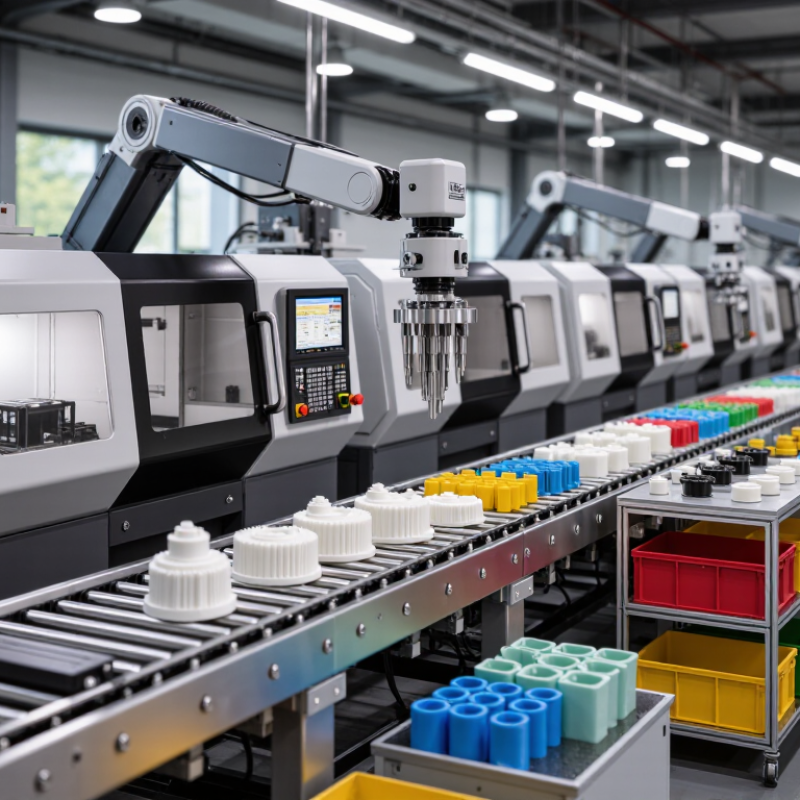
Plastic injection molding supports automotive, medical, electronics, packaging, and household product manufacturing. The process begins with heated resin, a precision mold, and controlled pressure. A 120-ton press may produce small housings, while larger machines form panels or containers. Cycle time, cooling efficiency, and mold design directly affect production costs.

Global suppliers differ by equipment, materials, certifications, and engineering capability. Strong manufacturers usually control tooling, process validation, dimensional inspection, and batch traceability. They may use polypropylene, ABS, nylon, or reinforced engineering plastics. Material selection depends on heat exposure, impact resistance, flexibility, and contact requirements. Regional strengths also vary. Some markets emphasize high-volume production, while others focus on complex prototypes or tight tolerances.

Supplier evaluation needs more than a polished website. Request sample parts, inspection reports, mold-flow analysis, and clear production timelines. Ask how the factory handles warpage, flash, short shots, and color variation. These defects can appear after scaling production. No supplier is perfect. A capable partner admits process limits and documents corrective actions. That honesty matters. Energy use, recycled content, worker training, and responsible waste handling also deserve attention. Cost remains important, but the cheapest quotation can hide weaker molds, inconsistent resin, or expensive rework. A careful comparison should examine total lifecycle value, communication speed, technical evidence, and the supplier’s ability to maintain quality across repeated production runs.

How to Evaluate Worldwide Injection Molding Suppliers

Evaluating worldwide plastic injection molding suppliers requires more than comparing hourly rates. Grand View Research valued the global plastic injection molding market at approximately USD 42.3 billion in 2022. That scale creates many choices, but not every supplier can control thin walls, sink marks, or dimensional drift. Request recent inspection reports, cavity-fill simulations, and process capability data. A reported Cpk above 1.33 is useful, though it should not replace your own audit. Ask to inspect a production cell, not only a polished sample room.

Quality systems also need verification. The ISO Survey 2022 recorded more than 1.2 million ISO 9001 certificates worldwide, showing broad adoption but not guaranteed process discipline. Check certificate scope, calibration records, resin traceability, mold-maintenance logs, and nonconformance actions. World Bank’s Logistics Performance Index 2023 compares logistics across 139 economies, so delivery risk deserves measurable attention. Review customs experience, backup capacity, packaging controls, and average corrective-action time. Small details matter. A supplier may promise six-week tooling, yet provide no documented steel certification or spare-part plan. That is a warning, not a minor inconvenience. I would also challenge my own assumptions: the lowest quotation can hide inspection labor, tool refurbishment, or transport volatility. A practical scorecard should weight quality, engineering response, total landed cost, resilience, and communication—not price alone.

Top 10 Plastic Injection Molding Suppliers Worldwide: How to Evaluate Worldwide Injection Molding Suppliers

Use this weighted scorecard to compare injection molding suppliers consistently. The criteria cover the main factors typically reviewed during supplier qualification, including quality systems, technical capability, production capacity, cost, delivery, and compliance.

Quality and technical capability receive the highest weights because process control, tooling expertise, and repeatable production are essential for reliable molded parts. Buyers should adjust the weighting according to industry requirements, production volume, and regulatory risk.

Top 10 Plastic Injection Molding Suppliers Worldwide

Top 10 Plastic Injection Molding Suppliers Worldwide

Choosing among the top 10 plastic injection molding suppliers worldwide takes more than comparing production capacity. A capable supplier should explain how it controls mold design, material selection, sampling, and inspection. Ask for process records, not just polished photos. A clear answer matters.

Look closely at the details. Can the supplier hold consistent dimensions across repeated batches? How are color changes, surface marks, and warping checked? Request sample parts and review them under ordinary lighting, then measure critical features with suitable gauges. Small flaws can become expensive when thousands of parts are involved. Ask who owns the mold, how maintenance is recorded, and what happens when a tool needs repair.

Global reach can help with lead times and regional support, but it does not guarantee dependable work. Compare communication practices, technical documentation, and the supplier’s ability to manage changing forecasts. Request a realistic production schedule that includes tooling trials and approval time. A low quotation may leave out packaging, inspection, or mold upkeep. That is easy to miss. Even experienced buyers sometimes focus too much on unit price; I would also examine how quickly a supplier reports problems and proposes a practical correction.

Technologies and Industries Served by Leading Suppliers

Leading plastic injection molding suppliers combine process control with application-specific engineering. Grand View Research estimated the global injection-molded plastics market at about US$336 billion in 2023, underscoring the scale of demand across packaging, automotive, electronics, and healthcare. The figure is an estimate, not a count of supplier revenue, and market definitions vary. Still, it signals why buyers increasingly assess more than machine size.

For thin-wall packaging, high-speed presses and in-mold labeling can reduce cycle times; a warped lid still fails, however.

Automotive programs often need multi-material molding, insert molding, and automated inspection for repeatable fit.

In medical components, clean production areas, traceability, and tight dimensional checks matter as much as tool design. The International Organization for Standardization’s ISO 13485 standard sets quality-management requirements for medical-device production, though certification alone cannot prove every part is suitable for a specific use.

Small details count.

A supplier may use hot-runner systems to limit material waste, or scientific molding to monitor pressure and temperature shot by shot. These capabilities are not universal, and a polished sample can hide production variation.

Buyers should review process data, validation records, and tooling-maintenance plans, then test parts under real operating conditions. That step is easy to underestimate.

Factors to Consider When Choosing a Supplier

When comparing plastic injection molding suppliers, examine process control before comparing unit prices. OECD’s Global Plastics Outlook reports that global plastics production doubled between 2000 and 2019, reaching 460 million tonnes. That scale makes supplier capacity and material traceability practical concerns, not paperwork. Ask how the supplier tracks resin batches, controls drying, and records mold temperature and cycle time. Request sample inspection reports, not just a quality certificate. A neat certificate is not the same as a stable process.

Check whether the supplier’s machines can handle your part’s projected size, shot weight, and annual volume. Then review mold maintenance, backup capacity, lead times, and tooling ownership terms. Ask for evidence: recent delivery performance, defect rates, and corrective-action records. If those figures are unavailable, treat the gap as a risk. ISO 9001 certification can indicate a documented quality system, but it does not guarantee that every part will meet your specifications. Compare total cost, including tooling, inspection, packaging, and freight. A low quote can still be the wrong quote. I would also visit the production floor when possible; a short visit may reveal crowded storage or unclear work instructions that a sales call misses.

Top 10 Plastic Injection Molding Suppliers Worldwide - Factors to Consider When Choosing a Supplier

Use these criteria to compare suppliers across global manufacturing regions. Requirements vary by part, industry, and destination market; verify capabilities and certifications directly with each supplier.

No. Selection factor What to evaluate Evidence to request Why it matters
1 Molding capabilities Press clamping-force range, shot capacity, machine types, and experience with the required part size and resin. Machine list, sample parts, and confirmation that the proposed press suits the part and mold. An unsuitable machine can limit part quality, production efficiency, or mold life.
2 Engineering and mold design Design-for-manufacturing support, mold-flow analysis, tooling design, and engineering-change procedures. An example design review, mold-flow report where appropriate, and documented tooling scope. Early design feedback can help address filling, cooling, warpage, and ejection issues.
3 Quality management Documented inspection plans, process controls, nonconformance handling, and traceability appropriate to the product. Current certificates, audit records, sample inspection reports, and corrective-action examples. A consistent quality system helps control variation and resolve defects systematically.
4 Material expertise Experience with specified thermoplastics, recycled or filled grades, resin drying, and material handling. Material datasheets, resin-lot traceability approach, and documented handling procedures. Material choice and processing conditions affect strength, appearance, dimensions, and performance.
5 Tooling ownership and maintenance Contract terms for mold ownership, storage, maintenance, repair, transfer, and end-of-life disposition. Written tooling agreement, maintenance schedule, and mold condition records. Clear terms protect production continuity and clarify responsibility for customer-funded tooling.
6 Production capacity and lead time Available press time, shift pattern, planned maintenance, capacity allocation, and seasonal constraints. A capacity plan, quoted lead-time assumptions, and a contingency plan for interruptions. Capacity should match forecast demand and the required delivery schedule, not just initial samples.
7 Secondary operations In-house or managed assembly, decorating, machining, welding, packaging, and other specified finishing steps. Process flow, subcontractor controls, sample finished goods, and inspection criteria. Coordinated finishing can reduce handoffs, delays, and variation in the completed product.
8 Compliance and industry requirements Applicable customer, product-safety, environmental, and sector-specific requirements for the intended market. Current certificates and product-specific compliance documentation; confirm scope and validity with the issuer. A general quality certificate does not by itself demonstrate compliance for every product or market.
9 Total delivered cost Part price, tooling, packaging, freight, duties, inventory costs, inspection, and the cost of potential quality issues. An itemized quotation with assumptions for volume, material, packaging, Incoterms, and validity period. The lowest unit price may not represent the lowest cost across the full supply chain.
10 Location, logistics, and communication Shipping route, transit variability, time-zone overlap, language support, data security, and responsiveness. A sample escalation process, logistics plan, communication contacts, and agreed reporting cadence. Reliable coordination helps manage approvals, engineering changes, shipment risks, and production issues.

Note: This table is a supplier-selection checklist, not a verified ranking of individual manufacturers. Confirm all capabilities, certifications, lead times, and commercial terms directly before placing an order.

Scroll To Top