 Skip to content
Top Plastic Product Innovation Trends for Global Buyers?
Global buyers are entering a new phase of plastic product innovation. The focus is shifting from appearance and low price toward measurable performance, circularity, and supply-chain resilience. A reusable food container now needs more than a strong lid. Buyers must examine recycled content, cleaning cycles, chemical safety, repair options, and end-of-life pathways. Small details matter. A clear material label can prevent sorting errors. A replaceable seal can extend product life.
William McDonough, architect and co-author of Cradle to Cradle, captured the circular design principle in three words: “Waste equals food.” His statement remains highly relevant to modern plastic development. Products should be designed as resources for future products, not as short-lived objects. That requires verified material data, practical collection systems, and cooperation between manufacturers, retailers, and recyclers. It also requires honest limits. Not every bio-based polymer performs well in humid warehouses. Not every recycled resin suits medical or food-contact applications. No scorecard is perfect.
This guide examines the leading plastic product innovation trends shaping global purchasing decisions. It considers smart packaging, lightweight engineering, recycled polymers, mono-material design, refill systems, and digital product tracking. The aim is practical judgment. Buyers need evidence, not impressive claims. They should request test reports, traceability records, durability results, and clear disposal instructions. A product may look sustainable under showroom lights, yet fail after repeated washing or transport. Better decisions begin with that uncomfortable question: will this innovation work in real markets?
Defining Plastic Product Innovation for Global Buyers
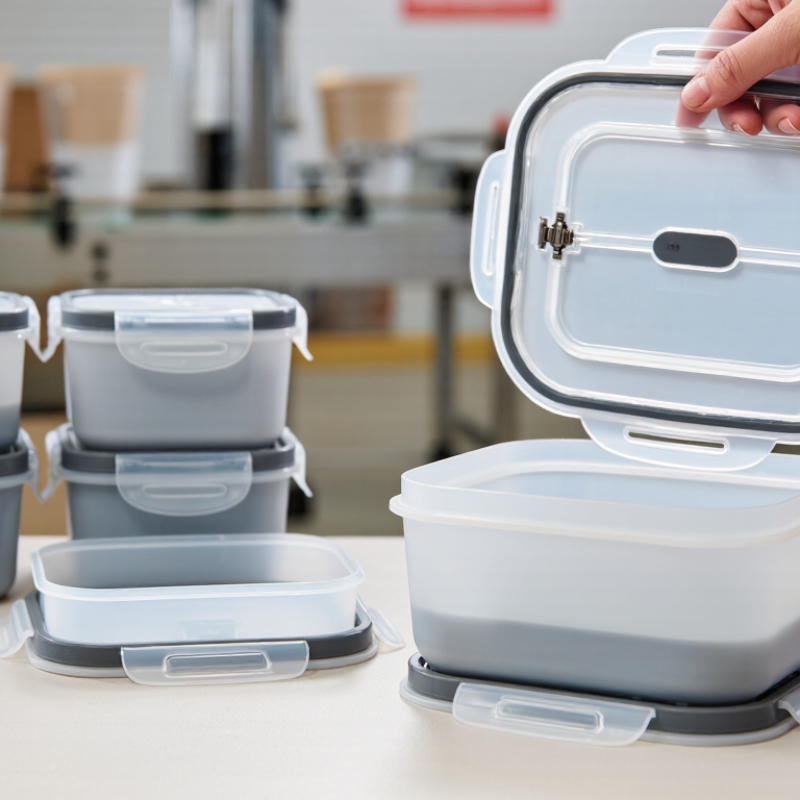
Plastic product innovation for global buyers means more than adding a new color or changing a package shape. It combines useful design, reliable performance, responsible material choices, and efficient production. A genuinely innovative product may use less plastic, last longer, or simplify assembly. It should also perform consistently across different climates, transport routes, and storage conditions. That matters.
From my experience reviewing product specifications, buyers often focus on appearance first. This can be a mistake. Innovation must be measurable through weight reduction, improved strength, lower waste, or easier recycling. Clear testing data builds confidence. Suppliers should explain material composition, production limits, quality controls, and expected service life. Claims without evidence create unnecessary risk. Sometimes, a simpler product is the better innovation.
Tips: Ask for sample testing under realistic conditions. Check dimensions after heat and moisture exposure. Compare total costs, not only the unit price. Confirm whether the design supports local recycling systems. Request quality records and traceable production details. Do not accept vague claims about sustainability. Small improvements often matter more than dramatic concepts. Yet, buyers should remain open to refinement, because early prototypes can reveal weak joints, difficult handling, or unexpected waste.
| Innovation Trend | Product and Material Direction | Relevant Data Point or Requirement | Buyer Value | Recommended Qualification Criteria | Market Readiness | Reference Framework |
|---|---|---|---|---|---|---|
| Post-Consumer Recycled Content | Use recycled PET, HDPE, PP, or other technically suitable polymers in packaging and durable plastic products. | In the European Union, plastic beverage bottles must contain at least 25% recycled plastic in PET bottles from 2025 and 30% in all plastic beverage bottles from 2030. | Reduces dependence on virgin resin and supports regulatory compliance, recycled-content claims, and circular procurement policies. | Request recycled-content percentage, chain-of-custody documentation, material safety evidence, batch traceability, and contaminant-control results. | Commercially Established | EU Single-Use Plastics Directive 2019/904; ISO 14021 environmental claims guidance. |
| Design for Recyclability | Prefer mono-material structures, compatible closures, removable labels, washable inks, and simplified product assemblies. | Recyclability depends on material compatibility, collection, sorting, reprocessing, and the availability of suitable recycling streams; a recyclable claim should not rely on material composition alone. | Improves end-of-life recovery and lowers the risk that technically recyclable products become non-recyclable in real collection systems. | Check material identification, component compatibility, adhesive and ink selection, disassembly requirements, and market-specific recycling acceptance. | Commercially Established | ISO 15270; ISO 18604; applicable national packaging-recycling design guidelines. |
| Mono-Material Flexible Packaging | Replace multi-layer plastic laminates with PE-based or PP-based structures where the required barrier and sealing performance can be maintained. | Performance must be evaluated against oxygen transmission rate, water-vapor transmission rate, seal strength, puncture resistance, and shelf-life requirements. | Can simplify sorting and recycling compared with incompatible multilayer structures while preserving lightweight packaging benefits. | Require full-layer composition, barrier test results, seal-window data, drop and puncture testing, and compatibility with the destination recycling stream. | Scaling Across Markets | ISO 15105 for gas transmission; ISO 15106 for water-vapor transmission; ISO 527 for tensile properties. |
| Lightweighting and Material Efficiency | Reduce wall thickness, part weight, and packaging volume through structural redesign, improved tooling, foaming, ribs, and higher-performance resins. | Environmental improvement should be measured per functional unit, such as product delivered, use cycle, or protected volume, rather than by weight reduction alone. | Reduces resin consumption, freight weight, storage volume, and potentially production energy use without changing required functionality. | Compare weight, compression strength, impact resistance, dimensional stability, leakage rate, and product-protection performance before and after redesign. | Commercially Established | ISO 18601 packaging and environment framework; ISO 12048 compression and stacking tests for transport packaging. |
| Reusable Plastic Product Systems | Develop durable containers, crates, pallets, transport packaging, and refillable formats designed for repeated use. | System performance should be assessed by the number of verified reuse cycles, return rate, cleaning process, loss rate, and total material use per cycle. | Can reduce single-use consumption in closed-loop or managed distribution systems with reliable collection and reverse logistics. | Validate cycle-life testing, stacking and impact resistance, cleaning compatibility, food-contact compliance where applicable, and return-system economics. | Application Dependent | ISO 18603 reusable packaging requirements; relevant transport-packaging performance standards. |
| Chemical Recycling Feedstocks | Use chemically recycled polymers for applications where mechanically recycled material cannot consistently meet purity, color, or performance requirements. | Mass-balance allocation does not mean that recycled molecules are physically separated in every product; claims should clearly state the accounting method and system boundary. | Expands the range of plastic waste that may be processed and can support higher-quality applications when mechanical recycling is technically limited. | Request third-party chain-of-custody verification, input-waste definition, allocation method, yield data, energy profile, and regulatory status in the target market. | Emerging and Regulated | ISO 22095 chain of custody; applicable recycled-content accounting and environmental-claim requirements. |
| Bio-Based Plastics | Use renewable feedstocks such as bio-based ethylene, bio-based propylene, starch blends, cellulose-derived polymers, or other certified renewable inputs. | Bio-based content and biodegradability are separate properties; a bio-based plastic is not automatically biodegradable or compostable. | Provides feedstock diversification and may reduce fossil-resource demand when supported by verified sourcing and life-cycle evidence. | Separate bio-based content claims from compostability claims; request carbon accounting, feedstock source, certification scope, and end-of-life instructions. | Commercial and Emerging Applications | EN 16785-1 for bio-based content; ISO 16620 series for bio-based plastics terminology and measurement. |
| Compostable Plastic Products | Use certified compostable materials only for applications connected to suitable industrial or home-composting collection systems. | Industrial compostability requires controlled conditions and does not guarantee degradation in soil, marine environments, landfill, or conventional recycling systems. | Can support food-waste collection formats and selected applications where contamination makes conventional recycling impractical. | Confirm the exact compostability standard, certification scope, disintegration and ecotoxicity results, labeling, and local collection acceptance. | Niche and Infrastructure Dependent | EN 13432; ISO 17088; ASTM D6400 where applicable. |
| Digital Product and Material Traceability | Use QR codes, serialized records, digital product passports, batch identifiers, and data platforms to record material and compliance information. | Useful records may include polymer type, recycled content, additives, manufacturing site, test results, repair history, and end-of-life instructions. | Improves supplier transparency, customs documentation, recall management, recycling decisions, and verification of sustainability claims. | Check data ownership, update frequency, interoperability, cybersecurity, record retention, and whether information can be accessed without proprietary software. | Rapidly Developing | ISO 22095 chain of custody; applicable product-data and packaging-information regulations. |
| Tethered Closures and Integrated Components | Design caps and lids to remain attached to beverage containers during use and disposal, reducing the loss of small plastic components. | For certain single-use beverage containers up to 3 liters, the European Union requires caps and lids to remain attached from 3 July 2024. | Supports collection of closures with their containers and helps meet market-specific packaging requirements. | Test opening torque, resealing performance, consumer usability, attachment strength, leakage, and compatibility with filling lines. | Commercially Established | EU Single-Use Plastics Directive 2019/904; applicable packaging-product standards. |
| Additive Manufacturing with Recycled Polymers | Use recycled thermoplastics in 3D-printed prototypes, tooling, spare parts, fixtures, and low-volume customized products. | Material properties can vary with recycled feedstock quality, moisture, thermal history, additives, and the number of processing cycles. | Shortens development cycles, reduces tooling waste, and enables localized production for customized or replacement parts. | Require filament or pellet specification, moisture control, tensile and impact data, dimensional accuracy, layer adhesion, and repeatability testing. | Growing Industrial Use | ISO/ASTM 52900 terminology; ISO/ASTM 52907 feedstock characterization principles. |
| Low-Emission Processing and Electrification | Use all-electric injection molding, optimized heating and cooling, closed-loop process controls, and renewable electricity where available. | Energy performance should be reported using a consistent boundary, such as kilowatt-hours per kilogram of finished product, including or excluding auxiliary equipment as stated. | Can reduce production emissions, improve process repeatability, and lower long-term operating costs. | Request energy-per-unit data, production yield, scrap rate, electricity source, machine utilization, and verification methodology. | Commercially Available | ISO 14040 and ISO 14044 life-cycle assessment principles; ISO 50001 energy-management framework. |
Related Posts
-
Top 10 Trends in Plastic Product Design You Need to Know?
-
How to Create Effective Plastic Product Design for Everyday Use?
-

Best Custom Plastic Components for Your Global Sourcing Needs?
-
2026 Top Plastic Production Methods for Global Buyers
-
2026 Best Plastic Engineering Solutions for Global Buyers
-

Why Is Plastic Mold Design Important for Global Buyers?