 Skip to content

Top 10 High Volume Manufacturing Companies in China
China is home to manufacturers serving industries that need consistent output, from electronics and appliances to automotive components, packaging, and consumer goods. High volume manufacturing depends on more than large factory floors. It requires stable processes, dependable equipment, trained workers, and quality checks that hold up across long production runs. The details matter.
This overview introduces ten companies associated with China’s large-scale manufacturing sector. It considers practical indicators such as product focus, production capabilities, industry experience, and publicly available information about quality management. These indicators help frame a comparison, but they do not prove that a supplier is suitable for every project. Company capacity, lead times, certifications, and service options can change, and public descriptions may not show how a factory performs on a specific order.
A useful shortlist starts with the product itself. Ask about sample approval, tooling ownership, material traceability, inspection steps, and how production changes are communicated. A factory may handle impressive volumes yet struggle with a specialized design or a tight launch schedule. That is worth remembering. Buyers should verify claims directly, review current documentation, and assess whether communication is clear before making a commitment. The companies presented here offer a starting point for research, not a substitute for due diligence. Comparing them carefully can reveal which capabilities match a project’s needs—and where further questions are necessary.
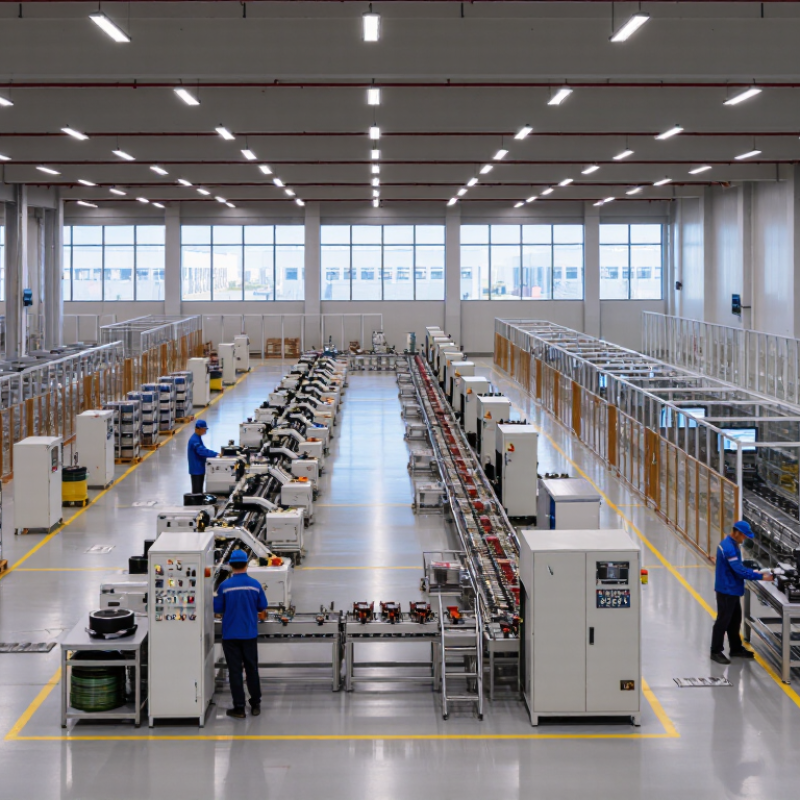
Defining High-Volume Manufacturing in China
Defining High-Volume Manufacturing in China
High-volume manufacturing is not defined by a single universal output threshold. In practice, it means producing large quantities of repeatable products on stable schedules, with controlled costs and consistent quality. A busy factory is not automatically a high-volume operation. Look at annual unit output, production-line cycle time, equipment utilization, defect rates, and the ability to repeat runs without major delays. A line assembling thousands of identical components each shift is a clearer example than a plant handling many small, customized orders.
China’s scale makes the distinction important. UNIDO’s International Yearbook of Industrial Statistics 2024 estimates that China generated about 31.8% of global manufacturing value added in 2022. The National Bureau of Statistics of China reported that manufacturing value added among industrial enterprises above designated size grew 5.0% in 2023. These figures describe the sector’s scale and growth, not the volume of every individual factory. That boundary is not always neat. A plant may run high volumes for several months, then slow when demand shifts or materials arrive late. Buyers should therefore ask for production capacity, recent output, yield, and lead-time records, rather than relying on a headline capacity figure alone. Even good data can miss a rough week.
Top 10 High Volume Manufacturing Companies in China - Defining High-Volume Manufacturing in China
To avoid presenting sector totals as company-level results, this table uses anonymized manufacturing segments and publicly reported China-wide production figures for 2023. The figures provide scale context; they are not a ranking of individual companies.
| No. | Anonymized Manufacturing Segment | 2023 China-Wide Production | Unit | High-Volume Indicator | Source |
|---|---|---|---|---|---|
| 01 | Steel manufacturing | Approximately 1,019 million | Tonnes of crude steel | Continuous, large-scale primary metal production | National Bureau of Statistics of China (NBS), 2023 |
| 02 | Cement manufacturing | Approximately 2,023 million | Tonnes of cement | High-throughput production for construction supply chains | NBS, 2023 |
| 03 | Motor vehicle manufacturing | Approximately 30.16 million | Vehicles | Large-scale assembly and component networks | NBS, 2023 |
| 04 | Solar cell manufacturing | Approximately 541.3 million | Kilowatts of solar cells | High-volume production for photovoltaic supply chains | NBS, 2023 |
| 05 | Smartphone manufacturing | Approximately 1.14 billion | Units | Mass assembly with extensive electronics sourcing | NBS, 2023 |
| 06 | Integrated circuit manufacturing | Approximately 351.4 billion | Pieces | High-volume production of semiconductor components | NBS, 2023 |
| 07 | Microcomputer equipment manufacturing | Approximately 330 million | Units | Repeatable electronics assembly at substantial scale | NBS, 2023 |
| 08 | Industrial robot manufacturing | Approximately 430,000 | Sets | Scaled production of factory automation equipment | NBS, 2023 |
| 09 | Lithium-ion battery manufacturing | More than 940 | Gigawatt-hours | Large-scale cell production for multiple end markets | Ministry of Industry and Information Technology (MIIT), 2023 |
| 10 | Shipbuilding | Approximately 42.32 million | Deadweight tonnes of completed ships | Large-scale vessel construction and delivery capacity | MIIT, 2023 |
Note: These are national sector output figures, not individual-factory or company production figures. Units differ by industry and should not be compared directly.
Related Posts
-
Top 10 High Volume Manufacturing Suppliers for Buyers?
-
China Top Plastic Molding Technology Manufacturers
-

Top 10 Trends in Plastic Product Design You Need to Know?
-

Why Are Sustainable Plastic Solutions Important for Buyers?
-
Top Plastic Automation Systems for Streamlined Manufacturing Processes?
-
Which Are the Top Eco Friendly Packaging Suppliers in China?