Skip to contentChoosing a supplier for eco friendly packaging takes more than comparing prices or attractive product photographs. Buyers need to examine materials, manufacturing consistency, documentation, and realistic end-of-life options. In China, suppliers may offer paper mailers, molded pulp inserts, recyclable films, and reusable formats. The right choice depends on the product, shipping conditions, and local waste systems.
The scale of the problem is clear. UNEP’s 2023 report, Turning off the Tap, estimates that packaging accounts for 36% of plastics produced worldwide. The OECD’s Global Plastics Outlook (2022) reports 353 million tonnes of plastic waste generated globally in 2019. Only 9% was recycled. That matters. These figures do not prove that one material is always better; they show why specific, verifiable claims matter.
This guide examines leading Chinese suppliers through practical buyer questions: What materials do they offer? Can they provide current, product-specific test reports and traceability documents? Do samples protect goods during real transit, not just in a showroom? Buyers should also check whether certificates apply to the exact product and intended disposal route. A compostable package, for example, may require industrial facilities that customers cannot access. Not every green claim holds up. Supplier rankings can help narrow the field, but they cannot replace independent checks, clear specifications, and honest scrutiny of trade-offs.
In China, eco-friendly packaging means more than using paper or adding a green label. Buyers should assess material origin, weight, reuse potential, and whether local recycling systems can actually process the package. The United Nations Environment Programme’s 2023 report, Turning off the Tap, estimates that packaging accounts for 36% of all plastic produced globally. A large share is discarded after one use. The scale is sobering.
For suppliers, practical evidence matters: request material specifications, recycled-content documentation, and test results for strength, moisture resistance, and food-contact suitability where relevant. Check whether mixed materials, inks, coatings, or glued layers hinder sorting. A package may be technically recyclable but rarely collected in its destination city. That gap is easy to overlook. Compare the full shipping unit, too; thinner packaging that causes product damage may increase total waste.
Tips: Ask for a sample and a written material breakdown. Confirm local collection options before approving a “recyclable” claim. Then test the package through real handling and transit—not just a showroom display.
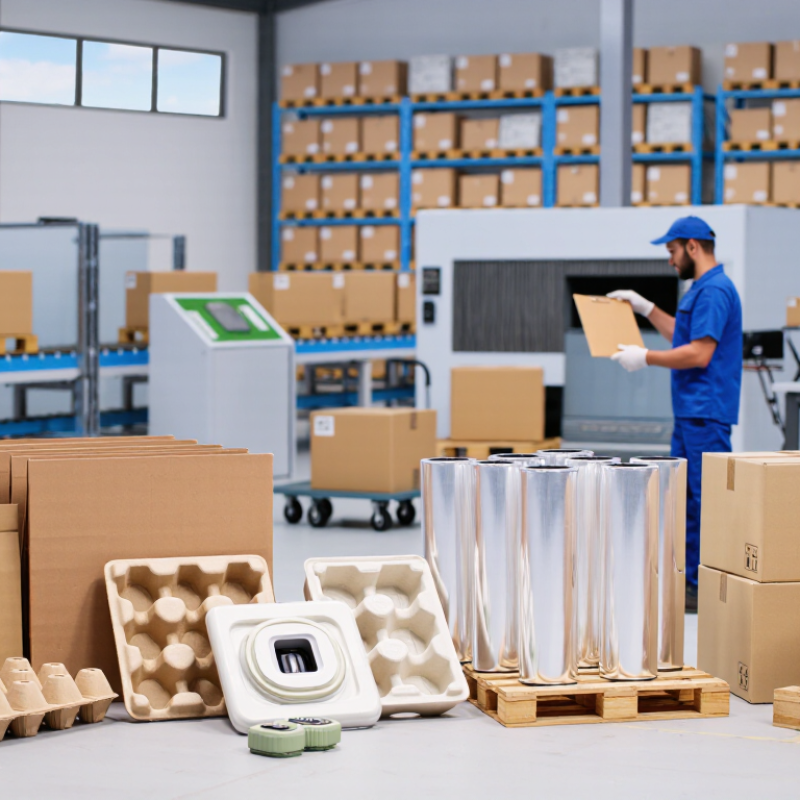
Chinese suppliers offer several lower-impact packaging materials, each suited to different products. Recycled paper and kraft board work well for cartons, sleeves, and shipping boxes. Molded pulp, often shaped into protective trays, can replace foam inserts for fragile goods. Bagasse fiber is used for food containers, while recycled PET and other recycled plastics suit products needing moisture resistance. Material choice matters.
The OECD’s 2022 Global Plastics Outlook identifies packaging as the largest source of plastic waste, accounting for about 40% in 2019. This helps explain interest in paper-based and recycled options, but neither is automatically sustainable. Coatings, inks, mixed-material layers, and local recycling access affect whether a package can actually be recovered. Compostable materials, including some plant-based plastics, also need suitable processing facilities; they may not break down effectively in ordinary waste systems.
Tip: Ask suppliers for the material composition, recycled-content evidence, and test reports for the finished package. Request a sample, then check its seams, coating, and fit with your product. A thinner carton may reduce material use, but it can also arrive damaged. That trade-off deserves testing.
Identifying leading eco-friendly packaging suppliers in China starts with evidence, not broad sustainability claims. Ask for the exact material composition, recycled content, and disposal conditions for each product. Numbers matter. A paper pouch may look greener, yet coatings or mixed layers can complicate recycling. Request technical data sheets and test reports, then confirm that they match the sample and intended use.
Reliable suppliers explain how they control quality across production runs. Ask about incoming-material checks, printing processes, defect rates, and lead times. Request a sample with the same structure and finish as the planned order. Ask for evidence. Certifications can help, but verify the issuing body, product scope, and validity rather than relying on a logo in a brochure. A factory audit or clear production records can provide useful context.
Also examine how the supplier handles waste, energy use, and packaging during shipment. Specific records are more useful than vague promises. Compare answers from several suppliers using the same questions. One limitation remains: a polished sample does not guarantee consistent bulk production. I would treat missing data as a reason to investigate further, not automatic proof of poor performance. Eco-friendly choices depend on the product, local disposal options, and the full packaging design.
How Are Leading Eco-Friendly Packaging Suppliers Identified?
This illustrative 100-point screening model prioritizes regulatory compliance, traceable materials, and recyclability. Verify claims against relevant documentation, such as applicable Chinese GB/T standards, ISO 14001 environmental management certification, and chain-of-custody records for certified paper. The weights are a proposed evaluation framework, not survey results or supplier rankings.
Chinese suppliers specializing in eco-friendly packaging often focus on a few material groups rather than every format. Some make molded-pulp trays from recovered paper for electronics, cosmetics, or food delivery. Others produce folding cartons, paper mailers, and recycled-fiber cushioning. Bagasse products are common for takeaway containers. Some manufacturers also develop compostable films or bio-based bags. Capabilities vary widely.
For buyers, the useful distinction is not “green” versus “ordinary,” but material, use, and disposal route. Ask for the exact fiber or resin composition, recycled-content percentage, and test reports for the finished item. Request samples and check them after moisture, stacking, and transit tests. A paper box may look sturdy on a desk, then soften in a damp warehouse. No format is perfect; lighter packaging can reduce shipping weight but may need extra protection.
Tips: Share product dimensions, packing speed, storage conditions, and destination waste systems before requesting quotes. Compare unit cost, damage rates, and minimum order quantities—not claims alone. Check that test reports match the supplied specification.
The table compares supplier specializations and packaging materials commonly available from manufacturers in China. It is a category guide, not a ranked list or a claim that every supplier offers every option.
| Supplier specialization | Common packaging products | Typical material | Suitable applications | Environmental considerations | What buyers should verify |
|---|---|---|---|---|---|
| Molded-pulp packaging manufacturers | Protective inserts, trays, egg cartons, and transit packaging | Recycled paper pulp or other plant-fiber pulp | Electronics protection, household goods, food-service items, and shipping protection | Fiber-based products can be recyclable where local collection and processing systems accept them. Coatings and food residues may affect recyclability. | Fiber source, recycled content, product strength, food-contact compliance where relevant, and local recycling guidance |
| Paper packaging converters | Paper bags, cartons, folding boxes, and corrugated shipping boxes | Paperboard, kraft paper, and corrugated fiberboard | Retail packaging, e-commerce, food takeout, and consumer-product boxes | Paper packaging is generally easier to recycle when it is clean and not combined with difficult-to-separate materials. Plastic films, laminates, and some coatings can limit recycling. | Paper sourcing documentation, recycled-fiber content, coating and lamination details, print finishes, and packaging recyclability in the destination market |
| Bagasse and agricultural-fiber packaging producers | Plates, bowls, trays, and food containers | Sugarcane bagasse or other agricultural fibers | Food service, catering, and takeaway meals | Composting suitability depends on the complete product, including coatings and additives, as well as the availability of an appropriate local composting facility. | Food-contact test reports, heat and moisture performance, coating composition, and evidence supporting any compostability claims |
| Flexible-packaging film manufacturers | Pouches, bags, wraps, and protective film packaging | Plastic films, including recyclable mono-material structures where specified | Snacks, dry foods, personal-care products, and consumer goods | Mono-material designs can be more compatible with some recycling streams than multi-material laminates, but actual recyclability depends on local collection and sorting systems. | Full layer structure, material identification, barrier performance, recyclability evidence for the target market, and migration testing for food packaging |
| Compostable-material packaging manufacturers | Compostable bags, liners, films, and food-service packaging | Materials may include PLA or certified compostable blends | Selected food-service, organic-waste collection, and bag applications | Compostable does not mean suitable for home composting or ordinary recycling. PLA products commonly require industrial composting conditions, and local facilities may not accept them. | Applicable certification and test scope, industrial versus home compostability, product composition, and acceptance by the intended waste-management system |
| Reusable packaging manufacturers | Reusable bags, containers, and transport packaging | Textiles, durable plastics, or other reusable materials | Retail shopping, closed-loop delivery, and repeated-use distribution systems | Environmental benefits depend on repeated use, product lifetime, washing or return logistics, and end-of-life handling. | Durability, intended number of reuse cycles, cleaning requirements, material disclosure, and return or take-back arrangements |
Choosing an eco-friendly packaging supplier in China starts with the product, not the label. Define the required barrier, weight, dimensions, shipping conditions, and disposal route. OECD’s Global Plastics Outlook (2022) estimates that packaging creates about 40% of global plastic waste. The scale matters. But replacing plastic with paper is not automatically better; material weight, coatings, and local recycling access also affect impact.
Compare suppliers using the same specification and request material composition, test results, and written claims. Ask for relevant certifications, such as chain-of-custody documentation for paper, and verify certificates with the issuing body. Request samples, then test seal strength, leakage, stacking, and performance after transit. A neat sample is not enough. Check minimum order quantities, lead times, defect handling, and whether the factory can trace materials by batch. UNEP’s 2023 report notes that packaging uses roughly 36% of plastics produced globally, making credible material data especially important.
For shortlisted factories, compare total delivered cost and environmental evidence side by side. Ask how rejected packaging and production scraps are handled, and whether claimed recyclability matches the markets where your customers live. A supplier may provide impressive documents yet struggle with consistent production. Visit the site or arrange an independent audit when volumes justify it. Keep the evaluation practical—and revisit assumptions when real-world shipping results arrive.