Skip to contentGlobal sourcing is reshaping how companies evaluate injection molded products. Demand spans automotive clips, medical housings, food containers, electronic enclosures, and household components. Each product reflects a different balance of volume, tolerances, material choice, tooling cost, and compliance requirements.
PlasticsEurope reported 413.8 million tonnes of global plastics production in 2023. That scale explains why molded components remain central to modern manufacturing. Fortune Business Insights estimated the global injection molding machine market at approximately US$12.68 billion in 2023. The same report projects continued growth through 2030. These figures suggest strong industrial capacity, but they do not guarantee dependable suppliers. A factory may quote quickly, yet struggle with mold maintenance, dimensional control, or resin traceability.
Details matter.
This guide examines ten widely sourced product categories and the practical reasons behind their popularity. The selection considers repeatability, shipping efficiency, tooling economics, regulatory exposure, and potential for design customization. ISO 9001 quality systems, ISO 20457 mold acceptance principles, first-article inspection, and documented material certificates can support more reliable purchasing decisions. For medical and food-contact applications, buyers must also verify the relevant regional requirements rather than relying on generic claims.
The ranking is not absolute. Product demand changes by region, season, and industry cycle. Public market reports also use different definitions, which makes direct comparisons imperfect. That limitation deserves attention. A low unit price may hide expensive tooling revisions, high scrap rates, or difficult inspections. Effective global sourcing therefore begins with evidence: validated samples, clear drawings, measurable tolerances, and transparent production records.
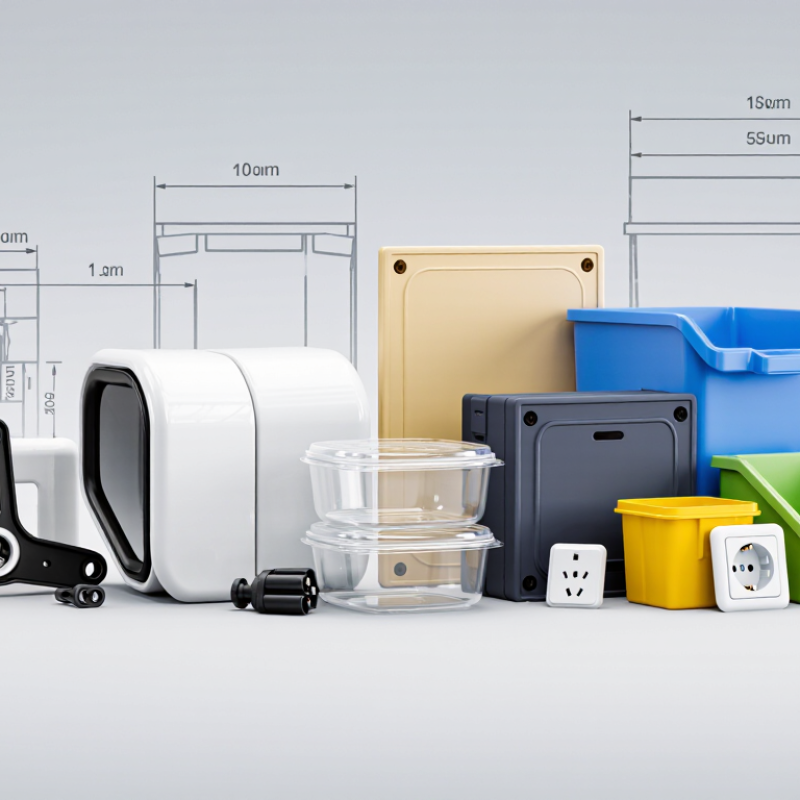
Injection molding gives global sourcing teams a practical way to produce repeatable plastic parts. Its scope includes housings, caps, trays, appliance panels, and industrial fittings. It serves consumer goods, electronics, packaging, and many equipment sectors. Steel molds support high volumes. Aluminum tooling can suit shorter runs and faster revisions. From sourcing experience, design decisions often matter more than factory location. Wall thickness, draft angles, resin choice, and gate placement affect cost and defect rates. Small details matter.
Key advantages include lower unit costs, stable dimensions, and consistent surface finishes. Global sourcing also allows buyers to compare capacity, tooling skills, material access, and quality systems. However, a lower piece price can hide mold maintenance, freight, duties, inspection, and correction costs. A quotation is not proof of value. Even experienced teams miss secondary expenses. I have seen projects change after testing revealed warpage near thin corners. That kind of lesson deserves attention, not blame. Injection molding works best when engineering and purchasing review the part together.
Tips: Request a detailed tooling quote. Confirm resin grades and color standards. Ask for a dimensional inspection plan. Review first samples before mass production. Keep realistic tolerances. Overly tight specifications may increase cost without improving performance. Also, discuss mold ownership, maintenance, storage, and revision responsibilities in writing. A clear record protects both sides.
When evaluating injection molded products for international purchasing, begin with the product’s real operating conditions. Common candidates include storage bins, bottle caps, cable clips, appliance housings, tool handles, furniture fittings, trays, interior clips, food containers, and pump components. Check resin performance, wall thickness, shrinkage, surface finish, and expected service life. A low unit price means little if the part warps during shipping or breaks during assembly.
Request a detailed drawing, material specification, tolerance chart, and mold maintenance plan. Ask for evidence. A reliable supplier should provide trial samples, dimensional reports, and production photos without avoiding difficult questions. Inspect key areas with calipers, gauges, and simple fit tests. For overseas purchasing, also review packaging strength, carton dimensions, labeling requirements, and applicable product regulations in the destination market.
My early mistake was approving a smooth sample too quickly. The first production batch showed sink marks near a thick rib. That problem taught me to inspect hidden surfaces and review the mold flow before signing a large order. Cost comparisons should include tooling, freight, inspection, rework, and replacement risks. Communication can still fail, even with clear documents. Use controlled revisions, written approval points, and a small pilot shipment before scaling. Test more than appearance.
Global sourcing teams commonly purchase ten injection molded product groups: automotive clips, interior panels, electrical housings, medical device components, food containers, closures, appliance parts, construction fittings, reusable crates, and consumer product casings. These parts serve different markets, yet share strict requirements for repeatability, cycle time, and material control.
Grand View Research’s Injection Molded Plastics Market Report 2024 projects steady market growth through 2030, supported by automotive, healthcare, packaging, and electronics demand. Packaging remains especially important because molded containers and caps require high-volume production and consistent sealing performance.
Medical components demand tighter validation. Small errors can affect fit, sterility, or patient safety. Electrical housings need flame resistance and stable dimensions. Construction fittings require pressure resistance, while automotive clips must survive vibration and temperature changes.
Reusable crates and pallets also need impact strength after repeated handling. Some are overlooked. They still influence total sourcing cost.
Material selection needs practical evidence, not attractive supplier claims. The OECD Global Plastics Outlook reported 353 million tonnes of plastic waste in 2019, with only 9% recycled. That figure should challenge purchasing decisions.
Recycled content, part weight, mold life, and scrap recovery deserve equal review. UNEP’s 2023 report also identified major opportunities to reduce plastic pollution by 2040.
A ranking is imperfect. Regional regulations, testing capacity, tooling support, and quality records can change the best choice for each sector.
Global sourcing of injection molded products demands more than a low unit price. Material choice affects strength, shrinkage, surface finish, and recycling options. The PlasticsEurope 2024 report recorded 413.8 million tonnes of global plastics production in 2023. This scale makes responsible resin selection increasingly important.
For housings, clips, medical accessories, and storage parts, engineers should match polymers to real loading conditions. Polypropylene suits lightweight components, while ABS offers better impact resistance and appearance. Glass-filled nylon improves stiffness but can increase tool wear and visible flow marks. Small details matter. Mold steel, cooling channels, gate location, and draft angles directly influence cycle time and defects. A supplier should provide mold-flow evidence, resin certificates, and first-article samples before mass production.
Quality standards also need practical definition. ISO 9001 supports controlled processes, but it does not guarantee perfect parts. ISO 20457 provides guidance for injection-molded plastic tolerances, helping buyers separate critical dimensions from cosmetic preferences. The ISO Survey 2023 reported more than 1.2 million ISO 9001 certificates worldwide, yet certification alone cannot replace factory audits. Inspect cavity balance, measurement equipment, corrective-action records, and packaging trials. I have seen projects fail after approval because cartons crushed thin walls during transport. This is easy to miss. Sampling plans should reflect risk, production volume, and the cost of a field failure. Recycled content may reduce environmental impact, but it can also change color, viscosity, and shrinkage; validate it through controlled trials rather than assumptions.
| No. | Product Category | Typical Materials | Recommended Tooling | Critical Quality Requirements | Relevant Standards or Tests | Typical Production Range | Production Considerations |
|---|---|---|---|---|---|---|---|
| 1 | Thin-Wall Food Containers | Food-contact polypropylene (PP); high-density polyethylene (HDPE) for selected designs | Multi-cavity hardened steel mold; hot runner preferred for high-volume production; balanced cavity layout | Uniform wall thickness, leak resistance, stackability, low warpage, clean gate vestige, consistent dimensions | Food-contact regulations applicable to the destination market; ISO 294 for molding conditions; ISO 527 for tensile properties; leak testing | Wall thickness: approximately 0.6–1.5 mm; cycle time: about 8–30 seconds; high-volume runs | Material drying and contamination control are important. Use consistent regrind limits and validate sealing, stacking, and drop performance. |
| 2 | Bottle Closures and Caps | HDPE, PP, or impact-modified PP; elastomer liners or seals where required | High-cavity precision mold with interchangeable inserts; thread-forming tooling; hot runner for large volumes | Thread accuracy, torque performance, tamper evidence, sealing reliability, concentricity, absence of flash | ISO 11607 where used for sterile packaging; ASTM D2063 or equivalent torque testing; leak and pressure testing | Cycle time: about 5–20 seconds; multi-cavity tooling commonly used; tight thread tolerances required | Validate cap-to-container compatibility, application torque, removal torque, seal compression, and material shrinkage. |
| 3 | Consumer Electronics Housings | ABS, PC/ABS, polycarbonate (PC), or glass-filled PC for structural components | Polished or textured steel mold; interchangeable cosmetic inserts; slides or lifters for undercuts | Surface texture consistency, color match, dimensional fit, snap-fit function, low sink marks, controlled parting lines | ISO 291 for conditioning; ISO 527 for mechanical properties; ISO 4892 for selected weathering tests; visual master samples | Wall thickness: approximately 1.5–3.0 mm; cycle time: about 20–60 seconds | Control mold temperature, gate location, weld lines, gloss, and color variation. Validate assembly with mating components. |
| 4 | Automotive Interior Trim Parts | PP, talc-filled PP, thermoplastic olefin (TPO), ABS, or PC/ABS | Large steel mold with textured cavities; hot runner; slides, lifters, or gas-assist features for complex geometry | Grain and color uniformity, dimensional stability, low odor, low emissions, scratch resistance, assembly fit | Automotive-specific customer specifications; ISO 6452 for fogging where applicable; odor and VOC testing; dimensional inspection | Part size: commonly 100–1,000 g; cycle time: about 30–90 seconds | Design for uniform shrinkage and stable clips. Conduct heat aging, abrasion, UV exposure, and low-temperature impact testing. |
| 5 | Electrical Connectors and Terminal Housings | Glass-filled PA66, PBT, PC, or high-temperature engineering thermoplastics | Precision multi-cavity mold with hardened inserts; fine venting; hot runner or cold runner based on resin and geometry | Terminal retention, dimensional accuracy, dielectric strength, insulation resistance, flash control, latch durability | IEC 60664 for insulation coordination; IEC 60512 for connector testing; UL 94 flammability classification where required | Small parts: approximately 0.5–20 g; cycle time: about 10–40 seconds; moisture control essential for PA | Use resin drying records, cavity-pressure monitoring where available, and 100% checks for critical locking or polarization features. |
| 6 | Medical Device Housings and Components | Medical-grade PC, ABS, PP, PE, POM, or transparent copolyester selected for the application | Polished stainless or hardened steel mold; validated tooling; cleanroom-compatible construction for controlled production | Biocompatibility suitability, particulate control, dimensional repeatability, sealing, transparency, sterilization compatibility | ISO 13485 quality system; ISO 10993 biological evaluation where applicable; ISO 11607 packaging; ISO 14971 risk management | Cycle time: about 15–90 seconds; traceability and process validation typically required | Define resin lot control, mold-cleaning procedures, sampling plans, change control, and documented process qualification before mass production. |
| 7 | Appliance Knobs, Bezels, and Control Panels | ABS, PC/ABS, PP, PBT, or glass-filled nylon for heat-exposed components | Textured or polished steel mold; replaceable cosmetic inserts; cores for shafts, bores, and mounting features | Actuation force, shaft fit, marking alignment, surface finish, heat resistance, color stability, and low warpage | IEC 60335 safety requirements for applicable appliances; ISO 527; ISO 178 flexural testing; visual and functional inspection | Cycle time: about 15–60 seconds; common tolerance range: approximately ±0.10–0.25 mm depending on size | Test repeated actuation, heat aging, chemical exposure, and cleaning-agent resistance. Protect cosmetic surfaces during packing. |
| 8 | Reusable Crates and Storage Bins | HDPE or impact-modified PP; UV-stabilized grades for outdoor or extended-use applications | Large single- or multi-cavity mold; hardened steel; replaceable wear inserts; hot runner or valve gate for large parts | Load capacity, nesting or stacking accuracy, impact resistance, flatness, handle strength, and dimensional stability | ISO 8611 for pallets where applicable; ISO 2248 drop testing; ASTM D4169 distribution testing; compression testing | Part weight: approximately 0.3–8 kg; cycle time: about 30–180 seconds | Balance cooling and wall thickness to limit warpage. Specify allowable recycled content and verify performance after repeated use. |
| 9 | Precision Gears and Mechanical Components | Acetal (POM), glass-filled nylon, PA46, PBT, or other wear-resistant engineering polymers | High-precision hardened mold; cavity and core inserts; controlled venting; optimized gate location to reduce tooth distortion | Tooth profile, concentricity, backlash, wear rate, dimensional stability, noise, and resistance to fatigue | ISO 1328 for gear accuracy where applicable; ISO 527; ISO 178; torque, wear, fatigue, and dimensional testing | Typical diameter: approximately 5–150 mm; cycle time: about 15–60 seconds | Account for moisture absorption, molding shrinkage, operating temperature, lubrication, and fiber orientation in the design review. |
| 10 | Personal-Care and Household Product Components | PP, HDPE, LDPE, ABS, PET-compatible components, or elastomer overmolding materials | Multi-cavity mold with hot runner; unscrewing cores for threaded parts; two-shot tooling for soft-touch or sealing features | Chemical resistance, sealing, pump or hinge function, appearance, color consistency, odor control, and consumer-safe edges | ISO 175 chemical-resistance testing where applicable; ISO 4892 for UV exposure; leak, hinge-cycle, torque, and compatibility tests | Cycle time: about 8–60 seconds; cavity count selected according to annual demand and part complexity | Test exposure to oils, alcohols, surfactants, fragrances, and cleaning agents. Confirm packaging protection for cosmetic surfaces. |
Global sourcing of injection molded products begins with supplier selection, not the lowest quotation. I review mold design capability, resin traceability, dimensional control, and documented process changes. A supplier should provide sample parts, inspection records, and a realistic production schedule. Ask how they manage warpage after cooling. Ask who approves tooling revisions. Factory visits can reveal practical details: clean resin storage, labeled gauges, and operators checking first-off parts. Certifications help, but they do not replace evidence from the production floor. A supplier may look strong on paper and still communicate poorly.
Cost analysis must separate tooling, unit price, packaging, inspection, freight, duties, and payment terms. Compare prices at the same annual volume and quality level. A cheap mold with a short life may create expensive interruptions. For a small housing, a two-cavity tool may cost more initially but reduce cycle time. Request a costed bill of materials. Include regrind limits and scrap assumptions. Small details matter. I would also model exchange-rate movement and expedited freight. These estimates are imperfect, especially when forecasts change. That weakness should be visible, not hidden.
Logistics planning starts before approval. Confirm carton dimensions, pallet patterns, port options, and lead times for molded parts and replacement inserts. Keep tooling ownership and maintenance terms in writing. Use milestone inspections: design review, trial run, pre-shipment, and arrival checks. Dual sourcing can reduce disruption, but splitting volume may weaken both suppliers’ learning curves. Risk registers should cover resin shortages, power interruptions, tooling damage, customs delays, and rejected batches. Define corrective-action deadlines. Build safety stock when demand is uncertain. Sea freight is not always cheapest. Six weeks of waiting can change the calculation.