Skip to contentChoosing a plastic part manufacturing supplier in 2026 requires more than comparing unit prices. The cheapest quote can hide weak tooling support, unstable cycle times, or costly rework. A better decision begins with evidence. Review the supplier’s experience with similar resins, part sizes, tolerances, and annual volumes. Ask for sample parts, inspection reports, and clear process records. Small details matter. Look closely at flash, sink marks, weld lines, and surface consistency.
Robert A. Malloy, author of Plastic Part Design for Injection Molding, offers a valuable principle: “The design of a plastic part is not complete until the part can be manufactured economically.” This idea should guide every supplier discussion. A capable partner will question wall thickness, draft angles, gate locations, cooling design, and material selection before production begins. They should explain trade-offs clearly, not simply promise fast delivery. Strong suppliers also provide traceability, preventive maintenance records, qualified operators, and reliable corrective-action procedures.
Still, no supplier scorecard is perfect. A polished factory tour proves little without production evidence. A large machine park may not guarantee careful process control. Buyers should audit the facility, verify certifications, examine first-article results, and speak with current customers when possible. Consider communication, engineering responsiveness, tooling ownership, capacity during peak demand, and long-term material availability. Sustainability deserves attention too, including recycled content, energy use, and waste handling.
The right choice is rarely the supplier with the lowest initial price. It is the partner that can repeatedly deliver functional parts, documented quality, and practical engineering support. That judgment takes time. Rushing it can be expensive.
Choosing a plastic part supplier in 2026 should begin with a precise technical definition, not a price request. ISO 20457:2018 establishes tolerance classes for moulded plastic parts and separates production capability from drawing requirements. State the tolerance class, datum structure, shrinkage direction, and critical dimensions.
A 0.2 mm hole may need a post-moulding operation. Do not assume every supplier can hold it directly from the tool.
Material standards must be equally specific. Identify the polymer family, grade requirements, reinforcement percentage, color limits, flame rating, and testing method. ISO 1043 supports consistent material terminology, while ISO 527 defines tensile testing conditions.
Plastics—The Facts 2023 reported 400.3 million tonnes of global plastics production in 2022, showing the scale of material diversity and supply risk. That number is useful context, but it does not replace a verified material certificate.
Small substitutions can change warpage, impact strength, and surface appearance.
Ask suppliers for capability studies using actual production parts, not only sample plaques. Check Cpk data, first-article inspection records, moisture controls, and traceability from resin lot to finished component.
A supplier may quote ISO 20457 M tolerance, yet deliver tighter dimensions only under favorable conditions. That difference matters.
I have seen teams over-specify every feature, increasing tooling cost without improving function. Reconsider the drawing. Mark functional dimensions tightly, and leave noncritical surfaces practical freedom.
Supplier audits should also review measurement equipment, operator training, and corrective-action history. Contented paperwork is not proof.
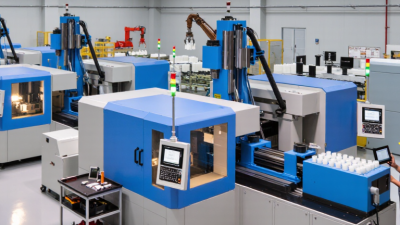
Choosing a plastic part manufacturing supplier in 2026 requires more than comparing hourly prices. Capacity and lead time should be tested against real market conditions. Published 2024 industry data estimated global plastics production at about 430.9 million tonnes, increasing from the previous year. This large output does not guarantee fast service. A supplier may operate busy injection molding lines, limited tooling teams, or restricted resin storage. Ask for monthly machine capacity, utilization rates, mold-building capacity, and recent delivery performance. Numbers need evidence.
Lead times should be separated into tooling, sampling, validation, and mass production. For example, a supplier may quote 20 days for molding, while tooling takes another 35 days. Request a production schedule with inspection points and shipment dates. Check whether the quoted capacity matches your part size, resin type, tolerance, and annual volume. A factory producing millions of simple housings may struggle with a small batch requiring tight dimensions. I have seen schedules fail because cooling time was treated as a minor detail. It is not.
Tips: Compare at least three suppliers using the same drawing, resin grade, forecast, and quality standard. Ask for capacity records from the previous twelve months. Confirm backup machines, maintenance plans, and qualified operators. Build a small pilot order before committing to full production. Also ask what happens during demand spikes. A supplier’s confident answer is useful, but documented recovery experience is better. Be cautious with unusually short lead times; they may hide overtime, subcontracting, or incomplete testing. Forecasts are never perfect, and your own volume estimate may need revision.
When choosing a plastic part supplier in 2026, audit evidence, not polished presentations, should lead the decision. The ISO Survey 2022 recorded more than 1.26 million ISO 9001 certificates worldwide. Certification shows a quality system exists, but it does not prove stable molding performance. Ask for the current certificate, scope, audit findings, corrective-action closure rates, and process-control records. Check whether the certificate covers the exact plant producing your parts.
For automotive work, verify IATF 16949 status and review recent customer-specific requirements. Request a complete PPAP sample, including dimensional results, material certificates, capability studies, control plans, and change records. AIAG’s PPAP guidance emphasizes objective evidence before production approval. Do not accept a signature alone. Compare the supplier’s last 12 months of supplier PPM data with shipment volumes, rejected lots, and escape incidents. A low PPM number can mislead when inspection is weak or returns are excluded. Trace three reported defects back to containment, root-cause analysis, and verified corrective action. Industry quality benchmarking often uses 50–100 PPM targets for mature suppliers, but the correct limit depends on risk, geometry, and end use. That part needs judgment. Audit the measurement system, too. A beautiful dashboard may hide unstable gauges, rushed sampling, or unrecorded rework.
PlasticsEurope’s Plastics – the Facts 2024 reported a European plastics circularity rate of about 13.5% in 2022. The figure combines mechanical recycling, chemical recycling, and renewable feedstocks. Ask suppliers which metric supports their claim.
A factory stating “30% recycled content” may refer only to selected parts, not the complete order. That distinction matters.
The OECD’s Global Plastics Outlook found that only 9% of global plastic waste was ultimately recycled in 2019. The gap remains significant. Suppliers should show monthly material balances, shipment weights, and independent verification. Compare purchased recycled resin with the finished parts shipped. Large unexplained differences deserve questions.
Inspect the factory floor. Look for labeled silos, sealed storage, and separate material flows. Request test reports for melt flow, impact strength, and contamination. Recycled feedstock can vary between batches. A strong supplier admits this risk and explains its controls.
I would not accept a polished certificate alone. Documents can be incomplete, and audits can miss seasonal changes. Recheck key figures annually against recognized circularity definitions and actual production data.
Choosing a plastic part supplier in 2026 requires more than comparing quoted piece prices. Score total cost, tooling risk, and resilience before contract approval. Deloitte’s 2023 Global Chief Procurement Officer Survey found that supply disruption remains a major procurement concern, with 71% of leaders increasing resilience efforts. That concern belongs in the supplier scorecard.
Calculate total cost across tooling, scrap, freight, inspection, maintenance, and change requests. A mold quoted at $42,000 may need hardened inserts, spare components, or annual refurbishment. Request cavity layouts, steel certificates, trial-shot records, and ownership terms.
Confirm who pays when dimensions fail after 10,000 cycles. Small details matter. They become expensive.
Resilience needs measurable evidence, not confident promises.
Review capacity by machine, backup production sites, raw-material inventories, and recovery targets. The Business Continuity Institute’s 2023 Supply Chain Resilience Report identified supply chain disruption as the leading cause of organizational interruption, affecting 61% of surveyed organizations. Ask for recent delivery performance and corrective-action records. Do not accept “two-week recovery” without a documented test.
A supplier with three qualified molders may outperform one large factory with a single bottleneck.
My own scoring can still be imperfect; weighted models often hide assumptions about demand, exchange rates, and transport delays. Recheck those assumptions with production, quality, and finance teams before signing.