Skip to contentChoosing a China top plastic engineering solutions supplier requires more than comparing factory prices. It demands evidence of engineering depth, manufacturing control, and dependable communication. A capable supplier should understand material behavior, mold-flow risks, tolerance limits, cooling design, and production scalability. These details matter when a small sink mark appears beside a visible housing panel.
Dr. John Beaumont, a recognized injection-molding expert, has stated, “The mold is the heart of the injection molding process.” His observation remains practical today. A strong supplier connects mold design with resin selection, part geometry, process validation, and long-term maintenance. Look for documented testing, experienced engineers, inspection equipment, and traceable quality records. Ask how the team handles warpage, short shots, weld lines, and unexpected material variation. Good answers should include data, not confident promises.
Experience also reveals uncomfortable truths. No supplier is perfect. Even an advanced facility can face tooling delays, communication gaps, or inconsistent cosmetic expectations. That is why a responsible evaluation should include prototype reviews, dimensional reports, pilot runs, and clear corrective-action procedures. Factory photographs are useful, but they prove little alone. Better evidence comes from repeatable results.
The strongest plastic engineering solutions supplier is not always the largest company. It is the partner that explains limitations clearly and improves designs before expensive production begins. This article examines China-based suppliers through that practical lens. It considers engineering capability, material knowledge, quality systems, customization, delivery reliability, and after-sales support. The goal is not to promote a convenient claim. It is to help buyers make a careful, evidence-based decision.

China Top Plastic Engineering Solutions Supplier?
Definition of Plastic Engineering Solutions
Plastic engineering solutions are integrated methods for designing, producing, testing, and improving plastic components. They cover material selection, mold flow analysis, tooling, process control, surface finishing, and performance validation. The goal is not simply to make plastic parts. It is to achieve stable dimensions, safe function, efficient production, and responsible material use. The OECD Global Plastics Outlook (2022) reported that global plastic waste reached 353 million tonnes in 2019. Only 9% was recycled. This figure makes design decisions more important. A recyclable structure may still fail when additives, coatings, or mixed materials complicate recovery. The definition remains incomplete without end-of-life planning.
Tips: Check heat, chemical, impact, and moisture conditions before choosing a resin. Request mold-flow results and dimensional tolerance records. Test parts under real service temperatures. A design can pass a factory test and still fail in a cold warehouse. It happens.
Reliable engineering also depends on documented experience. ISO 20457 provides guidance for molded plastic parts, including tolerances and manufacturing considerations. However, standards cannot replace practical judgment. Engineers should compare laboratory results with production data, inspection records, and field feedback. The Ellen MacArthur Foundation’s circular economy research also emphasizes designing products for reuse, repair, and recycling. That principle sounds simple, but it often conflicts with low-cost tooling or short delivery targets. Better solutions balance performance, manufacturability, compliance, and future recovery.
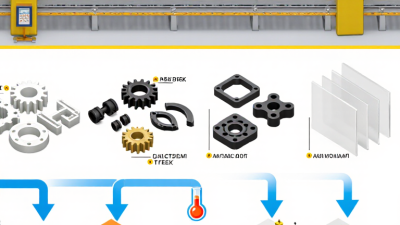
Engineering plastic solutions combine material selection, part design, processing, tooling, and quality control to meet specific performance requirements.
The chart compares representative tensile-strength values for commonly used unfilled engineering plastics. Actual performance depends on grade, additives, moisture content, temperature, processing conditions, and test method.
China’s leading plastic engineering suppliers provide more than production capacity. They support material selection, product design, mold engineering, prototyping, and volume manufacturing. Experienced teams review wall thickness, draft angles, shrinkage, and assembly points before tooling begins. This practical review can prevent expensive mold changes later. Many suppliers also handle injection molding, extrusion, blow molding, and insert molding for different applications. Their engineers may use 3D samples and flow analysis to identify weak areas early.
Quality services often include dimensional inspection, material verification, process monitoring, and functional testing. Reliable suppliers should provide clear inspection records and traceable production data. Some offer surface finishing, pad printing, ultrasonic welding, and secondary assembly. These services reduce coordination between separate vendors. However, claims about “zero defects” deserve careful review. Real production needs measurable tolerances, sampling plans, and documented corrective actions. Even experienced teams can miss a small warpage issue.
Tips: Share detailed drawings, resin requirements, annual volume, and working conditions. Ask for sample reports and tooling ownership terms. Confirm communication schedules before production starts. A factory visit or video audit can reveal cleanliness, equipment condition, and process discipline. Small details matter. Suppliers should also explain how they manage design changes, rejected parts, and after-sales technical support.
A capable plastic engineering supplier begins with material selection, not machinery. Common choices include ABS, nylon, PEEK, polycarbonate, and polypropylene. Each responds differently to heat, moisture, chemicals, and mechanical stress. Engineers should review operating temperatures, load cycles, surface needs, and expected service life. Material certificates and batch traceability improve reliability. Small details matter.
Manufacturing capability should match the component. Injection molding supports repeatable production and complex geometries. CNC machining suits prototypes and tight-tolerance parts. Extrusion creates continuous profiles, while insert molding combines plastic with metal components. A qualified supplier should provide mold-flow analysis, dimensional inspection, and documented process controls. Still, no process is perfect. Early prototypes may reveal warped corners or unexpected shrinkage.
Tips: Request samples before volume production. Check critical dimensions with calibrated tools. Ask how recycled content affects consistency. Confirm testing methods, inspection frequency, and corrective-action procedures. Clear drawings prevent expensive misunderstandings. A practical supplier also discusses design changes honestly, even when the original specification seems workable. Experienced teams learn from failed trials, not just successful deliveries. Supplier audits, engineering reviews, and controlled pilot runs can expose risks before they reach the production floor.
China Top Plastic Engineering Solutions Supplier?
A capable plastic engineering supplier should prove quality through controlled evidence, not polished claims. Look for ISO 9001 certification, with the certificate scope matching the actual factory and production process. Environmental and safety certifications can also reveal operational discipline. Verify validity, issuing bodies, audit dates, and covered locations before approving a supplier.
Technical support should begin before tooling. Engineers can review wall thickness, draft angles, ribs, shrinkage, and material selection during design analysis. Mold-flow studies may identify weld lines or filling pressure risks before trials begin. During production, reliable teams record resin batch numbers, machine settings, first-article results, and dimensional data. CMM reports, visual standards, tensile tests, and impact tests should match the product’s real application. Details matter.
Practical experience appears during difficult moments. Ask how the supplier handled a warped housing, unstable color, or repeated short shots. Strong teams document root causes and corrective actions instead of blaming operators. However, no supplier is flawless. A certificate cannot replace an on-site audit, sample approval, or process observation. Some reports may look complete while missing measurement uncertainty or clear acceptance limits. That gap matters. Request traceability from incoming resin to packed parts, and confirm who provides engineering support after production starts. Good support is responsive, but it should also be technically accountable.
| Evaluation Dimension | Relevant Standard or Requirement | What to Verify | Typical Evidence | Business Value |
|---|---|---|---|---|
| Quality Management System | ISO 9001:2015 | Documented processes for design, purchasing, production, inspection, nonconformity control, and continual improvement. | Valid certificate, certification scope, audit records, corrective-action reports, and process procedures. | Improves process consistency, traceability, and corrective-action discipline. |
| Automotive Quality Capability | IATF 16949:2016, where automotive supply is required | Advanced product quality planning, risk analysis, control plans, measurement-system analysis, and production-part approval capability. | IATF certificate, process-flow diagrams, PFMEA, control plans, capability studies, and PPAP documentation. | Supports demanding automotive supplier qualification and launch programs. |
| Environmental Management | ISO 14001:2015 | Controls for energy use, waste, emissions, chemical handling, and environmental compliance. | Valid certificate, environmental objectives, waste records, and legal-compliance evaluations. | Reduces environmental risk and supports customer sustainability requirements. |
| Material Compliance | RoHS Directive 2011/65/EU and amendments; REACH Regulation (EC) No. 1907/2006 | Restrictions on specified hazardous substances and communication of substances of very high concern where applicable. | Material declarations, supplier declarations, laboratory test reports, and updated substance lists. | Helps products meet electronics and international-market compliance requirements. |
| Flammability Performance | UL 94, including classifications such as HB, V-2, V-1, and V-0 | Burning behavior of plastic specimens under defined laboratory conditions; classification depends on material thickness and test results. | Material designation, thickness-specific test report, technical data sheet, and batch traceability. | Supports fire-performance selection for electrical, electronic, and industrial components. |
| Mechanical Testing | ISO 527 or ASTM D638 for tensile properties; ISO 178 or ASTM D790 for flexural properties | Tensile strength, elongation, flexural strength, and flexural modulus measured using defined specimen and conditioning methods. | Laboratory reports stating material grade, specimen dimensions, conditioning, test speed, and results. | Enables engineering comparison and application-specific material selection. |
| Thermal Performance | ISO 75 or ASTM D648 for heat deflection temperature; ISO 306 or ASTM D1525 for Vicat softening temperature | Temperature-related dimensional and load-bearing behavior under specified test conditions. | Test reports, temperature ratings, application limits, and long-term aging data when available. | Reduces thermal deformation and premature field failure. |
| Dimensional Control | Customer drawing tolerances, GD&T requirements, and applicable ISO GPS practices | Critical dimensions, warpage, sink marks, flash, surface finish, and assembly interfaces. | Inspection plans, calibrated gauges, coordinate-measuring-machine reports, first-article inspection, and capability data. | Improves fit, function, interchangeability, and assembly efficiency. |
| Process Validation | Process qualification based on risk assessment and customer requirements | Validated molding, extrusion, machining, assembly, or finishing parameters for repeatable production. | Process-validation reports, parameter sheets, machine records, control plans, and capability studies. | Reduces variation between production batches and supports stable ramp-up. |
| Engineering and DFM Support | Design-for-manufacturing review based on material and process limitations | Draft angles, wall thickness, ribs, bosses, radii, parting lines, shrinkage, gate locations, and ejection strategy. | DFM feedback, design-review minutes, mold-flow analysis, revised drawings, and prototype evaluation. | Prevents avoidable tooling changes and shortens development cycles. |
| Traceability and Documentation | Lot or batch traceability aligned with customer and regulatory requirements | Raw-material lot, production date, machine or mold identification, inspection results, and shipment records. | Certificates of analysis, inspection reports, production records, retention policy, and change notifications. | Enables faster root-cause analysis, controlled recalls, and audit readiness. |
| Technical Support and After-Sales Service | Defined communication, escalation, and change-control procedures | Response time, engineering contact, sample approval process, nonconformance handling, and engineering-change notification. | Service-level targets, issue logs, 8D reports, corrective-action timelines, and formal change notices. | Improves project coordination and minimizes production interruptions. |
China Top Plastic Engineering Solutions Supplier?
How to Select the Right Chinese Engineering Supplier
Choosing a Chinese engineering supplier requires more than comparing quotations. Examine their experience with your material, tolerances, tooling, and production volume. Ask for evidence. Request sample inspection reports, process flow charts, and photographs of similar assemblies. A capable team should explain shrinkage, warpage, surface finish, and expected service life in clear language.
During a factory evaluation, check whether engineering staff answer technical questions directly. Review their testing equipment, calibration records, and change-control procedures. Confirm who owns the drawings and how revisions are approved. A supplier may offer an attractive price, yet weak documentation can create expensive delays. Details matter. Ask whether prototypes use the same resin grade and process planned for mass production.
Communication deserves equal attention. Set measurable requirements for dimensional tolerance, packaging, inspection frequency, and delivery updates. Request a small pilot run before committing to large orders. It reveals problems that polished presentations can hide. I would also speak with recent customers, where possible, and verify production capacity during a busy period. One imperfect point deserves reflection: no supplier is risk-free. The stronger choice is usually the team that reports a defect early, proposes a corrective action, and records the result. That behavior shows practical experience, technical discipline, and reliability beyond a sales promise.