Skip to content

Why Choose Plastic Assembly Solutions for Global Buyers?

For global buyers, plastic assembly solutions offer more than connected components and faster production. They can simplify sourcing, reduce handling, and support consistent product quality across markets. A well-designed assembly may combine molded parts, clips, seals, inserts, and tested fastening methods. Each detail matters. A loose clip can create costly returns.

Experienced suppliers usually begin with the product’s real operating conditions. They review temperature changes, vibration, chemical exposure, assembly pressure, and expected service life. They also examine drawings, material specifications, tolerances, and packaging requirements. This practical review helps identify risks before tooling and mass production begin. It is not always perfect.

Reliable production depends on visible evidence. Buyers should look for documented inspections, traceable materials, controlled work instructions, and repeatable testing. Factory audits, sample approvals, and capability studies can reveal whether a supplier matches its promises. Clear communication also matters when time zones, languages, and engineering standards differ.

Global projects may require adjustments. A material suitable for one climate may perform poorly in another. A design that assembles smoothly by hand may frustrate automated equipment. Suppliers should therefore explain limitations, not hide them. They should confirm applicable market requirements and support responsible compliance reviews. No single process fits every product.

When technical experience, quality discipline, and honest collaboration work together, plastic assembly solutions become a practical strategic choice. They can help buyers control complexity while protecting performance and customer trust. The strongest partnerships remain open to testing, feedback, and improvement. Small lessons often prevent large failures.

Why Choose Plastic Assembly Solutions for Global Buyers?

What Plastic Assembly Solutions Include

What Plastic Assembly Solutions Include

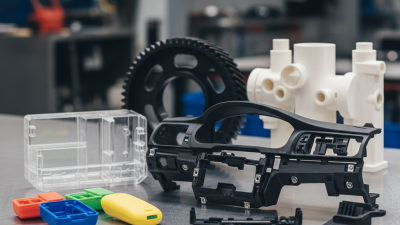
Plastic assembly solutions cover more than joining molded parts. They connect design, materials, production, inspection, and delivery into one controlled process. A capable supplier may provide snap-fit, ultrasonic welding, heat staking, adhesive bonding, insert installation, and automated screwdriving. Each method suits different loads, tolerances, and production volumes.

The details matter. ISO 20457 provides guidance for tolerances in plastic molded parts, yet real assemblies still need practical testing. A 0.2-millimeter gap can affect sealing, noise, or user handling. Assembly teams should review part warpage, shrinkage, weld strength, and fixture access before mass production. In my experience, a drawing rarely reveals every assembly risk.

Automation is also part of the solution. The International Federation of Robotics reported 541,302 industrial robots were installed worldwide in 2023. This supports repeatable assembly, but automation is not automatically better. Poor feeding design can make a fast line produce defects faster. Manual inspection, torque monitoring, vision checks, and traceability remain valuable.

Material decisions also influence global purchasing. The OECD Global Plastics Outlook reported that only about 9% of plastic waste was recycled in 2019. Therefore, buyers should ask about material identification, recycled content, repair options, and end-of-life separation. These questions may increase early engineering work. They can reduce hidden costs later, especially when products cross different markets and operating conditions.

Effective solutions may include prototype builds, process validation, control plans, packaging trials, and inspection records. That sounds complete, but it is not always enough. Shipping vibration, humidity, and rushed changeovers can still expose weak joints. Careful suppliers test those uncomfortable details before customers discover them in the field.

Why Choose Plastic Assembly Solutions for Global Buyers?

Plastic assembly solutions combine forming, joining, inspection, and packaging processes to support consistent quality, scalable production, and efficient international sourcing.

The chart compares common elements included in a complete plastic assembly program. Injection molding, quality inspection, and ultrasonic or thermal joining are frequently combined to improve repeatability and reduce handling between production stages.

How Plastic Assembly Processes Work

Plastic assembly begins with material preparation, part inspection, and a clear production plan. Technicians check dimensions, surface quality, and moisture before joining components. Clean contact areas matter. Dust can weaken a bond or distort a weld. For global buyers, this controlled start supports consistent results across different production sites. It also reduces surprises during later inspections. In practice, the process is not flawless. Small variations still appear.

After forming, workers or machines position each plastic part inside a fixture. Ultrasonic welding uses high-frequency vibration to create heat at the joint. Heat staking reshapes plastic posts around another component. Adhesive bonding works well when the materials and curing time are suitable. Each method has limits. Fixtures maintain alignment, while sensors monitor pressure, temperature, and cycle time. Operators then check critical points with gauges or vision systems. Automation helps, but it cannot replace sound process judgment.

Reliable assembly depends on documented work instructions and traceable inspection records. Sample parts may face pull tests, leak checks, torque checks, or repeated movement tests. These tests show whether a joint survives real handling, not only a clean factory demonstration. Buyers should review tolerances, joining methods, inspection frequency, and packaging conditions. A supplier may meet the drawing yet miss an awkward assembly step. That detail deserves discussion. Experienced teams adjust fixtures, retrain operators, or revise part geometry when evidence reveals a weakness.

Key Benefits for Global Buyers

Global buyers need plastic assembly solutions that reduce risk, not only unit prices. Integrated molding, insert placement, ultrasonic welding, and functional testing can reduce handling between stations. A sealed housing can leave one line ready for shipment, rather than requiring rework at another facility. This matters as global plastics production reached 413.8 million tonnes in 2023, according to Plastics Europe’s Plastics—The Fast Facts 2024 report.

Consistency is a major benefit. Qualified suppliers can control resin grades, moisture levels, torque settings, and weld energy through documented work instructions. These controls support repeatable parts across different production batches. They also make audits and corrective actions less chaotic. ISO 9001-based quality systems strengthen traceability, while ISO 14001 practices can help buyers measure energy, waste, and process impacts. Small details matter here.

Cost savings are possible, but they are not automatic. A 2024 report from Grand View Research valued the global injection molding market at over USD 190 billion in 2023, reflecting broad demand for scalable plastic production. However, buyers should compare total landed cost, tooling life, inspection time, packaging, and transport damage. The cheapest quote may hide weak process control. We have seen projects fail when drawings lacked tolerances or assembly forces. Design reviews, sample validation, and realistic testing prevent expensive surprises. Even then, assumptions should be challenged before mass production begins.

Quality, Compliance, and Supply Chain Considerations

Why Choose Plastic Assembly Solutions for Global Buyers?

Quality, Compliance, and Supply Chain Considerations

Plastic assembly solutions help global buyers control quality beyond individual molded parts. A complete review should cover fit, function, appearance, and long-term performance. Practical checks may include dimensional sampling, torque testing, leak testing, and inspection for flash or stress marks. Small defects can become expensive failures after shipment. Clear work instructions and trained operators also reduce variation between production lots.

Compliance must begin with material selection, not final paperwork. Buyers should request material declarations, restricted-substance records, and traceability documents. Requirements may include REACH, RoHS, food-contact rules, or sector-specific standards. The correct standard depends on the product and destination. Independent audits can verify process controls, but audits do not replace daily inspection. That distinction is often missed.

Supply chain planning deserves equal attention. A capable partner can support local packaging, controlled storage, and documented shipment release. Buyers should review lead times, tooling ownership, capacity limits, and backup plans before approving production. Dual sourcing may reduce risk, although it can increase qualification work. Buffer inventory helps, but it also ties up cash. There is no perfect solution. Even a strong supplier may face resin shortages, labor changes, or transport delays. Regular forecasts and honest escalation keep problems visible. A pilot run can reveal weaknesses earlier, especially when assemblies include clips, inserts, seals, or multiple materials.

Why Choose Plastic Assembly Solutions for Global Buyers? - Quality, Compliance, and Supply Chain Considerations

A practical reference table for evaluating plastic assembly partners across international markets

Evaluation Dimension Relevant Standard or Requirement Verified Fact or Benchmark Why It Matters to Global Buyers Recommended Evidence
Quality Management ISO 9001:2015 ISO 9001 specifies requirements for a quality management system, including process control, customer focus, corrective action, and continual improvement. A documented quality system helps reduce process variation and makes supplier performance easier to audit across borders. Current certificate, scope of certification, internal-audit records, corrective-action reports, and process-control plans.
Medical-Device Readiness ISO 13485:2016, where applicable ISO 13485 is a quality-management standard specifically designed for organizations involved in the life cycle of medical devices. Controlled documentation, production records, and risk-based processes can support regulated medical-device supply chains. Certificate scope, device-history-record procedures, material traceability, validation protocols, and change-control records.
Automotive Requirements IATF 16949:2016, where applicable IATF 16949 establishes automotive quality-management requirements and emphasizes defect prevention, variation reduction, and continual improvement. It is relevant when plastic assemblies enter automotive production programs that require structured supplier controls. Certification scope, process capability studies, failure-mode analysis, control plans, and production-part approval records.
Restricted Substances EU RoHS Directive 2011/65/EU and amendments RoHS restricts 10 substances in electrical and electronic equipment, including lead, mercury, cadmium, hexavalent chromium, and certain flame retardants and phthalates. Material declarations and test data help buyers confirm that assemblies are suitable for applicable electrical and electronic markets. Supplier declarations, laboratory test reports, resin specifications, and component-level material records.
Chemical Compliance EU REACH Regulation (EC) No. 1907/2006 REACH addresses the registration, evaluation, authorization, and restriction of chemical substances placed on the European market. Substance transparency is important for plastics, coatings, adhesives, pigments, and assembled products sold into the European Economic Area. REACH declarations, substances-of-very-high-concern statements, safety documentation, and updated material inventories.
Dimensional Consistency Drawing specifications and GD&T requirements Plastic parts can be affected by shrinkage, warpage, moisture, mold temperature, cooling conditions, and tool wear. Stable dimensional control improves fit, function, interchangeability, and assembly performance at the buyer’s facility. Inspection reports, calibrated measurement equipment, first-article inspection results, capability studies, and mold-maintenance records.
Assembly Reliability Customer-approved work instructions and validation plans Common plastic assembly methods include ultrasonic welding, heat staking, snap-fit joining, adhesive bonding, and insert molding. A validated joining process can improve structural integrity, sealing performance, and repeatability while reducing secondary assembly work. Assembly parameter records, destructive-test results, leak-test data where relevant, work instructions, and operator training records.
Traceability Lot, batch, and production-date control Traceability links raw materials, production parameters, inspection results, operators, and shipments to an identifiable lot or batch. Clear records support targeted containment and faster root-cause analysis instead of broad product recalls or unnecessary replacement. Lot codes, resin-batch records, barcode scans, inspection history, shipping records, and documented retention periods.
Delivery Terms Incoterms® 2020 Incoterms® 2020 contains 11 standardized trade terms that allocate costs, transport responsibilities, and risk between buyers and sellers. Selecting the correct term clarifies freight responsibility, insurance expectations, customs tasks, and the point where transport risk transfers. Written purchase terms, named place of delivery, freight quotations, insurance arrangements, and customs-document checklists.
Supply Continuity Business-continuity and risk-management planning Supply interruptions can result from tooling failures, resin shortages, transportation disruption, regulatory changes, or capacity constraints. Contingency planning reduces exposure to single points of failure and supports more predictable global production schedules. Backup tooling plans, approved alternate materials, maintenance schedules, capacity reviews, escalation contacts, and recovery procedures.
Packaging and Handling Customer packaging specification and transport requirements Plastic assemblies may be damaged by impact, abrasion, deformation, contamination, static discharge, or uncontrolled moisture during transport and storage. Appropriate packaging preserves cosmetic quality, dimensional stability, cleanliness, and assembly readiness through international logistics. Packaging drawings, drop-test requirements, carton labeling, pallet configuration, protective materials, and incoming-inspection criteria.
Total Cost of Ownership Landed-cost analysis Landed cost can include piece price, tooling, packaging, freight, insurance, customs duties, taxes, inspection, rework, and inventory carrying costs. Comparing the complete delivered cost prevents low unit pricing from hiding logistics, quality, or compliance expenses. Itemized quotations, tooling amortization, shipping assumptions, tariff classification review, inspection costs, and quality-cost history.

Note: Applicable standards, regulations, testing requirements, and import obligations depend on the product category, destination market, intended use, and customer specification.

How to Select a Plastic Assembly Partner

Why Choose Plastic Assembly Solutions for Global Buyers?
How to Select a Plastic Assembly Partner
Selecting a plastic assembly partner requires more than comparing unit prices. The PlasticsEurope 2023 report estimates global plastics production reached 400.3 million tonnes in 2022. That scale increases pressure on quality, capacity, and material traceability. Ask for documented process controls, not attractive promises. Review molding records, assembly tolerances, inspection methods, and change-management procedures. A factory tour can reveal cluttered workstations, unclear labeling, or weak material storage.
Certifications provide useful evidence, but they are not complete proof. The ISO Survey 2023 recorded more than 1.26 million ISO 9001 certificates worldwide. Therefore, request recent audit findings and corrective-action records. Check whether the partner can manage tooling maintenance, incoming inspection, functional testing, and lot-level traceability. For regulated applications, confirm applicable safety documentation and restricted-substance controls before production begins. Small gaps become expensive later.
A reliable partner should explain how it handles engineering changes, delivery delays, and rejected parts. Request a pilot build with measurable acceptance criteria. Compare first-pass yield, defect rates, response time, and on-time delivery data. No scorecard is perfect. A spreadsheet cannot show every risk. In practice, communication quality often matters as much as equipment capacity. Ask who will answer technical questions at 8 a.m. and during a late-night production issue. The best choice may not be the cheapest quote. It is the supplier that can prove stable performance, admit weaknesses, and improve them.
Scroll To Top