 Skip to content

10 Tips for Choosing Plastic Packaging Solutions?
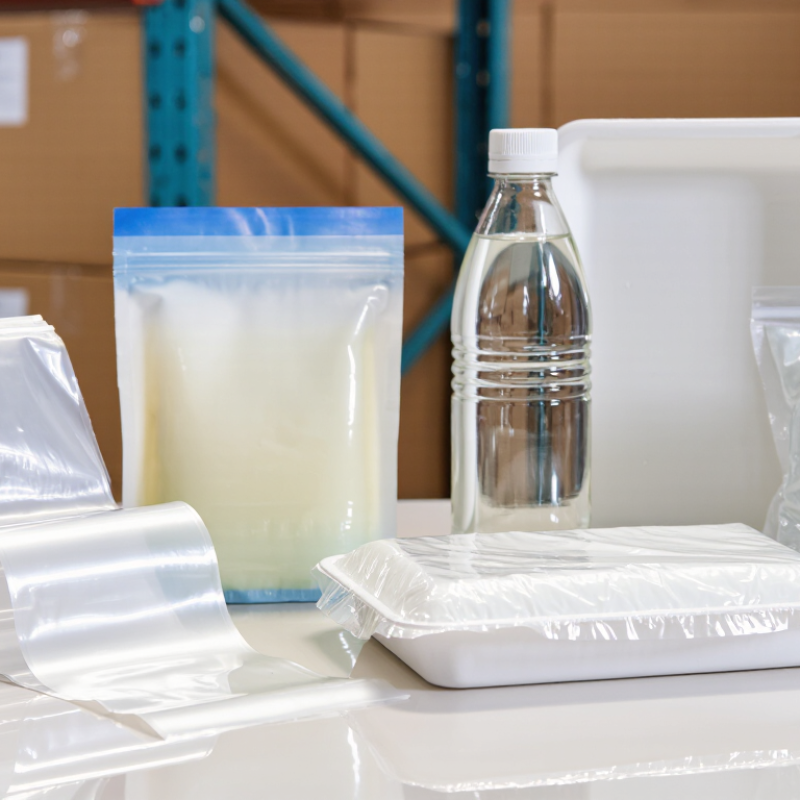
Choosing the right plastic packaging solutions can feel like comparing identical boxes under bright warehouse lights. In practice, small differences matter: a 60-micron film may resist punctures better, while a lighter pouch can reduce material use and shipping weight. The best choice protects the product, supports efficient handling, and fits the customer’s real routine.
Packaging educator Walter Soroka is often credited with saying, “Packaging is the silent salesman.” That idea still matters, but modern packaging must do more than attract attention. It should communicate clearly, open safely, preserve freshness, and perform through filling, transport, storage, and disposal. My experience reviewing packaging projects shows that teams often focus on unit price first. That can be a costly shortcut. A cheaper pack may create leakage, damaged goods, or higher waste rates.
This guide presents 10 practical tips for selecting plastic packaging solutions with greater confidence. It considers barrier performance, material structure, sealing quality, machinery compatibility, appearance, recyclability, and total cost. It also encourages a closer look at evidence, including supplier specifications, product trials, and measured performance. Ask difficult questions. Test real samples. Small details matter.
No package is perfect. A recyclable design may need stronger logistics planning. A high-barrier structure may complicate end-of-life recovery. Those tensions deserve honest discussion, not polished promises. Measure twice. The goal is not to choose the most advanced package, but the most suitable one for the product, market, and responsible use.
Understanding Plastic Packaging Requirements and Product Specifications
Choosing plastic packaging solutions begins with a precise understanding of the product. A liquid, powder, cream, or fragile component creates different packaging demands. Define the product’s weight, viscosity, temperature range, and shelf life. Also record how customers will open, store, and transport it.
Material selection requires more than appearance. Polyethylene may suit flexible pouches, while rigid containers may need stronger barrier properties. Check resistance to oil, moisture, oxygen, light, and chemicals. A clear package looks attractive. However, light-sensitive contents may deteriorate inside it. Confirm closure compatibility, seal strength, wall thickness, and dimensional tolerance before approving samples.
Testing should reflect real handling conditions. Packaging teams can perform drop tests, compression tests, leak checks, and seal-integrity assessments. Test filled units, not only empty samples. Measure performance after heat exposure, cold storage, and vibration. For regulated products, request suitable documentation and verify applicable contact or labeling requirements in each market. Specifications should state measurable limits, not vague phrases like “high quality.” A drawing may show the shape, but it cannot predict every production problem. Small flaws matter.
Cost also deserves careful review. A lighter package may reduce material use, yet it can increase breakage or returns. That trade-off is easy to miss. Review samples with production, quality, logistics, and customer-service teams. Their feedback may reveal a cap that is difficult to grip or a label area too narrow for essential information. Revise the specification when evidence changes. Perfect planning is unlikely. Reliable packaging comes from testing, documentation, and honest review.
10 Tips for Choosing Plastic Packaging Solutions? - Understanding Plastic Packaging Requirements and Product Specifications
| Selection Tip | Key Requirement | Recommended Specification or Data Point | Practical Verification Method | Priority |
|---|---|---|---|---|
| 1Define the product and filling conditions | Identify the product's chemical, physical, and temperature characteristics before selecting a polymer. | Record pH, alcohol or oil content, viscosity, solids, particulate size, filling temperature, and storage temperature. For hot-fill applications, document the maximum product temperature and cooling process. | Prepare a product profile and conduct compatibility screening with the proposed packaging material. | High |
| 2Match the polymer to the application | Choose a resin with suitable stiffness, impact strength, chemical resistance, and processing performance. | Common options include PET for clear beverage and food containers, HDPE for chemical and personal-care containers, PP for heat resistance and closures, and LDPE for flexible films and squeezable packs. | Compare resin technical data sheets, including density, tensile strength, elongation, softening behavior, and chemical-resistance information. | High |
| 3Set barrier requirements | Protect the contents from oxygen, moisture, carbon dioxide, aroma loss, or light as required. | Specify oxygen transmission rate (OTR), water vapor transmission rate (WVTR), carbon dioxide transmission, and light-transmission limits. Lower OTR and WVTR values generally provide stronger barrier protection. | Request test results generated under defined temperature and relative-humidity conditions; compare the results with the product shelf-life target. | High |
| 4Calculate the required mechanical strength | Ensure the package can withstand filling, stacking, transportation, handling, and consumer use. | Define container top-load, compression, drop-impact, puncture, burst, seal-strength, or tensile requirements. Distribution conditions should include pallet stacking and expected vibration. | Use laboratory compression, drop, vibration, leak, and seal-integrity testing on finished samples. | High |
| 5Confirm dimensions and capacity | Make sure the package fits the product volume, filling equipment, closure, labels, cartons, and pallets. | Specify nominal fill volume, overflow capacity, height, width, neck finish, wall thickness, closure dimensions, and allowable tolerances. Include headspace requirements where pressure or expansion may occur. | Check dimensional drawings, gauge measurements, closure fit, filling-line trials, and pallet-layout calculations. | High |
| 6Evaluate sealing and closure performance | Prevent leakage, contamination, tampering, and accidental opening during the intended life of the package. | Define seal temperature, dwell time, pressure, torque range, liner type, induction-seal requirements, and tamper-evidence features. A closure should provide consistent opening and resealing performance when required. | Perform leak testing, torque testing, seal-strength testing, vacuum or pressure testing, and tamper-evidence inspection. | High |
| 7Check regulatory and food-contact suitability | Confirm that the material and additives are suitable for the intended market and product category. | Obtain declarations of compliance, migration-test documentation, additive information, and applicable recycled-content documentation. Requirements vary by product type, destination market, and contact conditions. | Review supplier compliance documents and use an accredited laboratory when migration or extractables testing is required. | High |
| 8Design for manufacturing efficiency | Ensure the packaging can be produced consistently at the required speed and yield. | Define the forming or molding process, cycle time, acceptable wall-thickness variation, weight tolerance, dimensional tolerance, and scrap limit. Consider preform, film, sheet, or injection-molding requirements. | Run production trials and monitor process capability, weight variation, wall distribution, appearance, and line efficiency. | Medium |
| 9Assess sustainability and end-of-life options | Reduce unnecessary material use while maintaining product protection and functional performance. | Measure package weight, recycled content, material count, recyclability, reuse potential, and material separation. Mono-material designs are often easier to sort and recycle than complex multilayer structures, but local recycling capability must be confirmed. | Conduct a life-cycle or packaging-impact assessment and verify compatibility with the target region's collection and recycling infrastructure. | Medium |
| 10Validate shelf life and real-world distribution | Confirm that the complete packaging system protects the product throughout storage, transport, and use. | Define target shelf life, storage range, humidity exposure, light exposure, transportation profile, and expected usage cycles. Test the complete package rather than the resin alone. | Use accelerated and real-time shelf-life studies, environmental conditioning, transport simulation, and final product-quality testing. | High |
Related Posts
-

China Top Plastic Packaging Components Manufacturers?
-
What is Plastic Packaging Solutions and How Do They Impact the Environment?
-
Why Choose Sustainable Plastic Packaging Solutions for Your Business?
-

Top Plastic Component Design Trends for 2026 What Buyers Need to Know
-

2026 How to Optimize Precision Plastic Molding for Global Buyers?
-
2026 Best Plastic Engineering Solutions for Global Buyers