Why Choose a Vertical Concrete Mixer for Your Business?
Choosing the right mixing equipment can shape a concrete business’s daily performance. A Vertical Concrete Mixer offers a compact, practical solution for contractors, precast workshops, masonry producers, and small batching operations. Its upright design uses gravity to support material movement, while the mixing chamber often requires less floor space than horizontal equipment.
Concrete materials expert Peter C. Taylor has emphasized a useful principle: “Good concrete begins with disciplined control of materials, mixing, placement, and curing.” His point remains relevant. A mixer is not merely a machine that turns cement, sand, stone, and water. It must create a consistent blend, batch after batch. Uneven moisture, overloaded paddles, or rushed discharge can weaken quality control. Small details matter.
A Vertical Concrete Mixer can support measured production, easier loading, and straightforward cleaning. Many models also allow operators to inspect the mixture from above. That visual access can help identify dry pockets or excessive water before discharge. The benefits depend on proper capacity, motor power, blade configuration, and maintenance. Bigger is not always better.
There is a practical weakness, too. Some vertical designs may mix dense or heavily loaded batches more slowly than expected. Operators must respect the manufacturer’s capacity guidance. I would not treat this equipment as an automatic quality guarantee. It improves the process, but trained supervision still matters. For businesses seeking reliable output, lower space demands, and flexible batch control, the right Vertical Concrete Mixer deserves careful evaluation.
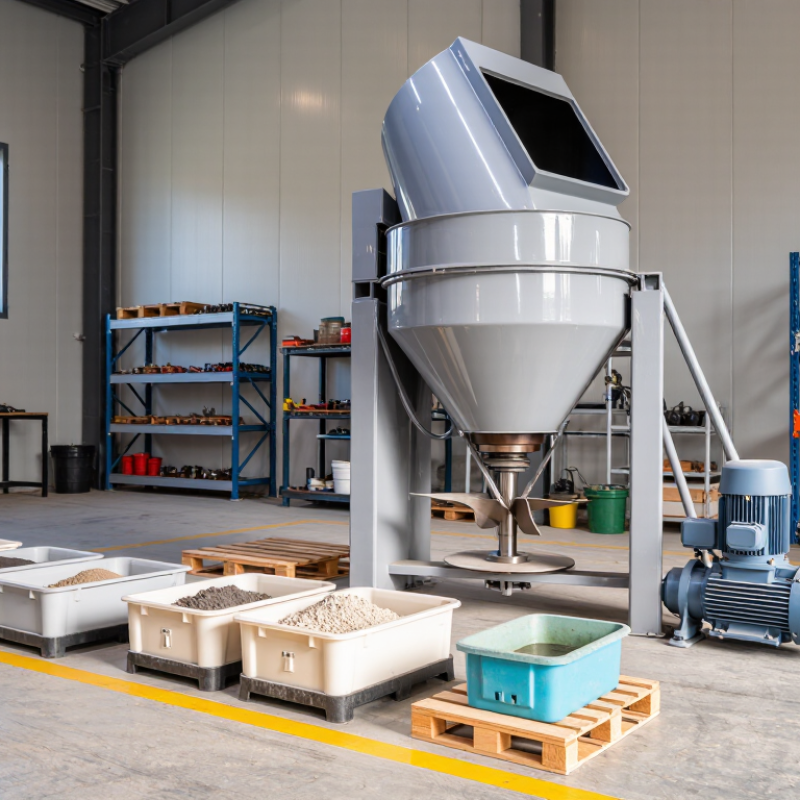
What Is a Vertical Concrete Mixer?
A vertical concrete mixer is a machine with an upright mixing chamber. Unlike a horizontal mixer, it works with a vertical flow of materials. Cement, sand, aggregate, and water enter the drum from above. Rotating blades then lift, fold, and push the mixture around the chamber.
This design can suit businesses with limited floor space. Its compact footprint often fits near a small batching area or construction site entrance. The upright drum also gives operators a clear view of the batch during mixing. From practical use, consistent loading matters greatly. Adding too much water early can create a weak, sticky mixture. It can also increase cleaning time.
The mixer’s performance depends on blade condition, batch size, and mixing duration. A worn blade may leave dry pockets near the drum wall. That detail matters. Operators should check the mixture before discharge, not rely only on the timer. In many jobs, a vertical mixer handles mortar, concrete, and other cement-based materials effectively. However, it may not suit every high-volume operation. Large aggregate, frequent batches, or strict output targets may require a different machine design.
Cleaning is often overlooked. Hardened material around the blades can reduce capacity and raise maintenance costs. A careful operator rinses the chamber after use and inspects moving parts regularly. The best choice depends on material size, daily production, available space, and the crew’s working habits.
Why Choose a Vertical Concrete Mixer for Your Business?
What Is a Vertical Concrete Mixer?
A vertical concrete mixer combines cement, aggregates, water, and additives in an upright mixing chamber. Its compact layout, efficient material circulation, and flexible batch sizes make it suitable for construction sites, precast production, landscaping, and small-to-medium concrete operations.
The chart shows representative nominal working capacities commonly specified for vertical concrete mixers, ranging from 0.1 to 1.0 cubic meters per batch. Actual production depends on the mixer design, material composition, loading method, mixing cycle, and operating conditions. Choosing the right capacity helps balance batch consistency, space requirements, and daily production needs.
How Does a Vertical Concrete Mixer Work?
Why Choose a Vertical Concrete Mixer for Your Business?
How Does a Vertical Concrete Mixer Work?
A vertical concrete mixer blends materials inside an upright mixing chamber. Its motor turns a central shaft fitted with paddles or blades. These tools lift dry cement, sand, stone, and water from the bottom. Gravity then pulls the mixture downward. This repeated movement creates a steady mixing cycle.
The process is easy to observe. Operators can check whether dry pockets remain near the wall or beneath the blades. They can also adjust water gradually instead of adding it all at once. Proper loading matters. Overfilling the chamber may reduce circulation and leave uneven material. In practical work, consistent batch sizes usually produce more reliable results.
A vertical design can suit businesses with limited floor space. The mixer uses height rather than a wide horizontal footprint. It may also handle smaller batches efficiently, depending on motor power and material density. Still, it is not perfect for every application.
Very heavy aggregate can increase wear on the shaft and paddles. Cleaning must happen promptly, especially around the chamber bottom. A neglected mixer often delivers inconsistent concrete, even when the recipe is correct. Regular inspections, measured ingredients, and trained operators support safer, more dependable production.
Which Materials Can It Mix Effectively?
A vertical concrete mixer is valuable when a business handles varied recipes. Its rotating vertical shaft creates strong upward and downward circulation. This action can blend cement, sand, graded stone, water, and chemical admixtures effectively. It also suits mortar, grout, plaster, dry-mix compounds, and some lightweight aggregate blends.
Moisture control matters greatly. Too much water can leave a thin slurry around the drum wall. Too little water can produce dry pockets near the discharge gate. According to the USGS Mineral Commodity Summaries 2025, global cement production reached approximately 4.1 billion metric tons in 2024. That scale shows why consistent mixing remains commercially important. The Global Cement and Concrete Association reports that the world uses more than 14 billion cubic metres of concrete annually. A vertical mixer supports this demand when operators control batch size, mixing time, and aggregate grading.
It is not perfect. Highly sticky mixes may cling to internal surfaces. Very large stones can also reduce circulation. Operators should check the material’s moisture, maximum particle size, and required slump before loading. A practical test helps: inspect three samples from the top, middle, and discharge area. If their texture differs, the mixing cycle needs adjustment. ACI 211.1 guidance also reminds producers that proportions must match the intended strength and workability. Good equipment cannot correct a poor mix design.
How Should Businesses Choose the Right Model?
Why Choose a Vertical Concrete Mixer for Your Business?
Choosing a vertical concrete mixer should begin with your daily production pattern, not the advertised drum size. The 2024 AGC Workforce Survey found that 94% of contractors struggled to fill open positions. A simple, accessible mixer can reduce training pressure and shorten loading time. Measure your usual batch, aggregate size, discharge height, and available floor space. A 500-liter drum may be excessive for repair crews, while a 150-liter unit may slow a busy precast workshop. Bigger is not automatically better.
Power selection needs equal care. Electric models suit fixed sites with stable electricity and lower indoor emissions. Engine-powered units offer mobility, but fuel storage, noise, and maintenance require planning. The U.S. Energy Information Administration reported that industrial electricity prices vary significantly by region in 2023. This makes operating-cost estimates more useful than a single purchase price. Check motor protection, emergency controls, mixing-blade access, and spare-part availability. Small details matter.
Think about the concrete itself. High-slump mixes may need different blade geometry than stiff, aggregate-heavy batches. Vertical mixing can improve material circulation in compact spaces, but poor loading can still create dead zones. I have seen operators overfill a mixer, expecting faster output. It usually produces uneven material and extra cleaning. The Global Cement and Concrete Association continues to emphasize resource efficiency across concrete production. Track batch time, water use, rejected material, and labor hours for two weeks. Your first choice may be wrong. That is useful evidence, not failure.
Why Choose a Vertical Concrete Mixer for Your Business? - How Should Businesses Choose the Right Model?
Practical comparison of common vertical concrete mixer sizes for construction, precast, landscaping, and small-batch concrete production.
| Model Category | Typical Batch Capacity | Approximate Output per Hour | Typical Motor Power | Recommended Crew Size | Best-Fit Applications | Main Advantages | Key Selection Consideration |
| Compact Vertical Mixer | 50–150 L per batch | 1.5–4 m³/h | 2.2–5.5 kW electric motor | 1–2 operators | Repair work, residential footings, paving repairs, garden walls, and small landscaping projects | Low purchase cost, compact footprint, easy transport, and lower electricity consumption | Choose this size when batches are small and the mixer will be moved frequently between job sites |
| Small Commercial Mixer | 150–300 L per batch | 4–8 m³/h | 5.5–11 kW electric motor | 2–3 operators | Residential construction, block production, small contractors, and routine concrete maintenance | Good balance between mobility, batch consistency, and daily productivity | Check whether the available electrical supply can support the motor and starting current |
| Medium Production Mixer | 300–600 L per batch | 8–16 m³/h | 11–22 kW electric motor | 3–4 operators | Precast components, concrete blocks, pavers, farm construction, and medium-sized building projects | Higher throughput with efficient use of labor and reduced loading frequency | Confirm that the discharge method, aggregate storage, and material-handling equipment can match the mixer’s capacity |
| Large Commercial Mixer | 600–1,000 L per batch | 16–25 m³/h | 22–37 kW electric motor | 4–6 operators | Large precast yards, infrastructure support work, commercial construction, and continuous site production | High production capacity and fewer batch cycles for demanding daily schedules | Requires adequate floor space, stronger material-feeding systems, and reliable three-phase power |
| Heavy-Duty Industrial Mixer | 1,000–2,000 L per batch | 25–40 m³/h | 37–75 kW electric motor | 5–8 operators | High-volume precast production, large infrastructure projects, and centralized concrete operations | Maximum output, stable operation under intensive workloads, and reduced cost per cubic meter at high utilization | Best suited to businesses with steady demand; excess capacity can increase energy, maintenance, and capital costs |
Planning note: Output figures are typical operating ranges calculated from batch capacity, loading time, mixing time, and discharge time. Actual performance varies with mix design, aggregate size, moisture content, operator skill, and site layout. Select a mixer based on required daily volume, available power, material-feeding method, floor space, and expected utilization rather than maximum capacity alone.
 Skip to content