
Skip to contentChoosing a pt100 RTD manufacturer in China is not just a price comparison. Buyers need stable readings, consistent calibration, and clear documentation. IEC 60751 defines key characteristics for industrial platinum resistance thermometers, including their resistance–temperature relationship. It offers a useful technical reference when comparing product specifications. Still, a standards claim alone does not prove that every sensor in a batch performs equally.
Market context matters, too. Grand View Research’s temperature sensor market analysis describes demand across industries such as manufacturing, automotive, and healthcare. These applications place different demands on temperature probes, from vibration resistance to repeatable measurements. That broad market view helps explain why Chinese suppliers offer varied designs, materials, and production capabilities. It does not identify the best factory for every buyer. The details matter.
This article examines manufacturers through practical criteria: product range, stated accuracy, probe construction, calibration support, quality controls, and export experience. A useful comparison should look beyond polished catalogs. Ask for test records, inspect the sheath and cable details, and check whether the quoted tolerance applies across the required temperature range. A sample can look excellent. Long-term consistency is harder to judge from a brochure. Supplier information can also be incomplete, so some conclusions deserve caution. The aim is a grounded shortlist, not a universal winner.
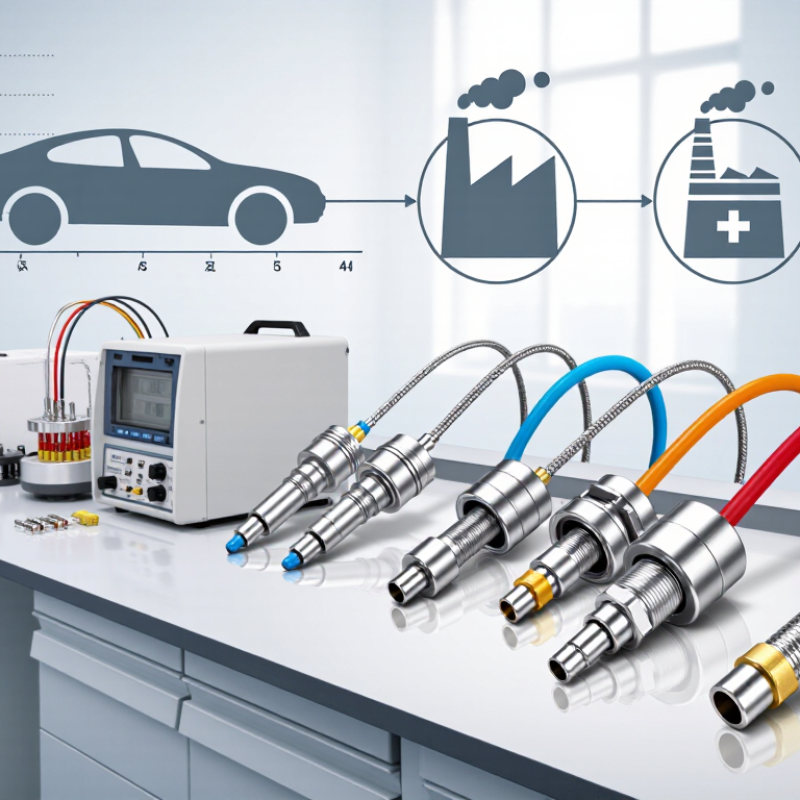
A PT100 RTD is a temperature sensor made with a platinum element. “PT” refers to platinum, and “100” means the element measures 100 ohms at 0°C. As temperature rises, its electrical resistance increases in a predictable way. That relationship lets an instrument estimate temperature by measuring resistance. Simple in principle. A small sensing current passes through the element, and the instrument reads the resulting voltage. Excessive current can warm the element slightly and affect the reading.
In real installations, the sensor’s response also depends on its probe, wiring, and contact with the measured surface. A three-wire connection can help compensate for resistance in the lead wires; four-wire designs offer greater compensation in suitable measurement systems. On a process pipe, a loose probe or poor thermal contact may cause a noticeable lag. The specification alone does not tell the whole story. I would check the temperature range, tolerance, sheath material, and connection method against the actual application.
A dependable manufacturer should explain how each PT100 sensor is built, tested, and matched to your application. Ask for the tolerance class, calibration records, wiring options, sheath material, and operating temperature range. Check whether the stated accuracy follows IEC 60751, and request sample reports rather than relying on a catalog line. Clear answers matter. Vague specifications make comparisons difficult.
Evaluate the details that affect your installation. A probe used in a narrow pipe may need a different diameter and response time from one placed in a tank. Ask how the supplier controls assembly consistency and handles failed inspections. If possible, test samples at several temperatures and compare readings with a calibrated reference. Review communication and replacement procedures, too. A polished brochure can still leave practical questions unanswered, and one successful sample does not prove every production batch will match.
Tips: Confirm whether calibration documents identify the instrument and test points. Specify two-, three-, or four-wire connections before ordering. Keep the evaluation grounded in your actual process; the lowest quoted price may not reflect service life. No single score tells the whole story.
Leading PT100 RTD manufacturers in China can differ widely in process control, testing, and customization. A PT100 sensor measures 100 ohms at 0°C, but the finished probe’s performance also depends on its element, wiring, insulation, and assembly. Details matter. Ask whether the supplier can provide calibration records, stated tolerances, and test results for the specific model—not just a general product brochure.
For industrial use, check the sheath material, probe diameter, insertion length, and connection type against the installation conditions. A four-wire design can reduce lead-wire resistance errors in precision measurements, while a protective metal sheath may suit wet or abrasive environments.
Neither choice is universal. Request sample units and compare readings in a controlled temperature bath before placing a large order. Also ask how production batches are identified and whether inspection records can be traced to them.
Some suppliers describe tight accuracy without explaining the test method; that is a point worth questioning. Clear specifications and repeatable checks are stronger signs of manufacturing capability than a polished catalog.
Chinese PT100 RTD manufacturers commonly offer sensing elements, probe assemblies, and cable-connected temperature sensors. Some also supply mineral-insulated probes, thermowells, and transmitters for specific installations. Product choices vary by factory and application. Buyers should check the datasheet rather than assume every supplier offers the same range.
These products serve HVAC systems, food-processing lines, pharmaceutical equipment, power facilities, and industrial machinery. In a food plant, a stainless-steel probe may monitor a wash tank or pasteurization line. A longer, sheathed sensor can suit a hot process pipe, while a compact probe may fit a laboratory instrument. Fit matters. Cable length, sheath material, temperature range, and connection type affect installation and performance.
Manufacturers may produce standard probes in batches and build custom assemblies to match drawings or operating conditions. Ask about calibration records, tolerances, response time, and inspection procedures. For harsh or vibrating environments, discuss the probe’s mounting method and protective sheath. Catalog specifications help, but they cannot describe every real installation. A sample test can reveal a mismatch early. That step is easy to overlook, and even a carefully selected PT100 may respond differently when installed in the actual process.
China offers many PT100 RTD suppliers, but a polished catalogue cannot prove manufacturing consistency. Grand View Research’s 2023 temperature-sensor market report estimated the global market at USD 7.5 billion, with a projected 4.4% compound annual growth rate from 2024 to 2030. That growth makes supplier claims worth checking carefully. Ask for the sensor’s IEC 60751 tolerance class, sheath material, wiring configuration, operating range, and batch traceability. Under IEC 60751, Class A tolerance is ±(0.15 + 0.002|t|)°C; Class B is ±(0.3 + 0.005|t|)°C. Paper is not proof.
Verify the factory’s quality certificate and confirm its scope covers the relevant production site. For calibration, request a certificate showing measured points, uncertainty, and traceability to recognized standards; check the issuing laboratory’s accreditation directory. Then test samples from more than one production batch in a stable temperature bath against a calibrated reference thermometer. Record readings near the lower, middle, and upper parts of your intended range. Check lead resistance and response time too. I would not approve a supplier from one sample alone. A sample can pass while batch control remains weak. Ask for corrective-action records when results drift, and agree on acceptance limits before ordering. Small gaps matter.
Use the tolerance grade and operating range shown in a supplier’s datasheet to assess whether a PT100 sensor suits your application. The chart shows the maximum permissible resistance-temperature deviation in °C, calculated from the IEC 60751 tolerance equations. A value is omitted where the temperature is outside that grade’s stated range: AA (−50 to 250°C), A (−30 to 300°C), B (−50 to 500°C), and C (−196 to 600°C). Ask suppliers to confirm the applicable standard, grade, operating range, and calibration or test documentation for the exact model.
Source: IEC 60751 tolerance equations. Values shown are calculated tolerance limits, not test results from individual manufacturers.
