 Skip to content

China Top Mattress Quilting Machine Manufacturers
Choosing among China Top Mattress Quilting Machine Manufacturers requires more than comparing prices and catalog photographs. A reliable supplier should demonstrate practical experience, stable engineering standards, and consistent production quality. The right Mattress Quilting Machine can improve stitch accuracy, fabric handling, production speed, and finished mattress appearance. It should also match your materials, quilting patterns, mattress sizes, and factory capacity.
This article introduces manufacturers with relevant industry experience and recognizable technical capabilities. Their strengths may include computerized pattern control, servo-driven feeding systems, automatic thread trimming, and durable needle assemblies. Clear specifications matter. Buyers should examine quilting width, operating speed, compatible fabrics, power requirements, maintenance access, and operator training. A machine that runs smoothly on a sample floor may behave differently in continuous factory production.
Details reveal credibility. Look for factory testing records, installation support, spare-parts availability, and responsive after-sales communication. Ask for videos of similar materials being quilted. Request references from comparable mattress producers when possible. Small differences matter. A loose stitch can weaken the surface. Uneven feeding can create visible waves across the panel.
No manufacturer is perfect. Even a well-built machine may require calibration after installation. Some published performance figures may reflect ideal conditions rather than everyday output. That is worth questioning. This guide therefore considers both technical advantages and practical limitations. It aims to help manufacturers, distributors, and purchasing teams make a more informed decision. The best choice is not always the fastest machine. It is the equipment that delivers dependable results, manageable maintenance, and long-term production value.
Mattress Quilting Machine Manufacturing in China
Mattress Quilting Machine Manufacturing in China
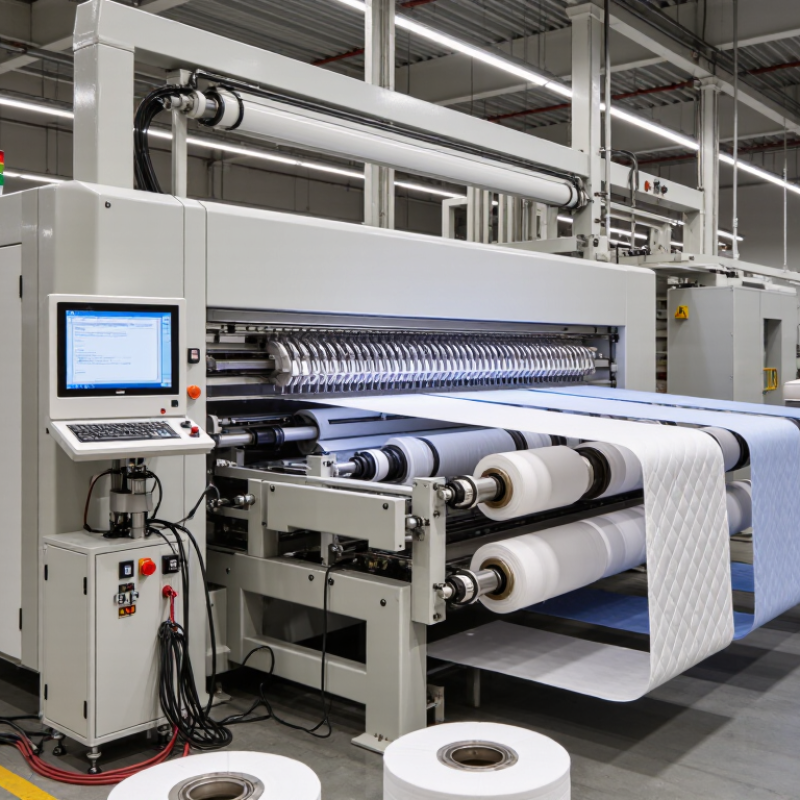
China’s mattress quilting machine manufacturing combines metalworking, automation, and textile testing in one production process. Experienced factories usually begin with frame design, needle-bar calibration, and fabric compatibility checks. Production teams inspect steel components before assembly. They also test servo motors, tension systems, and pattern controls under working conditions. This matters because a machine can look precise but perform poorly on thick foam covers. Real factory experience often reveals small issues, such as thread breaks or uneven stitches. These details deserve attention.
Manufacturers commonly build machines for single-needle, multi-needle, and computer-controlled quilting applications. Reliable suppliers should provide clear specifications, sample patterns, spare-part information, and operator training. Buyers should review stitching speed, working width, fabric thickness, power requirements, and maintenance access. Factory acceptance testing is valuable. Ask for videos or live trials using similar mattress materials. No trial is perfect. However, honest records help identify limitations before shipment. Some suppliers may promise high output too quickly, so practical verification remains essential.
Tips: Request a sample quilt before ordering. Check stitch consistency across the full width. Confirm electrical standards for your facility. Keep written records of testing, adjustments, and replacement parts. A thoughtful factory should welcome technical questions, even uncomfortable ones. That response often reveals more than a polished showroom.
China Top Mattress Quilting Machine Manufacturers - Mattress Quilting Machine Manufacturing in China
Technical and Manufacturing Overview of Mattress Quilting Machines Made in China
| Machine Category | Typical Application | Working Width | Quilting Speed | Needle Gauge | Quilting Patterns | Automation Features | Common Material Compatibility | Typical Production Lead Time | Quality and Documentation |
|---|---|---|---|---|---|---|---|---|---|
| Computerized Single-Needle Quilting Machine | Mattress panels, quilted fabric, pillow tops and upholstery layers | 2,000–2,600 mm | Up to approximately 2,000 rpm, depending on fabric and pattern | Commonly 7.5–12.7 mm | Diamond Wave Geometric | Computerized pattern storage, automatic thread trimming and programmable stitch control | Knitted fabric, woven fabric, polyester padding, cotton blends and thin foam layers | Approximately 30–60 days for standard configurations | Operation manual, electrical schematics, commissioning checklist and standard inspection records |
| Multi-Needle Chain-Stitch Quilting Machine | High-volume mattress fabric and continuous roll-to-roll quilting | 2,450–3,300 mm | Approximately 800–1,500 rpm, depending on stitch length and material thickness | Commonly 25.4–76.2 mm needle spacing | Straight Line Diamond Parallel Line | Servo-driven fabric feeding, automatic edge alignment and digital speed adjustment | Nonwoven fabric, cotton layers, polyester fiber, felt and mattress ticking | Approximately 45–75 days for configured equipment | Factory run test, mechanical inspection report, spare-parts list and installation guidance |
| Double-Sided Mattress Quilting Line | Continuous quilting of mattress covers with coordinated upper and lower fabric layers | 2,450–3,200 mm | Approximately 10–30 m/min, depending on quilting depth and pattern complexity | Configuration varies by quilting head and stitch design | Continuous Pattern Custom Repeat Border Design | Automatic unwinding, tension control, fabric alignment and synchronized material feeding | Mattress ticking, knitted cover fabric, fiberfill and laminated textile structures | Approximately 60–100 days for a complete line | Layout drawing, electrical component list, trial-production report and operator training materials |
| High-Speed Computerized Quilting Machine | Large-scale production of mattress panels, comforters and industrial quilted textiles | 2,600–3,500 mm | Up to approximately 2,500 rpm under suitable operating conditions | Commonly 12.7–25.4 mm | Dense Pattern Large Repeat Decorative Pattern | Touchscreen control, pattern editing, servo motors, fault alarms and automatic lubrication options | Polyester, cotton, viscose blends, hollow fiber and selected foam-backed fabrics | Approximately 45–90 days, subject to customization | Factory acceptance testing, safety inspection, software backup and maintenance schedule |
| Edge and Border Quilting Machine | Decorative borders, side panels, mattress tape areas and localized quilting | 600–1,500 mm effective quilting area | Approximately 500–1,200 rpm | Typically 7.5–12.7 mm | Border Line Wave Leaf | Programmable positioning, adjustable presser-foot pressure and automatic thread cutting on selected configurations | Mattress borders, laminated textiles, decorative fabric and medium-weight padding | Approximately 30–60 days | Dimensional inspection, sample approval, operating instructions and recommended spare parts |
| Customized Mattress Quilting Production Line | Integrated cutting, quilting, rolling, inspection and fabric handling for large factories | Configured according to product specification, commonly 2,450–3,500 mm | Determined by the slowest integrated process | Selected according to stitch density and product structure | Custom CAD Pattern Multi-Size Variable Repeat | Centralized control, production data monitoring, automatic tension adjustment and line synchronization | Finished mattress covers, knitted textiles, nonwoven layers, fiberfill and selected foam laminates | Approximately 90–180 days, including engineering and commissioning | Process-flow diagram, installation plan, commissioning records, training documents and after-sales support terms |
Note: Specifications are commonly available ranges for mattress quilting equipment manufactured in China. Actual performance depends on machine configuration, material structure, quilting pattern, stitch density, operator settings and production conditions.