
Skip to contentChoosing the right Pharmacy Thermal Labels in China is not simply a price comparison. It is a controlled evaluation of readability, adhesive performance, thermal sensitivity, and supply reliability.
Mike Fairley, a long-time label-industry analyst, captures the broader principle: “The label is the critical link between product and customer.” That link becomes critical on medicine cartons, prescription bags, vial stickers, and cold-chain packages. A blurred barcode can slow dispensing. Weak adhesive can leave a label on a refrigerated container. Poor coating may cause text to fade under alcohol wipes or humid storage conditions.
This guide examines ten pharmacy thermal labels supplied by Chinese manufacturers and converters. The comparison considers direct thermal and thermal-transfer options, face-stock quality, roll consistency, core sizes, printer compatibility, and customization capacity. It also reviews practical details, including 2D barcode clarity, lot-number printing, tamper evidence, and resistance to moisture and abrasion.
Real pharmacy environments are less tidy than product brochures suggest. A label may face condensation, repeated handling, or an uneven plastic surface. Testing matters.
No single product suits every pharmacy. A budget label may perform well on paper bags but fail on chilled containers. A premium material may be unnecessary for short-term internal use. Even experienced buyers can overlook adhesive aging or ribbon compatibility.
The rankings therefore reflect practical performance, not marketing language alone. Sample trials, supplier audits, and documented quality controls remain essential. Readers should treat this list as a starting point, not a final purchasing decision. The strongest pharmacy thermal labels balance legibility, durability, regulatory responsibility, and dependable delivery.
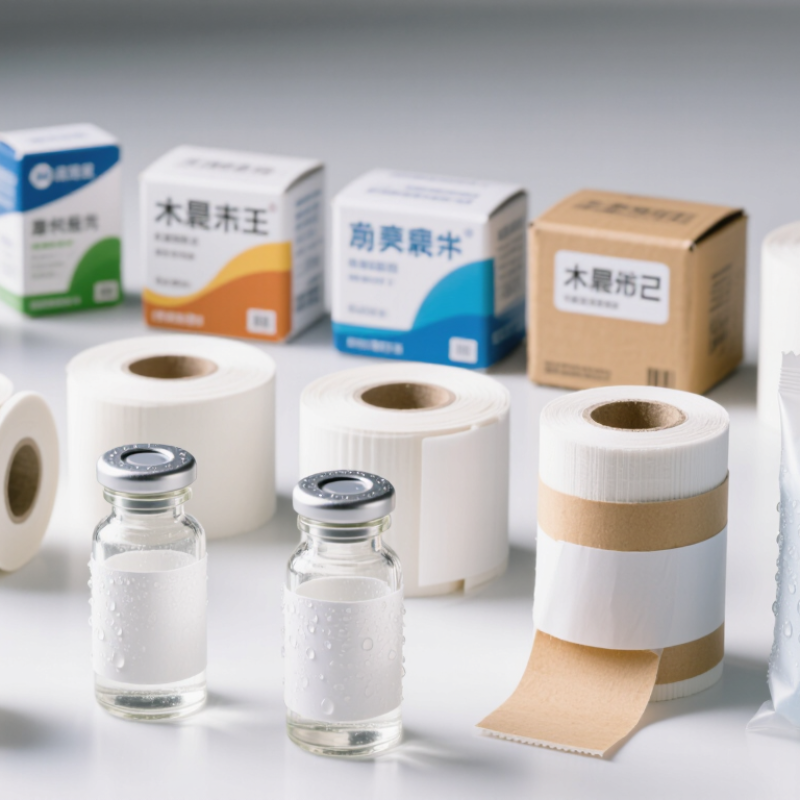
Pharmacy thermal labels in China are adhesive labels printed through heat, rather than liquid ink. Direct thermal labels react to a heated printhead, while thermal-transfer labels use a ribbon for stronger image stability. In pharmacies, both formats support medicine identification, dispensing, inventory control, and traceability.
A well-designed label may show the medicine name, strength, dosage instructions, batch number, expiry date, barcode, and storage warning. On a 30 mL bottle, every millimeter matters. Text must remain readable after handling, cleaning, or short-term refrigeration. For cold-chain products, the adhesive should remain attached when condensation forms on the package. This detail is often underestimated.
Accuracy comes before appearance.
Selecting the top ten pharmacy thermal labels in China requires more than comparing price. Buyers should examine print clarity, adhesive performance, roll consistency, barcode readability, and compatibility with existing printers. Material choices should match the package surface, storage temperature, and expected handling period. Local pharmacy workflows also benefit from Chinese character clarity and reliable batch records.
However, thermal printing has limits. Direct thermal images can fade under heat, light, or prolonged storage. Thermal-transfer printing may offer better durability, but it adds ribbon management and operating cost. No label is perfect. A label that works on a carton may fail on a curved vial. Small pilot tests, documented quality checks, and feedback from pharmacists can reveal problems before large-scale purchasing.
When comparing the top ten pharmacy thermal labels in China, start with use conditions, not appearance. A label for refrigerated medicine faces different demands from one used on a dry shelf. Check print clarity, barcode contrast, and resistance to moisture, alcohol wipes, friction, and temperature changes. Small text must remain readable under ordinary pharmacy lighting. It sounds simple. It is not.
Material selection creates a practical dividing line. Direct thermal labels suit short-term dispensing, while thermal transfer labels often support longer records. Test the adhesive on glass, plastic, paper cartons, and curved containers. A label that sticks at room temperature may lift after refrigeration. Measure the application temperature, storage range, liner release, and residue risk. A sample sheet alone can be misleading. Real containers expose weaknesses.
A reliable evaluation also examines data integrity. The label should show product names, strength, quantity, expiry dates, lot numbers, and machine-readable codes clearly. Printer compatibility, roll dimensions, winding direction, and batch consistency affect daily workflow. Request material specifications, test reports, and traceable quality records from the supplier. Independent checks take time. They may also reveal inconvenient failures. No label is perfect. Some problems appear only after several days in a cold cabinet.
China’s pharmacy market offers ten practical thermal label formats for daily dispensing and inventory work. These include white direct-thermal labels, prescription labels, barcode labels, two-dimensional code labels, vial labels, ampoule labels, shelf labels, batch-and-expiry labels, cold-chain labels, and tamper-evident labels. Each format serves a different surface, temperature range, or information load.
White direct-thermal labels suit medicine bags and outer cartons. Prescription labels usually provide space for dosage instructions, patient details, and dispensing dates. Barcode and two-dimensional code labels support faster scanning at busy counters. Small vial and ampoule labels need strong adhesive and clear printing on narrow surfaces. Shelf labels should remain readable under frequent handling. Batch-and-expiry labels help staff check stock rotation beside storage racks.
Cold-chain labels require adhesive performance at low temperatures and during condensation. Tamper-evident labels can show visible damage after removal, although their performance depends on the package material. Thermal coating quality matters. Poor coating may fade under heat, light, or alcohol contact. I have seen labels that looked sharp on day one but became difficult to scan later. Pharmacies should test print density, adhesive strength, barcode readability, and storage conditions before larger purchases. A label that works well on a carton may fail on a curved vial. Small trials are wiser.
| No. | Pharmacy Thermal Label Type | Printing Method | Common Material | Typical Size Range | Temperature Performance | Recommended Pharmacy Use | Key Advantages | Important Consideration |
|---|---|---|---|---|---|---|---|---|
| 1 | Direct Thermal Medication Labels | Direct thermal | Thermal-coated paper | 25 × 15 mm to 100 × 70 mm | Approximately 0°C to 50°C during normal use | Prescription containers, dispensing bags, and short-term medication identification | No ribbon required; fast printing; low operating cost | Image quality can fade with heat, sunlight, friction, or prolonged storage |
| 2 | Thermal Transfer Prescription Labels | Thermal transfer | Coated paper, polypropylene, or polyester | 30 × 20 mm to 100 × 75 mm | Usually approximately -20°C to 80°C, depending on face stock and ribbon | Longer-term prescription records, stock rotation, and durable drug identification | Sharper, more durable print with better resistance to heat and abrasion | Requires a compatible ribbon and thermal-transfer printer |
| 3 | Water-Resistant Pharmacy Labels | Direct thermal or transfer | Polypropylene or synthetic thermal material | 25 × 20 mm to 100 × 100 mm | Commonly approximately -20°C to 70°C | Refrigerated medicines, liquid medication bottles, and laboratory-adjacent pharmacy areas | Resists splashes, condensation, and limited chemical exposure | Adhesive performance depends on bottle curvature, surface cleanliness, and humidity |
| 4 | Cold-Chain and Refrigerator Labels | Thermal transfer preferred | Freezer-grade synthetic film with cold-temperature adhesive | 30 × 20 mm to 100 × 75 mm | Commonly approximately -40°C to 60°C | Vaccines, refrigerated biologics, insulin, and other temperature-sensitive products | Maintains adhesion and legibility at low temperatures | Surface must be dry and suitable for the specified application temperature |
| 5 | Small Vial and Ampoule Labels | Direct thermal or transfer | High-sensitivity thermal paper or conformable synthetic film | 10 × 10 mm to 50 × 25 mm | Typically approximately 0°C to 50°C | Small vials, ampoules, sample tubes, and unit-dose containers | Compact format supports small curved containers and barcode printing | Very small labels require careful contrast, quiet zones, and barcode sizing |
| 6 | Barcode and QR-Code Pharmacy Labels | Direct thermal or transfer | Thermal paper, polypropylene, or polyester | 30 × 20 mm to 100 × 50 mm | Approximately 0°C to 60°C for common indoor applications | Inventory control, dispensing verification, traceability, and medication packaging | Supports machine-readable identification and automated workflows | Print contrast, barcode dimensions, and quiet zones must meet the selected symbology requirements |
| 7 | Tamper-Evident Pharmacy Labels | Thermal transfer preferred | Destructible film, void film, or tamper-evident paper | 20 × 15 mm to 100 × 50 mm | Commonly approximately -20°C to 70°C | Medicine boxes, compounded preparations, controlled storage, and sealed packages | Shows visible damage or residue when removed or disturbed | Security effect depends on the label construction and the packaging surface |
| 8 | Chemical-Resistant Synthetic Labels | Thermal transfer | Polyester or polypropylene with resin-based ribbon print | 25 × 15 mm to 100 × 75 mm | Approximately -20°C to 100°C, depending on construction | Compounding areas, alcohol-cleaned containers, laboratory medicines, and disinfectant exposure | Improved resistance to alcohol, moisture, abrasion, and handling | Material and ribbon compatibility should be tested with the actual chemicals used |
| 9 | High-Tack Bottle and Curved-Surface Labels | Direct thermal or transfer | Thermal paper or conformable polypropylene with permanent adhesive | 20 × 15 mm to 80 × 50 mm | Typically approximately -20°C to 70°C | Plastic bottles, glass containers, syringes, and curved medication packaging | Improved initial tack and resistance to edge lifting | Adhesive selection should match the container material, curvature, and storage conditions |
| 10 | Removable Pharmacy Shelf and Bin Labels | Direct thermal | Removable-adhesive thermal paper | 40 × 20 mm to 100 × 50 mm | Approximately 0°C to 50°C in dry indoor storage | Medicine shelves, drawers, picking bins, temporary locations, and stock organization | Easy to replace during inventory changes; no ribbon required | Not intended for long-term outdoor use, refrigeration, or permanent product identification |
A practical top-ten selection includes dispensing labels, vial labels, ampoule labels, IV bag labels, specimen labels, cold-chain labels, shelf labels, carton labels, delivery labels, and inventory labels. Each format serves a different point in the medicine workflow. In community pharmacies, dispensing and vial labels should show patient directions, strength, quantity, and expiry information clearly. Small fonts create avoidable mistakes.
Hospitals need labels that remain readable near moisture, disinfectants, and frequent handling. IV bag labels require strong adhesion and clear scanning during preparation and bedside checks. Specimen labels should resist smearing and remain attached during transport.
Cold-chain labels need suitable adhesive performance at low temperatures, especially on chilled cartons and containers. They must support traceability without hiding essential information.
Drug distributors often use carton, pallet, delivery, and inventory labels. These labels connect receiving records with storage locations and outbound shipments.
Thermal printing can reduce ink maintenance, but the material still matters. Direct thermal stock may fade under heat or light. Thermal-transfer stock usually offers stronger durability, although it needs compatible ribbons and printers.
The ranking is practical, not absolute.
A label that works well on a dry shelf may fail on a cold vial. Testing should cover scanning distance, adhesive strength, condensation, abrasion, and storage time.
One overlooked detail remains common: operators may print too much information. Clear hierarchy often works better than crowded labels.
What Are the Top 10 Pharmacy Thermal Labels in China?
Selecting pharmacy thermal labels in China requires more than comparing print quality. The ten strongest options usually include direct thermal, thermal-transfer, freezer-safe, moisture-resistant, tamper-evident, vial, carton, shelf, cold-chain, and specimen labels. Each type should match its task. Direct thermal labels suit short-term dispensing. Thermal-transfer labels support longer storage and tougher handling. A clean barcode matters, but readable drug names, strength, batch number, expiry date, and storage instructions matter more.
Compliance must be checked before purchasing. Labels should support applicable Chinese pharmaceutical requirements, facility procedures, barcode rules, and audit records. Ask suppliers for material specifications, adhesive data, print durability results, and quality certificates. Test labels on actual glass, plastic, paperboard, and refrigerated containers. A label that works on a carton may peel from a curved vial. Small print can also become unreadable under weak pharmacy lighting.
Storage conditions deserve equal attention. Keep unused rolls sealed, dry, and away from direct sunlight. Control heat and humidity according to the supplier’s specifications. Cold-chain labels should be tested after repeated temperature changes, not only after one brief exposure. In practice, rushed testing causes avoidable failures. I have seen labels remain attached but lose critical text after condensation. That result is easy to miss. Review print contrast, adhesion, scan accuracy, and expiry control during routine inspections. The “best” label may change with the medicine, container, and storage period.
Weighted suitability index for pharmacy selection, based on print legibility, variable-data compatibility, durability, cold-chain performance, traceability, and storage requirements. Scores are indicative application-fit ratings, not market share or company performance.
Direct thermal labels are commonly suitable for short-life dispensing and logistics workflows, while thermal-transfer, synthetic, freezer, and cryogenic constructions are better suited to moisture, abrasion, low-temperature, or long-term storage conditions. Final selection should be checked against current NMPA requirements, applicable Chinese GB standards, barcode specifications, adhesive compatibility, and facility SOPs.
