China Top 10 Bath Towel Making Machine Suppliers
The global textile industry is becoming more automated, traceable, and resource-conscious. According to the International Textile Machinery Federation’s International Textile Machinery Shipment Statistics, manufacturers continue investing in modern spinning, weaving, knitting, and finishing equipment. These investments reflect a practical need: higher output, stable fabric quality, and lower production waste. A Bath Towel Making Machine now supports more than basic weaving. It may connect yarn preparation, towel formation, cutting, stitching, embroidery, inspection, and packaging.
Industry data also shows why supplier selection requires careful judgment. Textile Exchange’s Materials Market Report 2024 highlights cotton’s continued importance in global fiber production, while also stressing recycled materials, responsible sourcing, and measurable environmental improvements. Grand View Research and IMARC market analyses similarly indicate steady growth in home textiles, driven by hospitality, healthcare, residential renovation, and online retail. Yet these reports do not provide one universal ranking for towel machinery manufacturers. That gap matters.
This guide examines China’s top ten Bath Towel Making Machine suppliers through practical purchasing criteria. The review considers machine speed, towel density, loop stability, energy consumption, automation, customization, spare-part access, and technical support. Factory experience matters. So does the ability to produce consistent towels after months of operation, not merely during a showroom demonstration. Buyers should also verify ISO documentation, electrical standards, warranty terms, and real customer references. Some supplier information may change quickly, and published specifications can look better than actual results. Treat this list as a useful starting point, not a final verdict. A sample towel, production trial, and transparent service agreement still reveal the most.
Bath Towel Making Machine Industry Overview in China
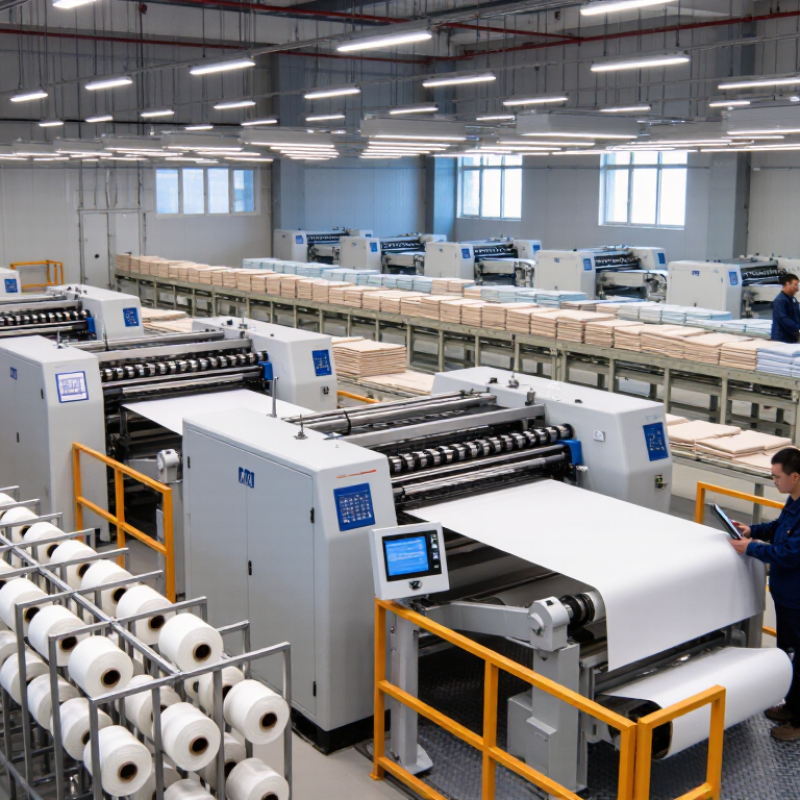
China’s bath towel making machine industry is supported by a large textile manufacturing base and mature supply chains. The National Bureau of Statistics reported that China’s textile industry value added declined by 1.2% in 2023. This reflects softer demand, not a lack of production capability. China remains strong in spinning, weaving, dyeing, finishing, and industrial automation.
Bath towel production requires coordinated equipment. Terry looms must control loop height and yarn tension. Cutting machines handle thick fabric edges. Sewing units need stable feeding around 450–650 GSM towels. China Textile Machinery Association reports that domestic textile machinery companies continue investing in digital control, energy saving, and automated inspection. These upgrades can reduce fabric waste and improve consistency, especially during long production runs.
Small details matter.
The top ten supplier list should not rely on price alone. Buyers should compare machine speed, servo accuracy, spare-part availability, installation support, and verified production samples. The International Textile Machinery Federation has repeatedly identified weak orders and investment uncertainty as major industry pressures. That warning deserves attention. A cheaper machine may consume more power or produce uneven loops after months of operation. The market is also not perfectly measured; public reports rarely separate bath towel machinery from broader textile equipment. Therefore, supplier evaluation should include factory visits, test runs, maintenance records, and independent technical checks before purchase.
Key Criteria for Evaluating Chinese Machine Suppliers
China Top 10 Bath Towel Making Machine Suppliers
When evaluating Chinese bath towel making machine suppliers, examine performance beyond catalogue images. Request a live test using your own yarn or towel design. Check pile height, GSM consistency, fabric width, production speed, and defect rates. A reliable supplier should explain how each setting affects softness and towel absorbency. Ask for machine records, inspection procedures, and clear technical specifications. Vague answers deserve caution.
Supplier experience matters, but it is not enough. Visit the factory or arrange a video inspection of assembly, testing, and spare-parts storage. Confirm whether technicians understand your voltage, workshop space, and expected output. Review installation training, response times, warranty limits, and the availability of common parts. Some suppliers promise fast support but provide slow replies after payment. That gap is easy to overlook.
Tips: Ask for three recent customer references. Request a sample-production report with actual figures. Compare energy use, maintenance hours, and noise levels. Read the contract carefully. Delivery details matter.
Do not judge only by a polished showroom. Real production includes thread breaks, adjustments, and occasional delays. A supplier that discusses these problems openly may be more dependable. I would also leave room in the budget for operator training. Machines rarely perform well when rushed into production. A second technical review can expose assumptions that looked reasonable at first.
Profiles of China’s Top 10 Bath Towel Making Machine Suppliers
China’s top 10 bath towel making machine suppliers differ in scale, equipment focus, and service depth. Their profiles show a broad manufacturing network across Jiangsu, Zhejiang, Guangdong, Shandong, and other industrial regions. Several specialize in terry looms that control pile height, loop density, and fabric width. Others focus on dyeing, drying, shearing, cutting, or automated sewing systems. A few suppliers combine complete production lines with customized modules for smaller factories. Their experience often appears in practical details, such as stable tension control and easy access to replacement parts.
A reliable supplier should provide machine drawings, energy data, installation guidance, and test-run records. Factory visits can reveal more than polished catalogs. Check weld quality, electrical cabinet labeling, operator access, and noise levels during production. Experienced suppliers usually explain maintenance intervals without avoiding difficult questions. They also discuss fabric waste, production speed, and training requirements in measurable terms. However, some supplier profiles rely heavily on sales claims, and published capacity figures may need independent verification. That weakness deserves attention. Buyers should compare warranty language, response times, and spare-part availability before signing a contract. Production samples remain essential, especially when towels require thick loops, precise edges, or frequent color changes.
China’s Top 10 Bath Towel Making Machine Suppliers: Industry Specification Benchmark
This neutral benchmark uses commonly published bath towel fabric-weight ranges to illustrate the product segments supported by Chinese towel-making equipment suppliers. It does not rank or disclose individual company data.
GSM means grams per square meter. Higher GSM generally indicates a denser and more absorbent towel, although softness and performance also depend on fiber composition and finishing.
Machine Types, Features, and Production Capabilities
China’s bath towel machine suppliers cover several production stages. Terry towel looms form looped piles, while jacquard looms create raised patterns and borders. Shearing machines control pile height, and stitching units shape hems, labels, and edges. A complete line may also include embroidery, folding, and packing equipment.
Production capability should be measured beyond advertised speed. The International Textile Machinery Federation reports that textile investment remains sensitive to energy costs and uncertain demand. Therefore, buyers should request tested output using their own yarn, towel size, and design.
A practical line may produce 800–1,500 kilograms daily
but moisture, changeovers, and quality checks reduce real output. Faster is not always better.
Features deserve close inspection. Servo-driven tension control can reduce uneven loops, while automatic stop sensors limit broken-yarn damage. Energy monitoring matters because motors, compressors, and drying systems can affect operating costs.
The Textile Exchange Materials Market Report 2024 states that polyester represented about 59% of global fiber production, while cotton remained essential for absorbent home textiles.
Suppliers should explain how machines handle both fiber conditions. Grand View Research has also identified steady growth in the global home textiles market, supporting continued demand for flexible equipment. Still, capacity claims need evidence.
A factory visit, sample run, spare-parts list, and operator training plan often reveal more than a polished brochure. Some evaluations remain imperfect. Product quality can change after installation.
How to Select and Purchase from a Chinese Supplier
China Top 10 Bath Towel Making Machine Suppliers: How to Select and Purchase from a Chinese Supplier
Selecting among China’s top 10 bath towel making machine suppliers requires more than comparing prices. Grand View Research valued the global textile machinery market at approximately USD 27.7 billion in 2023. Its forecast also indicates steady growth through 2030. This growth attracts capable factories, but also creates uneven quality. Ask each supplier for machine age, weaving width, production speed, towel GSM range, and energy consumption. Request recent inspection records, not only polished factory photographs.
A suitable supplier should run your yarn and towel design on a sample machine. Check pile height, edge stability, absorbency, and fabric defects after washing. For terry towels, inspect electronic control accuracy and loop-forming performance. Confirm whether technicians can support installation remotely or on site. Spare-parts availability matters. A low quotation may become expensive when a sensor stops production.
Review ISO 9001 certification, export experience, warranty terms, and payment milestones. The International Textile Machinery Federation’s 2023 shipment statistics show China remains a major textile machinery manufacturing center. However, shipment scale does not prove every supplier is reliable. Compare total ownership cost, including freight, training, electricity, maintenance, and tooling. I would avoid paying the full amount before factory acceptance. No checklist is perfect. A faster machine may produce more waste with inexperienced operators. Purchase decisions should follow verified samples, written specifications, and direct technical communication.
 Skip to content