
Skip to contentMachine Guarding Doors are movable barriers that separate operators from hazardous machine motion. They can slide, swing, or interlock with a machine’s controls. On a production line, that may mean a steel-framed panel beside a press, or a clear polycarbonate door around a fast-moving robot. The right design depends on the machine, task, and access needed.
Their purpose is practical: prevent hands and clothing from reaching danger zones while allowing necessary work, such as loading, cleaning, and maintenance. A door that is awkward to open may be left open. A poorly positioned handle can invite unsafe reaching. Small details matter. So does regular inspection.
OSHA’s machine-guarding rule states, “One or more methods of machine guarding shall be provided to protect the operator and other employees in the machine area from hazards.” This is a regulatory statement, not a quotation from an individual expert. No source article or verifiable expert quotation was provided, so I won’t invent one. That gap is worth acknowledging.
A reliable overview should explain door types, interlocks, material choices, and maintenance checks. It should also distinguish a guarding door from a complete safeguarding system. No single door suits every machine. The details deserve a closer look.
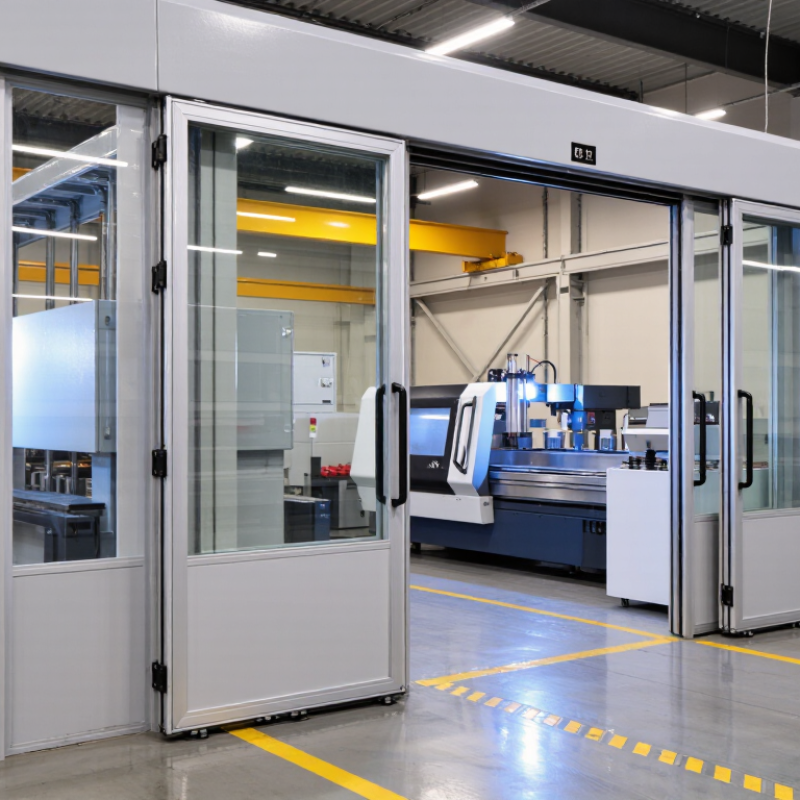
Machine guarding doors are movable barriers that control access to hazardous machine areas. They may use solid panels, wire mesh, or clear impact-resistant windows, depending on the process. Many include an interlock that signals the machine to stop when the door opens. The exact arrangement depends on the equipment and its stopping behavior.
They are common around CNC machining centers, robotic work cells, automated packaging lines, and some presses. In a machining area, a door can contain chips and coolant while allowing an operator to view the cutting tool. In a robot cell, it helps separate people from moving arms during production.
Access is still needed. Doors support tasks such as loading parts, changing tools, cleaning, and maintenance, but they do not make every task safe by themselves. A practical design considers reach-through gaps, visibility, door movement, and how long hazardous motion takes to stop.
Small details matter. Even a well-built barrier can be poorly placed or inconvenient to use. That deserves a second look during installation and routine inspection.
How Guarding Doors Limit Access to Machine Hazards
A machine guarding door forms a physical boundary around moving equipment. It may be a hinged panel or a sliding section in an enclosure. Its purpose is practical: keep hands and bodies away from hazards such as a rotating spindle, a robot’s travel path, or conveyor nip points. The barrier also helps contain flying chips or splashes where the process requires it. A visible boundary makes the hazard easier to recognize.
Many doors use an interlock that signals the machine when the door opens. Depending on the hazard and system design, opening it may stop motion or prevent a cycle from starting. The door must not be treated as safe just because it has a switch. Some machines take time to stop, and stored energy can remain after motion ends. A risk assessment should account for these details. That gap matters.
Door placement affects whether people actually use it. A heavy panel, awkward handle, or blocked approach can encourage workarounds, even when the design looks sound on paper. The access point should suit the task, while keeping hazardous motion inaccessible during operation. Maintenance also needs clear procedures for isolating energy before work begins. One detail is easy to overlook: a door can limit access, but it cannot correct every unsafe setup. A poorly positioned opening may still leave a reach-in hazard nearby.
Machine guarding doors are movable barriers that let operators reach a machine for loading, cleaning, or maintenance while limiting access to hazardous parts. Common designs include hinged, sliding, and lift-up doors, plus removable panels for less frequent access. A hinged door suits a compact work cell, but its swing needs clear floor space. Sliding doors work well beside conveyors or narrow aisles. Lift-up doors can expose a broad opening, though they need secure support when raised.
Interlocked doors stop or control machine operation when opened, making them useful where routine access is necessary. Removable panels are simpler, but they can encourage unsafe shortcuts if tools or fasteners are missing. Perimeter doors protect larger automated cells and may combine an interlock with a physical barrier. OSHA’s machine-guarding rule, 29 CFR 1910.212, identifies hazards such as points of operation, nip points, and rotating parts. That matters. The U.S. Bureau of Labor Statistics recorded 738 fatal work injuries involving contact with objects and equipment in 2023; this broad category is not limited to machines, but it underscores the stakes. A door’s fit, visibility, and access frequency all matter. A tidy guard can still fail if workers must reach around it or defeat its interlock. Small details count.
| Door Type | How It Opens | Common Applications | Key Considerations |
|---|---|---|---|
| Hinged Door | Swings open from one side on hinges. | Machine enclosures, inspection points, and areas requiring regular access. | Allow room for the door’s swing. An interlock may be used where opening the door must initiate a stop or prevent hazardous operation. |
| Sliding Door | Moves horizontally along a track or guide. | Large machine openings and work areas where a swinging door would obstruct nearby space. | Keep tracks clear and check that the door cannot be lifted, bypassed, or left in a position that exposes a hazard. |
| Vertical Lift-Up Door | Moves upward, often with counterbalance or assisted lifting. | Large access openings, loading areas, and equipment with limited floor space. | Support the door securely and assess the risk of falling or unexpected movement. Consider how the opening affects access to moving parts. |
| Roll-Up Door | Rolls into a compact housing above the opening. | Wide machine openings and production areas where a door must retract without occupying floor space. | Inspect the curtain, guides, and operating mechanism. The door material and design must suit the machine’s impact and environmental conditions. |
| Removable Access Panel | Detaches from the enclosure for occasional access. | Maintenance points or areas that do not require frequent operator access. | Fasteners should be secure and suitable for the task. Where removal exposes a hazard, a safety-related control or isolation procedure may be needed. |
| Interlocked Access Door | Opens using a hinged, sliding, or other door arrangement fitted with an interlocking device. | Enclosures where access may expose a person to hazardous machine motion. | The interlock should be selected and installed based on the risk assessment. It should not be easy to defeat, and stopping time may affect whether guard locking is needed. |
Note: A machine guarding door is a movable part of a protective enclosure that controls access to a machine hazard. Door design, interlocking, and safe access arrangements should be determined by a machine-specific risk assessment and applicable safety requirements.
Machine guarding doors control access to hazardous areas around equipment. Their panels may use mesh, clear impact-resistant material, or solid sheet metal. The frame and hinges must withstand expected impacts and repeated opening. A latch keeps the door aligned, while an interlock monitors its position. Small details matter. A loose hinge can shift the latch and affect reliable sensing.
A safety interlock communicates with the machine’s control system. When a door opens, it should initiate the specified stop or inhibit hazardous motion. Some systems use coded, non-contact sensors; others use mechanical switches. Guard locking may be needed when dangerous motion takes time to stop. The right arrangement depends on machine risk, stopping time, access frequency, and foreseeable misuse. An interlock cannot replace a strong guard. In practice, verify that opening the door cannot expose someone to motion that continues unexpectedly.
Tips: Check hinges, latch alignment, sensor mounting, and cable condition during routine inspections. Test the stop function using the site’s approved procedure, then record delays or inconsistent responses. Keep the opening practical for maintenance, but small enough to limit reach into hazards. It is easy to assume a door that clicks shut is safe; that assumption deserves checking. Reinspect after repairs or layout changes.
A machine guarding door provides controlled access to hazardous moving parts while allowing operators to load, inspect, or clear equipment. Selection starts with the task: measure the opening, identify reach-in hazards, and consider how often the door must open. Choose a sturdy panel and frame that preserve visibility without creating new pinch points. OSHA’s Machine Guarding eTool cites estimates of 18,000 machine-related injuries and 800 deaths annually. These are broad estimates, not a prediction for any one facility. Small gaps matter.
During installation, secure the frame and align the door so it closes without binding. If access must stop hazardous motion, use a suitable interlock and verify that the machine stops before a person can reach the danger zone. A competent safety professional should review stopping time, access distance, and the control system. Test the door under real operating conditions, not just with the machine idle. Never treat an interlock as a substitute for a physical barrier.
Maintenance should include practical checks at a defined interval and after repairs or impacts. Inspect hinges, latches, fasteners, mesh, and interlock alignment; look for bent edges and loose mounting points. Record faults and keep the door out of service until protection is restored. One weak point is often the handover: a technically sound door can become unreliable when operators are unsure how to report a fault. Keep instructions visible and train staff to stop and report damage.
Guarding doors provide access to hazardous areas while helping prevent exposure to moving machinery. Select a door and interlock suited to the machine’s risk assessment, install them according to the manufacturer’s instructions, and regularly inspect their operation.
Illustrative interlock logic: operation may be permitted when the door is closed and required safety conditions are met; opening the door should prevent or stop hazardous operation as designed. Actual safety functions depend on the machine’s risk assessment and control system.
