Skip to contentFinding a reliable China Leading Square Bottom Fibc Supplier requires more than comparing prices on a product page. Square bottom FIBCs must remain stable during filling, stacking, transport, and discharge. Their fabric weight, lifting loops, seams, coating, and liner design all affect performance. A capable supplier should explain these details clearly, not hide behind broad claims.
Experience matters at the factory level. Ask how many years the company has produced square bottom bags and which industries it serves. Request production photos, sample reports, and evidence of quality inspections. Check whether the supplier controls weaving, cutting, sewing, and final packing. Small details can reveal a lot. For example, uneven stitches or poorly finished loop edges may signal wider process problems.
A trustworthy China Leading Square Bottom Fibc Supplier should provide traceable raw material information and consistent batch records. Independent testing can verify tensile strength, seam strength, dimensions, and safe working load. Confirm that documents match the actual product, especially when food, chemical, or industrial applications require specific standards. A certificate alone proves little.
Communication also deserves careful attention. Can the supplier answer technical questions without repeated delays? Does it report production changes honestly? Can it discuss a failed sample and explain the correction? These practical moments show reliability better than impressive photographs.
Price still matters, of course. Yet the cheapest offer may create higher costs through damaged cargo, rework, or delayed delivery. Buyers should inspect samples under realistic conditions and record every requirement. Mistakes happen, even with experienced teams. The important issue is whether the supplier notices them, accepts responsibility, and improves the process before mass production.
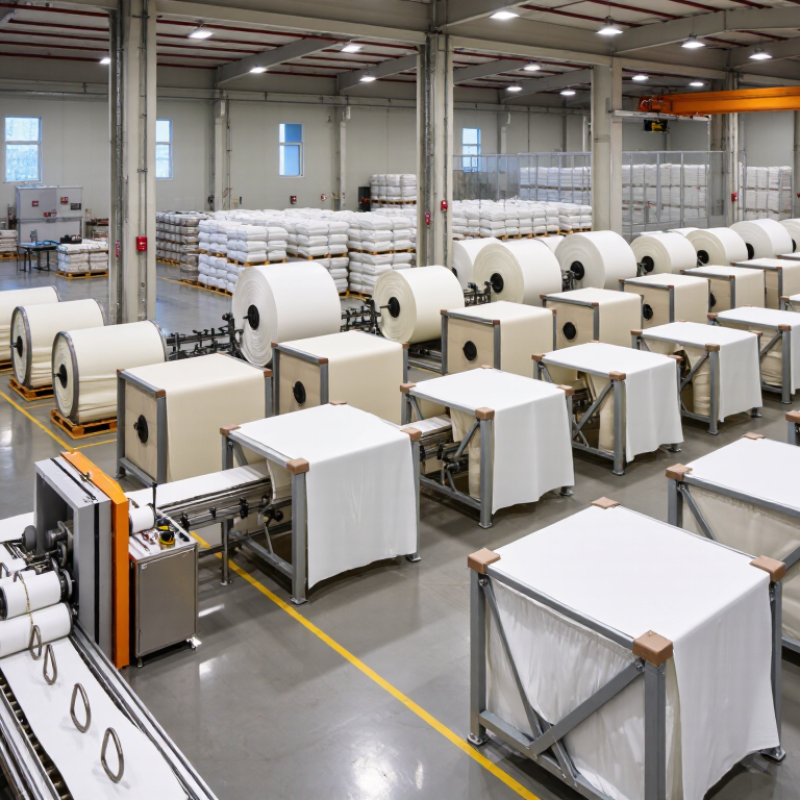
A leading square bottom FIBC supplier is more than a factory with attractive prices. It is an experienced technical partner that designs stable, stackable bulk bags for specific loading and storage conditions. The square bottom structure usually uses four shaped panels, helping the filled bag keep a cleaner footprint than a standard circular bag. This matters in warehouses, trucks, and automated filling lines.
The Grand View Research Flexible Intermediate Bulk Container Market Report estimated the global market at over US$7 billion in 2023, with continued growth expected through 2030. Such growth increases supplier choice, but also increases quality risks. A reliable supplier should provide documented fabric strength, safe working load, safety factor, seam performance, and lifting-loop tests. ISO 21898 compliance is a useful reference for packaging intended to carry non-hazardous bulk materials. Ask for batch records, inspection photos, and traceability documents.
Details matter.
During supplier evaluation, inspect fabric weaving, corner shape, discharge spouts, liner fitting, and pallet compatibility. A capable manufacturer should explain how polypropylene tape strength changes with ultraviolet exposure, moisture, and long storage. Third-party testing adds credibility, but it does not replace factory audits. No supplier is perfect. A quotation may omit testing, packaging, or mold-prevention controls. That gap deserves attention. The strongest supplier communicates clearly, admits technical limits, and improves specifications before mass production begins.
| Evaluation Dimension | What a Leading Supplier Should Provide | Practical Reference Data | Evidence to Request |
|---|---|---|---|
| Applicable Standards | Manufacturing and testing procedures aligned with recognized FIBC requirements. | ISO 21898 is the international standard for packaging of flexible intermediate bulk containers. | Current certificates, test procedures, inspection records, and batch traceability documents. |
| Square Bottom Construction | A four-panel or four-corner construction that maintains a stable square shape when filled. | Common finished dimensions include approximately 90 × 90 × 100–120 cm, depending on capacity and filling density. | Technical drawing, dimensional tolerance limits, empty-bag photographs, and filled-bag stability samples. |
| Safe Working Load | A clearly defined SWL based on bag design, lifting method, filling ratio, and intended use. | Commercial square-bottom FIBCs commonly support an SWL of about 500–2,000 kg; the approved value must be confirmed by testing. | SWL marking, design calculation, load-test report, and written confirmation of the applicable lifting configuration. |
| Safety Factor | A safety factor selected according to the product type, handling cycle, and reuse requirements. | 5:1 is widely used for single-trip FIBCs; reusable designs may use 6:1 when specified and validated. | Safety-factor declaration, seam-strength results, lifting-loop test data, and reuse instructions. |
| Fabric and Lamination | Virgin or approved recycled polypropylene fabric selected for the required strength, permeability, and product compatibility. | Uncoated fabric supports airflow; coated polypropylene reduces moisture and fine-powder penetration. | Fabric specification, denier or grammage data, coating details, material declaration, and sample inspection results. |
| Seam and Loop Strength | Consistent stitching density, reinforced stress points, and lifting loops designed for the stated SWL. | Critical seams and lifting components should be tested as part of the complete bag design rather than judged only by fabric strength. | Destructive seam tests, loop tensile reports, sewing specifications, and production inspection records. |
| Discharge and Filling Design | Inlet and outlet dimensions matched to the customer’s filling, discharge, and dust-control equipment. | Typical options include top inlet diameters of approximately 35–90 cm and bottom outlet diameters of approximately 15–45 cm. | Opening drawings, closure specifications, discharge-flow test results, and compatibility confirmation. |
| Product Compatibility | A material and construction recommendation based on powder size, moisture sensitivity, temperature, and contact requirements. | Food, pharmaceutical, chemical, mineral, and agricultural materials may require different liners, fabrics, coatings, or cleanliness controls. | Food-contact or product-contact documentation where applicable, liner specification, cleanliness procedure, and compatibility statement. |
| Testing and Inspection | Documented incoming-material inspection, in-process checks, final inspection, and batch release procedures. | Important checks include dimensions, fabric condition, stitching, SWL marking, contamination, and packaging condition. | Inspection checklist, calibrated-equipment records, batch test report, nonconformity procedure, and retained samples. |
| UN-Certified Options | UN-tested designs for applicable dangerous goods, with the correct construction, marking, and packaging documentation. | UN FIBC designs are subject to applicable dangerous-goods packaging requirements and must be used within their approved conditions. | Valid UN test certificate, design type, marking information, and confirmation that the supplied design matches the tested configuration. |
| Production Capacity | Capacity that supports repeat orders without changing materials, construction, or quality controls without approval. | A reliable supplier should disclose realistic monthly capacity, lead time, minimum order quantity, and peak-season limitations. | Capacity statement, production schedule, lead-time record, raw-material planning process, and sample-to-mass-production procedure. |
| Traceability | Each production batch should be traceable from raw materials through inspection and shipment. | Traceability should cover production date, batch number, material lot, inspection results, and shipment quantity. | Batch coding example, material-lot records, inspection reports, packing list, and corrective-action records. |
| Supplier Selection Result | Select the supplier that demonstrates stable technical performance, documented compliance, transparent communication, and consistent delivery. | A practical comparison can score each category from 1 to 5 and give higher weighting to safety, testing, compatibility, and traceability. | Completed supplier questionnaire, approved sample, independent test results where necessary, and signed technical specification. |
A reliable square bottom FIBC starts with measurable specifications, not attractive photos. Confirm the finished dimensions, filling capacity, safe working load, and safety factor. Common industrial bags use a 5:1 or 6:1 safety factor, depending on handling conditions. Ask for fabric weight, tensile strength, and coating thickness. These details affect load stability and moisture resistance.
The square base should remain flat after filling. Check corner construction, seam density, lifting loop strength, and dimensional tolerance. Reinforced seams reduce bulging during forklift movement. A discharge spout should close securely and operate without excessive fabric stress. If the cargo needs extra protection, verify the liner material, thickness, fit, and sealing method. Small gaps can cause serious leakage. Details matter.
Reliable suppliers in China should provide batch records, test reports, sample approval, and clear inspection procedures. Request photographs of woven fabric, stitching, and finished load testing. Factory audits can reveal uneven seams or rushed packing that documents miss. A specification sheet can still hide weaknesses. Inspect samples under realistic loading conditions, not only in an empty warehouse. I would also compare repeated samples, because one perfect bag proves little. Tolerances must be written clearly, although buyers sometimes overlook them. That mistake becomes expensive during stacking, transport, and discharge.
Common Safe Working Load Classes for Square Bottom FIBCs
A dependable square bottom FIBC supplier should provide a clearly documented Safe Working Load (SWL), a tested safety factor commonly specified as 5:1 for single-trip bags or 6:1 for reusable bags, consistent fabric and seam construction, verified lifting-loop strength, and a discharge design suited to the product. The SWL classes shown are common industry ratings; the final specification must be confirmed through product testing and application requirements.
Reference basis: common FIBC market classifications and ISO 21898 requirements for FIBCs used with non-dangerous goods. Actual ratings depend on design, material, filling method, handling conditions, and certification.
How to Find a Leading Square Bottom FIBC Supplier in China?
When evaluating Chinese FIBC manufacturers, inspect production evidence rather than relying on polished websites. Grand View Research’s 2024 analysis estimates the global FIBC market at about US$6 billion in 2023, with steady growth through 2030. This expansion attracts capable factories and weaker traders. Ask for factory registration, production videos, recent audit records, and export references. A direct factory visit is still valuable. Photographs can mislead.
For square bottom bags, check fabric weight, coating uniformity, lifting-loop alignment, and seam strength. Request samples made from the same polypropylene grade used in production. Then compare test reports against ISO 21898 requirements. Mordor Intelligence’s 2024 market study also identifies packaging performance and supply reliability as important growth factors. Do not accept certificates alone. Verify the issuing laboratory, test date, and sample identification.
Review the supplier’s quality plan in detail. It should show incoming resin checks, loom inspections, stitching controls, and final load testing. Ask how rejected bags are recorded. Ask again. Reliable suppliers can explain corrective actions without hesitation. Price deserves attention, but an unusually low quotation may hide thinner fabric, recycled content, or weak seams. One practical weakness remains: remote evaluation cannot reveal every production habit. Use a small trial order, define tolerances in writing, and inspect random cartons before shipment. Calculating total cost should include testing, packaging, lead time, and potential replacement losses.
A reliable supplier should provide quality certifications that match your application, not merely display attractive logos. ISO 9001 shows a structured quality management system, but it does not guarantee every bag performs well. For square bottom FIBCs, request test evidence based on ISO 21898. This standard covers important areas, including lifting loops, seams, construction, and safe working load. Ask for recent laboratory reports, not only scanned certificates.
Check each document carefully. The company name, factory address, certification scope, and expiry date should match your purchasing contract. An independent accredited body should issue the certificate. If the bags handle food, request applicable food-contact declarations and migration test results. If they carry regulated materials, confirm the required UN testing documents for that specific design. Certifications can expire. Details matter.
Tips: Ask for a sample before placing a large order. Inspect stitching around the four corner loops and the square base. Request a filled-load test video, but do not treat video evidence as final proof. Compare the report with the actual fabric, liner, discharge spout, and lifting design. A certificate may cover one model only. This is often overlooked. Suppliers should also explain batch traceability and corrective action procedures. A polished document is useful, but consistent production records are more convincing.
Selecting the right square bottom FIBC supplier in China starts with a clear specification. Define bag dimensions, safe working load, fabric weight, coating, liner, lifting loops, discharge spout, and filling method. Include the actual material density and pallet size. Small omissions can cause costly production changes.
Request factory photos, production records, test reports, and recent export references. A reliable supplier should explain how fabric strength, seam quality, and dimensional stability are checked. Ask for a pre-production sample, not only a catalogue image. Inspect its base shape, loop alignment, stitching, and discharge closure. Details matter. Confirm the supplier’s quality system, traceability process, and ability to meet applicable packaging and transport requirements.
Price is only one part of the order. Compare the full quotation, including tooling, sample fees, packaging, inspection, shipping terms, and replacement policy. Clarify the minimum order quantity and realistic lead time in writing. During a factory call, ask who manages quality problems and how quickly corrective action is issued. Communication reveals experience. I have seen buyers choose the lowest offer and later discover inconsistent fabric weight. That decision was not always foolish, but the evaluation was incomplete. Order a controlled trial batch before committing to a large shipment. Check random bags after production, because one approved sample cannot represent every lot.