
Skip to content

10 Tips for Buying Dehydrated Onion Snacks

Buying Dehydrated Onion Snacks looks simple until the package, texture, and flavor tell different stories. A crisp ring may seem fresh, while excessive powder or a sharp, stale aroma suggests poor handling. This guide introduces ten practical tips for making a more confident choice.

Harold McGee, a respected food science writer, describes drying as “the oldest and simplest way of preserving food.” His observation explains why dehydration remains valuable today. Removing moisture can concentrate onion flavor, extend shelf life, and create a light snack for travel or quick cooking. However, dehydration does not automatically guarantee quality. That part deserves attention.

Check the ingredient list before trusting the front label. Look for recognizable onion ingredients, limited additives, and clear allergen information. Compare sodium levels, especially when the snacks are seasoned. Examine the package for moisture damage, broken seals, or clumped pieces. Those small details matter.

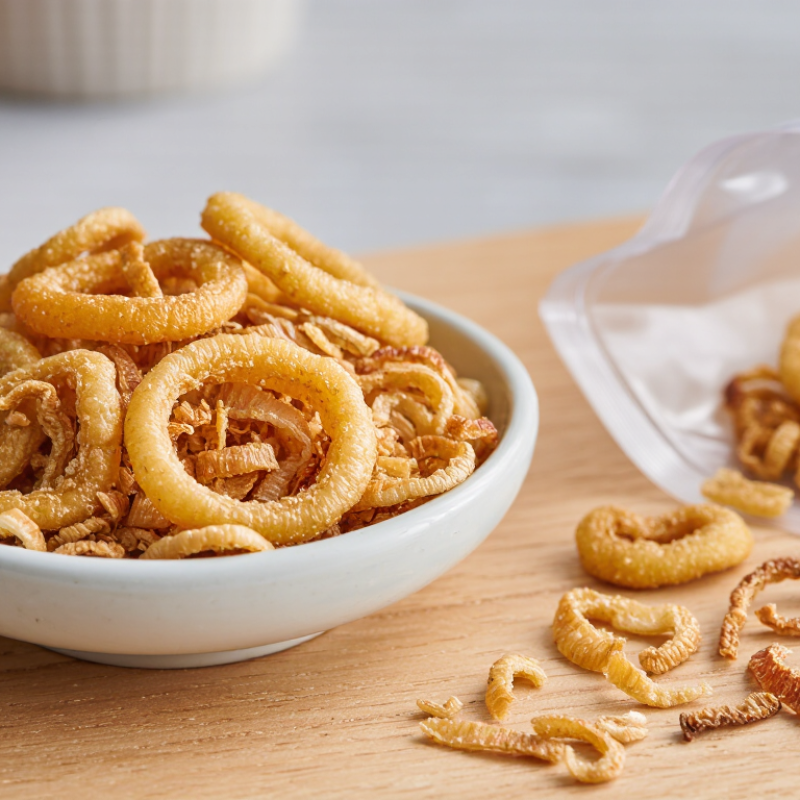
Texture also provides useful evidence. Good Dehydrated Onion Snacks should feel dry and crisp, not rubbery or greasy. The color should look reasonably consistent, although perfect uniformity is not always necessary. Natural variation happens. Sometimes, shoppers expect too much perfection.

Storage instructions deserve equal consideration. Resealable packaging can protect crunch after opening, but only in a cool, dry cupboard. Taste a small portion first. Notice sweetness, bitterness, saltiness, and any musty note. No checklist is flawless, and personal preference still matters. These tips combine label reading, sensory experience, and practical judgment for a more reliable purchase.
10 Tips for Buying Dehydrated Onion Snacks

Confirm USDA-Style Moisture Limits and Onion-Only Ingredients

When buying dehydrated onion snacks, check moisture information before judging flavor or crunch. A USDA-style moisture limit can serve as a useful quality benchmark, but it is not automatically the same for every product. Ask for the stated limit, testing method, and lot-specific certificate of analysis. Moisture levels that run high may soften the pieces, shorten shelf life, or encourage spoilage during storage.

Look for an ingredient panel that says only onion, without added salt, oil, sugar, flavoring, preservatives, or anti-caking agents. “Natural flavor” still deserves questions. It may not fit an onion-only requirement. Also check the package for serving size, batch identification, seal condition, and a clear best-before date. A reliable seller should answer these details without vague promises.

Use your senses, but do not treat them as laboratory evidence. The pieces should feel dry and light, with a clean onion aroma and no sticky patches. A sharp snap helps. It is not proof. I once assumed a crisp texture guaranteed low moisture, but packaging humidity can create a misleading result. After opening, reseal the bag quickly and store it away from heat. Compare the listed specification with your actual experience, and reconsider products that hide either their ingredients or moisture data.

10 Tips for Buying Dehydrated Onion Snacks

USDA FoodData Central reference composition for generic dehydrated onion flakes, shown per 100 g. Use the moisture value as a product-comparison reference, not as a universal legal moisture limit.

Buying check: Ask for lot-specific moisture and water-activity results, verify that the ingredient list contains onion only, and confirm that the supplier’s specification matches the applicable food-safety requirements in your market.

Source: USDA FoodData Central, generic dehydrated onion flakes; values rounded to one decimal place.

Use FDA’s 0.85 Water-Activity Threshold to Assess Safety and Crispness

10 Tips for Buying Dehydrated Onion Snacks

Use FDA’s 0.85 Water-Activity Threshold to Assess Safety and Crispness

Water activity, or aw, shows how much water is available for microbial growth. It differs from total moisture. For many shelf-stable foods, the FDA uses 0.85 aw as an important safety threshold. Look for a lot-specific test result near or below this value. Do not treat it as a complete safety guarantee. Yeasts, molds, packaging faults, and poor handling still matter. Ask whether the test covered the finished product, not only the raw onion.

Check the package seal, date code, and storage instructions. Choose pieces that look dry, light, and evenly colored. Avoid swollen bags, soft flakes, or a sour smell. Crispness depends on water activity, oil content, and moisture moving through the package. A low aw can support crunch, but damaged packaging may quickly reverse it. Once opened, reseal the bag tightly and keep it away from steam. The kitchen counter beside a kettle is a poor location.

Read the ingredient list for unnecessary oils, sugars, or heavy seasoning. Compare texture across pieces, since uneven drying can create both brittle and chewy bites. If a seller cannot explain its aw testing or handling controls, pause before buying. I once assumed “dry” meant stable; that shortcut was too simple. Home texture checks are useful, but they cannot replace validated testing. Buy a small pack first, then judge crunch after opening and again the next day.

Compare USDA FoodData Central Values for Sodium, Calories, and Fiber

Buying dehydrated onion snacks requires more than checking the ingredient list. USDA FoodData Central lists plain dehydrated onion at about 341 calories, 73 milligrams of sodium, and 15.2 grams of fiber per 100 grams. A 10-gram handful provides roughly 34 calories and 1.5 grams of fiber. These values describe plain onion, not seasoned snack pieces. Salt, oil, and coatings can change the numbers sharply. The World Health Organization recommends fewer than 2,000 milligrams of sodium daily, so small portions still deserve attention.

Tip 1: Compare labels using the same serving size. One package may list 15 grams, while another uses 30 grams. I prefer weighing a sample with a kitchen scale because “one handful” is unreliable. Tip 2: Check sodium per 100 grams when possible. A crunchy product with 400 milligrams per serving may look moderate, but its serving could be unusually small.

Fiber can support a more satisfying snack, but the USDA figure may mislead if the product contains little onion and more starch. Tip 3: Read the ingredient order carefully. Onion should appear near the beginning. Look for added salt, sugar, and frying oils. Calories also need context; dehydrated vegetables lose water, concentrating nutrients and energy by weight. My imperfect rule is simple: choose the least processed option, then verify it against the Nutrition Facts panel. USDA data is a useful baseline, not a guarantee for every snack.

10 Tips for Buying Dehydrated Onion Snacks — Compare USDA FoodData Central Values for Sodium, Calories, and Fiber
Tip What to Check Before Buying USDA Reference Comparison Sodium
per 100 g
Calories
per 100 g
Fiber
per 100 g
Practical Buying Guidance
1 Read the ingredient list first. USDA reference foods include raw onion and dehydrated onion forms; packaged snacks may contain additional oil, salt, sugar, or seasonings. 4 mg
Raw onion

73 mg
Dehydrated onion
40 kcal
Raw onion

341 kcal
Dehydrated onion
1.7 g
Raw onion

15.2 g
Dehydrated onion
Prefer a short ingredient list such as onion, with seasonings clearly identified.
2 Compare serving sizes, not only front-label claims. A 10 g portion of plain dehydrated onion, calculated from USDA values, provides approximately 34 kcal, 7 mg sodium, and 1.5 g fiber. 7 mg
per 10 g
34 kcal
per 10 g
1.5 g
per 10 g
Use the same gram amount when comparing different snack packages.
3 Choose unsalted or lightly salted options when possible. Plain dehydrated onion has about 73 mg sodium per 100 g in the USDA reference entry; added salt can increase the final product substantially. 73 mg
plain reference
341 kcal
plain reference
15.2 g
plain reference
When two products are similar, select the one with less sodium per serving.
4 Check whether oil has been added. The USDA dehydrated-onion reference describes the dried vegetable itself. Oil-based coatings can raise calories beyond the plain reference value. 73 mg
reference value
341 kcal
reference value
15.2 g
reference value
For a lower-calorie snack, compare products without fried coatings or added oils.
5 Look for meaningful fiber per serving. Dehydration concentrates nutrients by weight: dehydrated onion contains about 15.2 g fiber per 100 g compared with 1.7 g in raw onion. 73 mg
dehydrated
341 kcal
dehydrated
15.2 g
dehydrated
Remember that a small snack serving will contain only a fraction of the per-100-g fiber value.
6 Distinguish flakes, pieces, and powder. FoodData Central values are commonly reported per 100 g, while package serving sizes may use cups, tablespoons, or pieces. Use package label Use package label Use package label Use the package gram weight whenever possible because volume measures vary with particle size.
7 Watch for seasoning blends. Garlic, cheese flavoring, sugar, maltodextrin, and salt can change the nutrition profile from the plain USDA onion reference. May exceed
73 mg/100 g
May exceed
341 kcal/100 g
May differ from
15.2 g/100 g
Compare the Nutrition Facts panel rather than assuming all dried onion snacks have the same values.
8 Consider portion control because dried foods are concentrated. Removing water increases calories and fiber per 100 g compared with fresh onion. 4 mg
raw onion
40 kcal
raw onion
1.7 g
raw onion
Measure a serving into a bowl instead of eating directly from the package.
9 Check storage and package integrity. USDA nutrient reference values do not assess moisture protection, freshness, or packaging quality. Nutrition value
not applicable
Nutrition value
not applicable
Nutrition value
not applicable
Choose sealed packaging, check the date, and avoid products with visible moisture or damaged seals.
10 Use the label for the final product decision. USDA values are reference data for generic foods; a packaged snack may differ because of processing, ingredients, and serving size. Compare per serving Compare per serving Compare per serving Choose the product that best fits your sodium, calorie, fiber, and ingredient preferences.
Data note: Nutrient figures are generic reference values associated with USDA FoodData Central food profiles for raw onion and dehydrated onion, shown per 100 g unless otherwise stated. The 10 g dehydrated-onion values are mathematical conversions from the per-100-g reference values. Actual packaged snack values can vary by recipe, added ingredients, processing method, and serving size.

Check FDA’s 2,300 mg Daily Sodium Value and Seasoning Additives

When buying dehydrated onion snacks, I check sodium before judging flavor. The FDA lists 2,300 milligrams as the Daily Value for sodium. That equals about one teaspoon of salt, across an entire day. The CDC reports that Americans consume over 3,400 milligrams daily on average. One small snack can quietly push that total higher. I once chose a “lightly seasoned” pouch and missed its two-serving label. The portion looked tiny.

Read the Nutrition Facts panel beside the ingredient list. Compare sodium per serving, then calculate the whole pouch. A 180-milligram serving becomes 540 milligrams if you eat three servings. Watch for salt, sodium citrate, monosodium glutamate, and seasoned coating blends. These ingredients are not automatically unsafe, but they can make flavor stronger while hiding sodium density. The USDA FoodData Central database shows plain dehydrated onion contains naturally occurring nutrients, while prepared products vary widely by added seasoning. WHO recommends adults consume less than 2,000 milligrams of sodium daily, a stricter reference point than the FDA’s Daily Value. Check the serving weight, too. A “low sodium” claim may reflect a small serving rather than a genuinely mild recipe. I still find labels confusing sometimes. That is worth admitting. Compare two packages under the same serving size, and favor simple seasoning when the numbers remain close.

Verify HACCP, ISO 22000, Packaging, Storage, and Lot-Code Controls

10 Tips for Buying Dehydrated Onion Snacks

Verify that the supplier operates a documented HACCP system. Ask for the latest hazard analysis, not only a certificate image. Confirm that ISO 22000 certification is current and covers the correct production site. Check whether onion handling, drying, and packing appear within its stated scope. Request recent microbiological and moisture test results. A clean-looking sample proves very little. I once trusted appearance too quickly.

Inspect every package for tight seals, intact edges, and clear ingredient information. Choose packaging with strong moisture and oxygen barriers. Dehydrated onions can soften quickly after air enters. Ask whether the material suits the product’s shelf life. Review allergen-control procedures, especially where shared equipment is used. Small details matter.

Check storage instructions before buying large quantities. The warehouse should be cool, dry, clean, and protected from direct sunlight. Confirm that cartons stay off the floor. Read the lot code and production date carefully. The code should support traceability from finished pack to raw onion records. Ask how quickly a lot can be identified during a complaint. Test one opened pack after storage at home. Record changes in aroma, crispness, color, and taste. My own checks are not laboratory evidence, and that limitation deserves attention.

Scroll To Top