 Skip to content

How to Choose Silk Covered Litz Wire for Your Needs?
Choosing silk covered litz wire is not just a matter of picking a diameter. The right construction depends on operating frequency, current, winding space, and the conditions inside the finished equipment. Litz wire uses multiple insulated strands arranged to help manage AC losses, while its silk covering can provide a flexible outer layer for handling and winding. Details vary by manufacturer, though. Check the actual strand count, strand size, covering material, and finished dimensions before comparing products.
Start with the electrical requirements. A transformer operating at a few kilohertz may call for a different strand arrangement than a compact coil used at a higher frequency. Then consider practical details: Will the wire fit through a narrow bobbin slot? Can the ends be stripped and terminated reliably? Does the assembly face heat, abrasion, or repeated movement? Small differences matter. A braid that looks neat on a sample spool may add too much bulk to a tight winding.
This guide explains how to match silk covered litz wire to an application, assess supplier specifications, and avoid common selection mistakes. No single construction is best for every design. Even an experienced engineer may need to test a sample in the actual winding, because paper dimensions do not reveal every handling issue. Use this information as a starting point, then confirm performance against your equipment’s requirements and the manufacturer’s documented limits.
Understand the Structure and Purpose of Silk-Covered Litz Wire
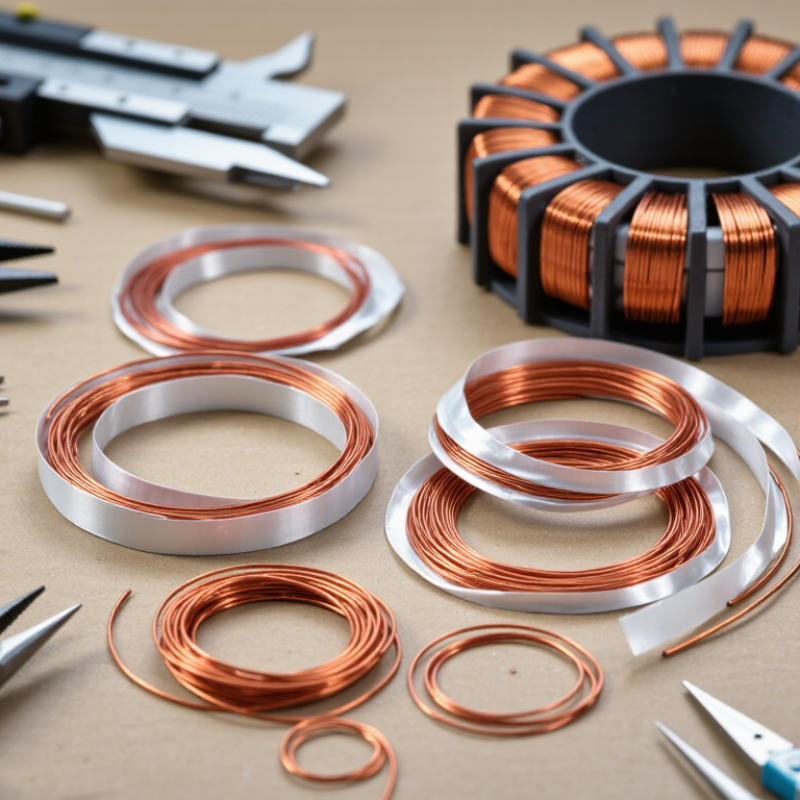
Silk-covered litz wire combines many fine, individually enamel-insulated copper strands with an outer textile wrap. The strands are twisted or grouped in a planned pattern, helping distribute current among them at higher frequencies. The silk covering sits outside this bundle; it does not replace the enamel on each strand. That distinction matters when checking electrical requirements. Small detail, big difference.
The outer wrap can protect the bundle from scuffing during winding and make the wire easier to handle. In a hand-wound coil, for example, the covering may help the wire slide around a former without exposing loose strands. It can also add spacing between adjacent turns. But the wrap changes the wire’s outside diameter and can affect how tightly a coil fits. “Silk” may also refer to different textile materials, so confirm the actual covering rather than relying on the name alone.
Choose a construction around the application’s frequency, current, winding space, bend radius, and operating temperature. Check strand count and diameter, enamel type, overall dimensions, and the covering material with the supplier’s technical data. Pay attention to how the ends will be stripped and terminated; the textile can fray, and neat-looking ends are not guaranteed. A wire that handles beautifully on the bench may still be too bulky in a finished coil, so test a short sample before committing to a full winding.
| Selection Factor | What to Check | Why It Matters | Practical Guidance |
|---|---|---|---|
| Wire structure | Fine copper strands are individually insulated, assembled into a bundle, and covered with a textile yarn wrap. | The strand insulation and construction help manage high-frequency current effects; the textile covering holds the bundle together and provides a protective outer layer. | Confirm the strand insulation, lay or bunch construction, and covering material in the product specification. “Silk covered” alone does not define the electrical construction. |
| Operating frequency | The frequency range of the transformer, inductor, resonant circuit, or other application. | At higher frequencies, skin and proximity effects can increase AC resistance and losses in conductors. | Choose strand diameter and bundle construction for the operating frequency. The suitable design depends on the application’s waveform, magnetic field, and winding layout. |
| Strand diameter and count | Individual strand diameter, number of strands, and total copper cross-sectional area. | Strand dimensions affect high-frequency behavior, while total copper area is an important input for current capacity and DC resistance. | Compare the specified copper area and strand details—not just the overall covered diameter. Verify current and temperature limits for the actual installation. |
| Silk or textile covering | Covering material, number of wraps, coverage, and finished outside diameter. | The wrap can improve handling, bundle integrity, and separation between adjacent turns, but its properties vary with material and construction. | Check abrasion, temperature, and chemical requirements. Do not treat a textile covering as certified primary electrical insulation unless its rating and intended use are specified. |
| Current and temperature | RMS current, duty cycle, cooling conditions, allowable temperature rise, and ambient temperature. | Conductor losses produce heat; permissible current depends on the complete design and thermal environment, not wire size alone. | Use application-specific thermal calculations or testing. Check the temperature ratings of the strand insulation and covering, as well as any winding insulation system. |
| Flexibility and winding | Bend radius, coil shape, winding method, and available space in the magnetic component. | A flexible stranded bundle can be easier to wind than a solid conductor, while the finished wrap affects handling and packing density. | Check the finished outside diameter and minimum bend guidance, then test the wire with the intended winding process to avoid damaging strands or covering. |
| Termination and soldering | How strand insulation and textile covering are removed, and how the conductor ends are joined. | Unremoved strand insulation can prevent reliable electrical contact; excessive heat can damage nearby insulation or covering. | Confirm whether the strand insulation is solderable and follow the specified stripping and termination process. Validate the connection mechanically and electrically. |
| Application fit | Frequency, loss target, voltage requirements, winding space, environment, and applicable standards. | Silk-covered Litz wire is commonly considered for high-frequency windings where flexible, multi-strand conductors and a textile wrap are useful. | Request a specification covering strand construction, copper area, insulation, covering, dimensions, and ratings. Compare candidates against the complete electrical and mechanical requirements. |