Skip to contentIndustrial automation is expanding across energy, manufacturing, transport, and process facilities. The International Energy Agency’s World Energy Investment 2024 report projected global energy investment above USD 3 trillion. This growth increases demand for reliable signal transmission in electrically noisy environments. It also raises expectations for cable traceability, testing, and long-term performance.
This guide introduces the 2026 Top Standard Bs Instrumentation Cable Suppliers for engineers, contractors, and procurement teams. The assessment considers conductor quality, insulation systems, shielding design, temperature ratings, documentation, and delivery capability. Suppliers should demonstrate compliance with relevant British and international requirements, including BS 5308 references, BS EN 50288 specifications, and IEC 60228 conductor classes where applicable. Buyers must verify each project’s exact specification. A familiar label is not proof of current compliance.
Practical evaluation matters. Check batch numbers. Review fire-test reports. Confirm screen coverage. Inspect drum markings before installation. According to the IEC 2024 World Energy Transitions Outlook, expanding electrification and industrial modernization will require stronger infrastructure reliability. Instrumentation cables support that reliability by protecting low-level control and measurement signals. However, market data often combines control, power, and instrumentation cable categories. Direct comparisons can therefore mislead. No ranking is perfect.
Our supplier review focuses on evidence rather than promotional claims. It considers manufacturing experience, laboratory capability, export consistency, technical support, and after-sales responsiveness. A supplier may offer an attractive price but weak documentation. Another may provide excellent engineering support but longer lead times. These trade-offs deserve careful reflection. The strongest choice is not always the cheapest cable. It is the cable that remains traceable, compatible, and stable after years of operation.
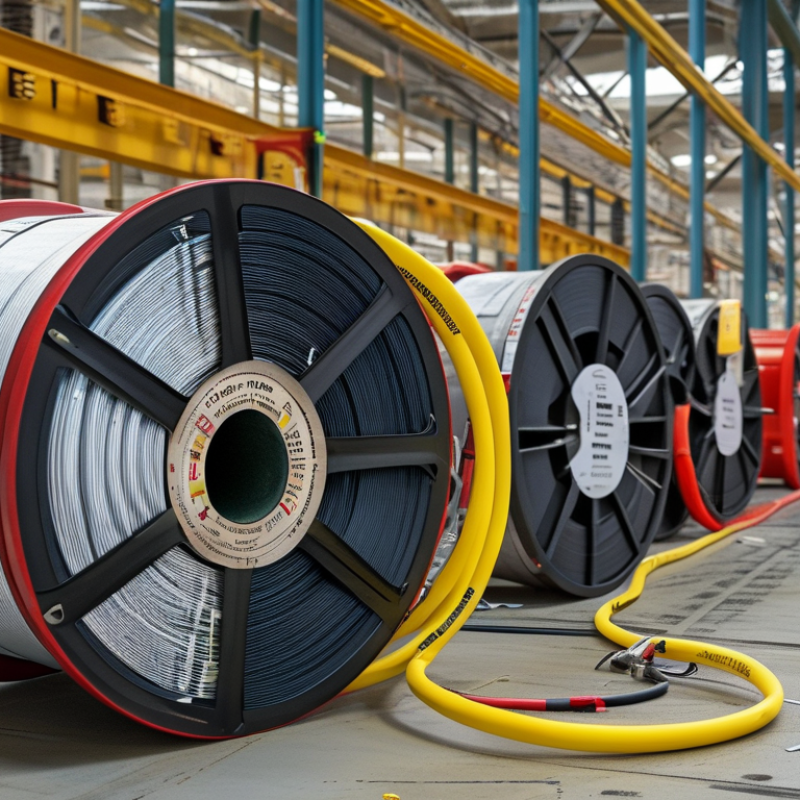
BS Instrumentation Cable Standards and Technical Requirements
BS instrumentation cable selection starts with the applicable standard, not the supplier’s catalogue. The BSI standards catalogue lists BS 5308 as withdrawn, with later requirements commonly aligned with BS EN 50288-7. This standard addresses multi-element metallic cables for analogue and digital signal transmission. Buyers should verify the project specification. Old references can create confusion.
Typical cables use stranded copper conductors, insulation, individual screens, an overall screen, and a protective sheath. Drain wires should provide reliable screen continuity. Pair or triad construction helps limit electromagnetic interference. Capacitance and resistance must match the control system. A small mismatch can weaken low-level signals. It happens more often than expected.
BS EN 50288-7 defines performance characteristics, while IEC 60228 supports conductor classification and resistance verification. IEC 60332-1-2 is commonly referenced for vertical flame propagation testing. For hazardous industrial areas, designers may also require low-smoke, halogen-free materials and enhanced fire performance. These requirements are project-dependent, not automatic. The IEC 2024 World Energy Investment report shows continued high investment in electrification and industrial infrastructure, increasing the need for dependable signal networks. Yet cable quality cannot be judged by market growth alone. Factory test records should confirm conductor resistance, insulation resistance, capacitance, screening effectiveness, and voltage testing. Supplier declarations are useful, but independent verification remains wiser.
High-quality BS instrumentation cables are built for signal stability, not visual appeal. In field installations, I look first at conductor consistency, insulation quality, and documented electrical performance. Copper conductors should maintain low resistance across the full drum length. Small variations can create troublesome readings.
Clear insulation is not enough. The material must resist moisture, heat, oils, and mechanical stress expected at the site. A properly applied screen reduces electromagnetic interference from motors and power circuits. Drain wires should remain continuous and easy to terminate. Good shielding matters.
Check the data sheet carefully. Capacitance, impedance, operating temperature, and voltage ratings must suit the control system. A robust outer sheath helps the cable survive pulling, bending, and crowded trays. Flame performance and smoke behavior also deserve attention in enclosed areas. Test reports, batch records, and traceable inspection results support reliable purchasing decisions.
Real projects expose weak points. A cable may meet basic BS requirements yet perform poorly after careless installation. Tight bends, damaged screens, or incorrect glands can defeat good materials. I have seen neat-looking runs produce unstable signals. That experience makes supplier quality control essential. Suppliers should provide consistent dimensions, inspection evidence, and responsive technical support. No cable is perfect. The specification must match the installation, not merely the catalog.
How to Evaluate Instrumentation Cable Suppliers in 2026
A reliable instrumentation cable supplier should prove performance, not merely display a catalogue. Request conductor resistance, insulation resistance, capacitance, shielding coverage, and flame-test records. These details matter near control panels, where signal noise can distort pressure or temperature readings. The IEC 60364-5-52 framework also supports careful cable selection for installation conditions, including heat, grouping, and mechanical stress.
Industry data supports a stricter review. MarketsandMarkets’ 2024 Industrial Ethernet Market report identifies automation and connected production as major growth areas. More connected equipment means greater demand for stable signal transmission. The International Energy Agency’s Electricity 2024 report also projects rising electricity demand through 2026, increasing pressure on power and process infrastructure. However, market growth does not prove supplier quality. That assumption needs challenging.
Tips: Compare at least three suppliers using the same technical checklist. Verify test reports with batch numbers, dates, and laboratory details. Check whether shielding remains consistent after bending. Ask for samples, then inspect jacket flexibility at room temperature and after heat exposure. Review delivery records and failure-response procedures, not only price. A supplier with ISO 9001 certification may show controlled processes, but certification alone cannot guarantee field performance. Request recent customer references from similar environments. In my experience, vague answers often reveal weak traceability. Still, even a polished audit can miss installation problems. Evaluate the cable and the supplier together.
Reliable BS instrumentation cable suppliers combine standards knowledge with practical manufacturing experience. They understand how signal cables behave near motors, control panels, and variable-frequency drives. Their product teams can recommend conductor sizes, insulation materials, shielding methods, and sheath designs for specific environments. This advice matters when cables face moisture, vibration, oil, or temperature changes.
Strong suppliers provide cables designed around recognized BS requirements and verified through documented testing. Typical checks include conductor resistance, insulation performance, voltage withstand, flame behavior, and dimensional accuracy. Factory records should identify batch numbers, test dates, and material details. Clear documentation helps engineers trace problems quickly. It also supports safer procurement decisions.
Good suppliers offer more than standard reels. They can adjust pair counts, screen coverage, drain wires, armor, sheath colors, and delivery lengths. Some provide technical drawings before production. Others support installation teams with bending-radius guidance and termination details. Practical experience shows in small details, such as stable foil wrapping and readable meter markings. Small details matter.
No supplier gets every project perfect. Buyers should question unclear certificates, vague test language, and unusually short lead times. A capable supplier welcomes these questions. It may also admit when a requested design needs further review. That honesty is useful. Supplier capability should be judged through factory evidence, engineering communication, sample evaluation, and consistent delivery performance.
Technical benchmark for evaluating supplier capability: maximum conductor DC resistance at 20°C for annealed copper Class 2 conductors across commonly specified instrumentation cable sizes. Lower resistance indicates improved signal transmission efficiency.
Reference basis: IEC 60228 conductor resistance values, commonly applied alongside BS 5308 and BS EN 50288-7 instrumentation and control cable specifications. Supplier comparison should also verify shielding, insulation, voltage rating, fire performance, environmental protection and certification.
2026 Top Standard BS Instrumentation Cable Suppliers
BS instrumentation cables support reliable signal transmission in refineries, power plants, water facilities, and process-control rooms. Buyers should match cable construction to the environment, not only the price. Armoured versions suit exposed routes and mechanical risk. Individual screening helps protect low-level signals from electromagnetic interference. Overall screening can reduce noise across grouped pairs. In practice, poor grounding can still defeat excellent cable design.
The specification must be checked carefully. BS 5308 may appear in older project documents, while newer designs may reference BS EN 50288-7. Confirm the required conductor class, insulation, voltage rating, temperature range, and fire performance. IEC 60332 addresses flame propagation, IEC 60754 concerns halogen acid gas, and IEC 61034 evaluates smoke density. Certification evidence should include test reports, batch traceability, and a verifiable quality system, preferably aligned with ISO 9001. The 2024 MarketsandMarkets industrial automation report projects continuing investment in connected process systems, increasing demand for dependable field cabling. The IEA’s World Energy Investment 2024 report also identifies substantial global spending on grids and industrial energy infrastructure. These trends support long-term cable demand, but forecasts do not replace technical verification. Ask suppliers for complete datasheets, routine-test records, material declarations, and samples from the proposed production line. A lower quotation can hide thinner insulation, weaker screening, or limited documentation. That risk is easy to underestimate.
| Supplier Capability Profile | Applicable BS / EN Standard | Typical Construction | Primary Applications | Relevant Certification or Test Evidence | Key Purchasing Considerations |
|---|---|---|---|---|---|
| Standard industrial instrumentation cable supplier | BS EN 50288-7; legacy specifications may reference BS 5308 Part 2 | Copper conductor, PVC or PE insulation, individual pair shielding, overall screen, PVC or LSZH sheath | Process control, measurement loops, distributed control systems, building-management systems | Product datasheet, routine electrical test records, conductor-resistance data, ISO 9001 quality-system certificate where applicable | Check conductor size, capacitance, operating voltage, temperature range, drum length, tolerance, and compatibility with the project cable schedule |
| Low-smoke, halogen-free cable supplier | BS EN 50288-7 with relevant reaction-to-fire requirements specified by the project | Copper conductor, XLPE or LSZH insulation, pair or triad screening, LSZH outer sheath | Rail facilities, hospitals, airports, public buildings, tunnels, and enclosed technical areas | Flame propagation testing to BS EN 60332-1-2; halogen-acid-gas testing to IEC 60754-1; smoke-density testing to IEC 61034-2 when specified | Confirm the exact CPR or project fire classification, sheath smoke performance, minimum bending radius, and whether LSZH compounds are suitable for outdoor exposure |
| Armoured instrumentation cable supplier | BS EN 50288-7 plus project-specific mechanical and installation requirements | Screened pairs or triads with galvanized steel wire armour, drain wire, bedding, and PVC or LSZH sheath | Petrochemical plants, utilities, outdoor process areas, cable trenches, and industrial installations exposed to mechanical damage | Construction and dimensional inspection, armour continuity, voltage test, insulation-resistance test, and documented inspection and test plan | Specify armour material, corrosion environment, gland compatibility, cable diameter, pulling tension, bending radius, and earthing or screen-termination method |
| Fire-resistant instrumentation cable supplier | BS EN 50288-7 construction with additional circuit-integrity requirements where specified | Copper conductor, mica or equivalent fire-resistant insulation system, screen, and low-smoke outer sheath | Emergency shutdown, fire-and-gas systems, alarm circuits, critical monitoring, and safety-related control functions | Circuit-integrity test to the exact specified method and duration, commonly referenced through BS EN 50200 or BS 8434-2 depending on the installation | Do not accept a generic “fire resistant” claim; verify test duration, mounting method, cable size, support system, jointing accessories, and complete system evidence |
| Outdoor and UV-resistant cable supplier | BS EN 50288-7 with additional environmental requirements defined by the purchaser | UV-stabilized PVC, PE, or LSZH sheath; screened pairs or triads; optional water-blocking or armour | Tank farms, substations, water-treatment facilities, renewable-energy sites, and exposed process units | Material data, weathering or UV-resistance evidence where required, insulation and sheath tests, and dimensional inspection records | Confirm UV exposure, minimum and maximum installation temperature, water ingress risk, soil or chemical contact, storage conditions, and expected service life |
| Intrinsically safe circuit cable supplier | BS EN 50288-7, selected according to the hazardous-area design and instrumentation loop requirements | Blue or project-defined sheath, individually screened pairs, low capacitance, drain wire, and optional armour | Hazardous-area transmitters, sensors, gas detection, control valves, and low-energy measurement circuits | Cable capacitance and inductance data; hazardous-area suitability assessed as part of the complete intrinsically safe system, not solely from a cable label | Verify loop entity parameters, cable capacitance and inductance, segregation rules, screen bonding, sheath color, gland type, and area classification |
| High-pair-count and custom-design supplier | BS EN 50288-7, with the complete design reviewed against the purchaser’s specification | Multiple individually screened pairs or triads, numbered cores, overall screen, separator, drain wire, and selected sheath system | Large process plants, central control rooms, marshalling systems, and retrofit projects requiring consolidated cable routes | Approved drawings, sample approval, full type-test documentation, routine test records, traceability, and change-control procedure | Compare fill capacity, crosstalk performance, pair identification, cable weight, drum dimensions, lead time, minimum order quantity, and spare-length policy |
| Project-qualified and export-oriented supplier | BS EN 50288-7 or the exact standard stated in the approved cable schedule | Construction selected from PVC, LSZH, PE, armoured, fire-resistant, or low-capacitance options | EPC projects, international infrastructure, oil and gas, power generation, water, and transportation projects | Third-party laboratory reports where required, factory acceptance test records, material certificates, packing lists, certificates of conformity, and batch traceability | Assess document completeness, inspection-witness options, Incoterms, packaging, customs documentation, delivery reliability, warranty terms, and after-sales technical support |
Note: BS EN 50288-7 is commonly used for multi-element metallic cables for analogue and digital transmission and control applications. Confirm the latest edition, project specification, national deviations, and required test standards before placing an order.