
Skip to content

2026 Top Tree Lights for Global Buyers?

Choosing the right Tree Lights in 2026 requires more than comparing brightness, color, and price. Global buyers must examine safety, durability, energy use, packaging, and supplier reliability. A beautiful light set means little if its wiring fails after one season.

This guide introduces leading Tree Lights for homes, hotels, retailers, public spaces, and seasonal projects. It considers LED efficiency, waterproof ratings, timer functions, dimming options, cable length, and installation flexibility. Warm white lights can create a soft, welcoming tree display. Cool white tones often suit modern storefronts and outdoor landscapes. Some buyers may prefer app controls, while others need simple plug-and-play operation.

Details matter.

Product claims should be supported by test reports, clear specifications, and consistent factory quality. Buyers should confirm voltage compatibility, plug types, warranty terms, and documentation before placing international orders. Regional electrical requirements differ, and a product suitable for one market may need changes elsewhere. Responsible sourcing also includes transparent materials, stable production capacity, and practical after-sales support.

Real-world performance can be less perfect than product photographs suggest. A light string may appear bright in a showroom but lose impact across a large tree. Remote controls may struggle through thick branches or outdoor walls. Packaging can also affect arrival condition. These limitations deserve honest attention.

The selections ahead focus on dependable performance, visual appeal, and purchasing confidence. They are not universal winners. Each option should be matched with climate, installation scale, budget, and local compliance needs. That careful comparison can help global buyers avoid costly surprises in 2026.
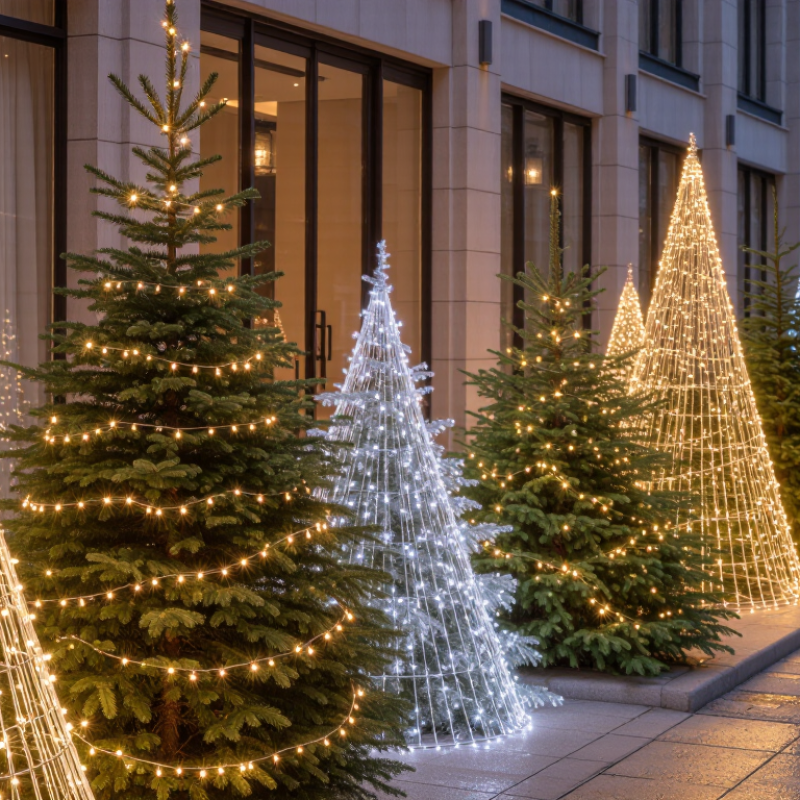
2026 Top Tree Lights for Global Buyers?

What Tree Lights Are and How They Work

Tree lights are small electric luminaires designed to outline branches, trunks, or indoor trees. Most modern sets use light-emitting diodes, or LEDs. Each LED converts electrical current into light through a semiconductor junction. A small controller may create flashing patterns, while a rectifier converts household alternating current into usable direct current. Some sets connect LEDs in series; others use parallel circuits. This difference affects brightness, failure behavior, and repairability.

In practical installation, check voltage, plug type, wire spacing, and weather protection before comparing appearance. The U.S. Department of Energy reports that LEDs use at least 75% less energy and last up to 25 times longer than incandescent lighting. The International Energy Agency also identifies lighting as roughly 15% of global electricity demand, making efficiency relevant for large seasonal displays. A ten-metre tree can require many connected sets. Small losses become visible.

Use a timer to reduce operating hours.
Keep connectors dry.

For outdoor use, verify the stated ingress protection rating and local electrical requirements. A higher rating does not make damaged insulation safe. That point is often missed.

My practical concern is repairability: sealed controllers and fixed connectors can shorten product life, despite efficient LEDs. The best 2026 choice is not simply the brightest set. It balances electrical safety, heat control, energy use, cable flexibility, and dependable performance in the buyer’s climate.

Key Features to Compare in 2026 Tree Lights

Choosing tree lights for 2026 requires more than counting bulbs or chasing the lowest price. In my product evaluations, light spacing often changes the result more than advertised brightness. Measure the tree first. A 2.1-meter tree may need a longer string than expected, especially with wide branches. Compare LED efficiency, color temperature, dimming control, timer settings, and memory functions. Warm white creates a softer room, while neutral white shows ornaments more clearly.

Check electrical details carefully. Global buyers should confirm voltage, plug type, cable length, and destination-market compliance documents. A suitable outdoor rating matters when lights may face moisture, but it does not replace correct installation. Look for low-heat LEDs, strong insulation, secure connectors, and clear instructions. Small details matter. Thin wires can tangle quickly.

Smart controls can add convenience, yet wireless features may fail in thick walls or crowded networks. Manual controls remain useful. Reviewers should also compare replacement policies, testing reports, carton protection, and spare components. I once underestimated packaging quality; several bulbs arrived intact, but the control unit did not. That experience changed my buying checklist. A longer warranty sounds reassuring, though its actual terms deserve careful reading. Buyers should test brightness, timer accuracy, and connector fit before decorating the entire tree. Some comparisons remain imperfect because brightness measurements vary between sellers. Awareness of that weakness leads to better decisions.

2026 Top Tree Lights for Global Buyers — Key Features to Compare
Light Type Typical Light Source Typical Power Use Common Color Options Recommended Indoor Use Recommended Outdoor Use Typical Protection Rating Typical Service Life Control Features Best Buying Priority
Mini LED String Lights LED bulbs, usually 3–5 mm or compact capsule formats Approximately 3–10 W per 100-light set Warm white, cool white, multicolor, single-color Christmas trees, mantels, windows and indoor decorations Suitable when the complete set is specifically rated for outdoor use IP20 for indoor models; IP44 or higher for many outdoor-rated models Approximately 25,000–50,000 LED operating hours Steady-on; some versions include timer, memory and multiple modes
Cluster LED String Lights Closely spaced LED nodes on a flexible cable Approximately 5–15 W per 10 m set Warm white, cool white, multicolor and color-changing Dense, bright coverage on medium and large trees Outdoor-rated versions can be used on shrubs, balconies and façades Commonly IP44; IP65 models provide stronger dust and water-jet protection Approximately 25,000–50,000 LED operating hours Multiple lighting modes, dimming or remote control on selected models
Icicle or Curtain Lights LED strings arranged as hanging drops or vertical strands Approximately 5–20 W per set, depending on length and LED count Warm white, cool white, blue, multicolor and color-changing Windows, walls, stair rails and event backdrops Outdoor façades, eaves and fences when marked for exterior use IP44 is common; IP65 is preferable for more exposed locations Approximately 25,000–50,000 LED operating hours Steady-on, flashing, wave, timer and remote-controlled modes
Battery-Powered Micro Lights Low-voltage micro LEDs on thin, flexible wire Usually below 5 W; runtime depends on battery capacity and mode Warm white, cool white, copper-wire amber and multicolor Tabletop trees, wreaths, centerpieces and areas without outlets Only when both the light set and battery enclosure are outdoor-rated Often IP20 to IP44; check the rating of the battery box separately Approximately 15,000–30,000 LED operating hours Timer, steady-on and flashing modes are common
Solar LED String Lights LEDs powered by a rechargeable battery charged by a solar panel Typically 1–5 W during operation; dependent on solar charging conditions Warm white, cool white, multicolor and color-changing Limited indoor use unless the solar panel can receive adequate daylight Gardens, outdoor trees, fences and locations without mains power Commonly IP44 to IP65; the solar panel and battery case may have different ratings LEDs commonly last 25,000–50,000 hours; rechargeable batteries usually need earlier replacement Automatic dusk sensor, timer and mode selection
Smart Addressable LED Lights Individually controllable RGB or RGBW LED nodes Approximately 8–30 W per set, depending on length, brightness and color Millions of color combinations; tunable white on RGBW models Interactive trees, retail displays and synchronized home décor Outdoor use requires an outdoor-rated controller, power supply and connectors IP20 for indoor systems; IP44 to IP65 for selected outdoor components Approximately 25,000–50,000 LED operating hours App control, schedules, scenes, music synchronization and brightness control
Low-Voltage Commercial String Lights LED lamps powered through an external low-voltage transformer or adapter Approximately 5–25 W per set, depending on length and lamp spacing Warm white, neutral white, cool white and limited color options Large indoor trees, venues, hotels and public displays Commercial outdoor installations when cables and connectors are suitably rated Often IP44 or IP65 for the light chain; verify the adapter rating separately Approximately 25,000–50,000 LED operating hours Timer, dimmer or controller compatibility varies by system
Mains-Voltage LED String Lights LEDs connected directly to the local electrical supply through a plug Approximately 3–30 W per set, depending on length and LED count Warm white, cool white, multicolor and color-changing Indoor displays with a compatible local plug and supply Outdoor use only when the complete product is outdoor-rated and protected by suitable residual-current protection IP20 for indoor products; IP44 or higher for outdoor products Approximately 25,000–50,000 LED operating hours Timer and lighting modes may be integrated or supplied separately
Buyer note: IP44 generally indicates protection against solid objects larger than 1 mm and water splashes from all directions. IP65 indicates dust-tight protection and protection against water jets; it does not mean the product is suitable for immersion. For global purchasing, confirm the local voltage and frequency, plug type, adapter input range, cable length, connector compatibility, product safety documentation and whether the stated IP rating applies to the entire assembled set.

Top Tree Light Types for Different Global Markets

2026 Top Tree Lights for Global Buyers?

Choosing tree lights for international markets requires more than attractive packaging. Light color, cable design, power systems, and weather resistance affect customer satisfaction. In my export experience, warm white LED strings remain popular across European homes. They create a soft glow around wooden ornaments and green branches. Cooler white lights often suit modern interiors and commercial displays in parts of Asia. North American buyers frequently prefer larger bulbs, stronger visual brightness, and programmable effects.

Outdoor markets need sealed connections and durable insulation. Indoor buyers may prioritize flexible wires, compact storage, and gentle dimming. Battery-powered lights can support apartments, temporary displays, and areas with limited outlets. Solar models suit sunny regions, but performance may fall during rainy seasons. That detail is easy to overlook. Product testing should include heat, moisture, bending, and repeated installation. Local electrical requirements must also be checked before shipment. One specification cannot serve every market well.

Tips: Match color temperature with local decorating habits. Offer clear cable-length options. Show real photos on dense and sparse trees. Test timers across different climates. Keep instructions simple and translated accurately. Ask buyers about socket types before confirming orders. My own mistake was treating “bright” as universal. Some customers wanted sparkle, while others found it tiring. Feedback changed the selection more than assumptions did.

Safety, Energy Efficiency, and Certification Requirements

2026 Top Tree Lights for Global Buyers?

Safety, Energy Efficiency, and Certification Requirements

Global buyers should inspect tree lights beyond brightness and appearance. Loose sockets, thin insulation, and poorly sealed controllers can create overheating risks. Choose products with stable wiring, strain relief, flame-resistant materials, and accessible user instructions. For outdoor trees, check the stated IP rating and test the connector seals before installation. Indoor products should never be marketed for exposed weather conditions.

Energy efficiency depends on more than LED technology. Confirm wattage, standby consumption, timer performance, and adapter efficiency. Warm-white LEDs usually provide strong visual comfort with modest power use. A longer cable may increase voltage drop, especially in low-voltage systems. Ask for measured results, not only catalogue claims. Small differences matter when hotels, retailers, or public venues operate thousands of light sets.

Certification requirements vary by destination. Buyers should verify applicable electrical safety, electromagnetic compatibility, chemical, plug, and energy rules before shipment. Common market schemes may include CE-related conformity obligations, UK requirements, North American recognized-laboratory testing, or Australia and New Zealand registration. The exact route depends on voltage, product design, location, and intended use. Request current test reports, declarations, factory traceability, and samples from the same production batch. A certificate alone is not enough. Practical inspections can still reveal changed components or weak packaging. That is an uncomfortable point, but it deserves attention. I would also recheck requirements before each seasonal order, because regulations and retailer policies can change.

How to Choose and Buy Tree Lights Internationally

2026 Top Tree Lights for Global Buyers?

Choosing tree lights internationally requires more than comparing brightness and price. Start with the destination’s voltage, frequency, plug shape, and import requirements. A 120-volt set can fail on a 230-volt circuit without a suitable converter. Check the product label, not only the online listing. The International Energy Agency reports that lighting uses about 15% of global electricity. Efficient LED products can reduce operating demand, but efficiency depends on wiring, drivers, and daily use. U.S. Department of Energy solid-state lighting reports also show continuing improvements in LED efficacy. However, laboratory performance is not the same as household performance.

Tips: Select low-voltage lights with a certified power adapter. Confirm compatibility with IEC 60598 safety requirements and IEC 60529 ingress ratings. For outdoor trees, choose an appropriate IP rating, sealed connectors, and UV-resistant cable. Ask the seller for test reports, rated voltage, wattage, color temperature, and warranty terms. Keep these documents for customs or service claims. Small details matter.

Warm white, around 2700–3000K, creates a softer residential appearance. Cooler white can look sharper but may feel harsh indoors. Measure the tree before ordering. A two-meter tree often needs more cable than expected, especially when spacing between branches is wide. I have found that buyers sometimes prioritize lamp count and overlook adapter quality. That is a costly trade-off. Reports can differ, and product claims may be optimistic. Compare independent test evidence, not attractive packaging.

Article Source:

Scroll To Top